
Trump Sees U.S. Oil Producers Spending Billions in Venezuela
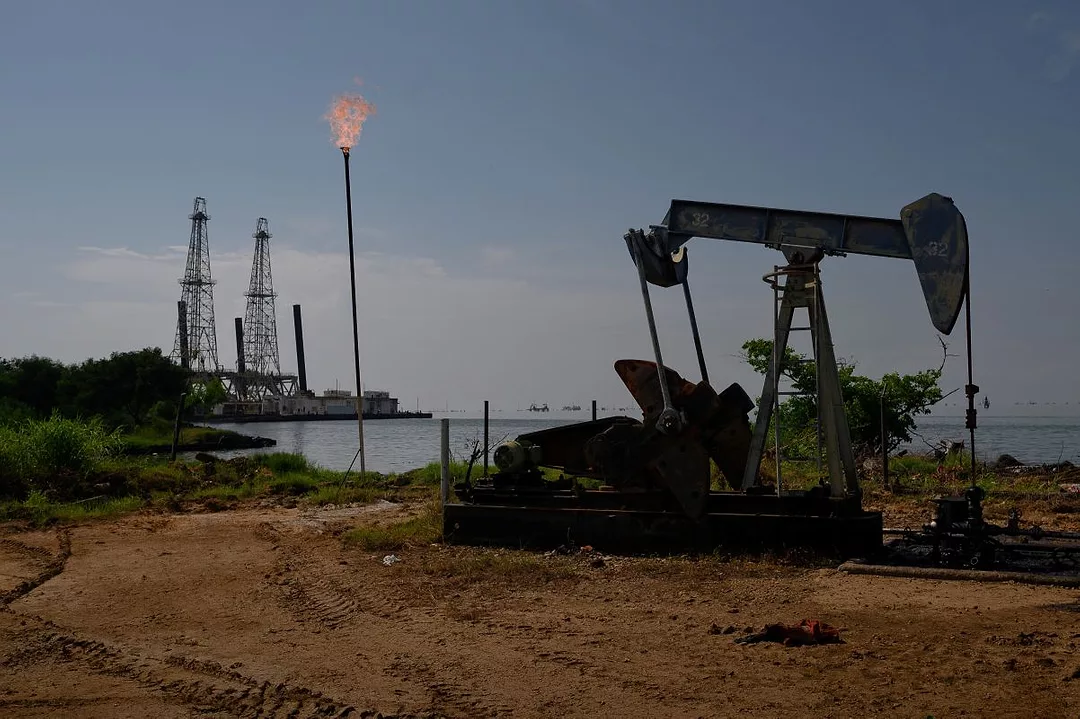
An oil pumpjack on Lake Maracaibo in Cabimas, Zulia state, Venezuela. Source: Bloomberg
President Donald Trump said U.S. oil companies will spend billions of dollars to rebuild Venezuela’s crumbling energy infrastructure after a military operation that led to the capture of Nicolas Maduro, the country’s former leader.
During a press conference January 3 at his Mar-a-Lago estate in Florida, Trump described an ambitious vision to use U.S. financial resources and industry knowhow to restore the South American nation’s oil sector to its former glory.
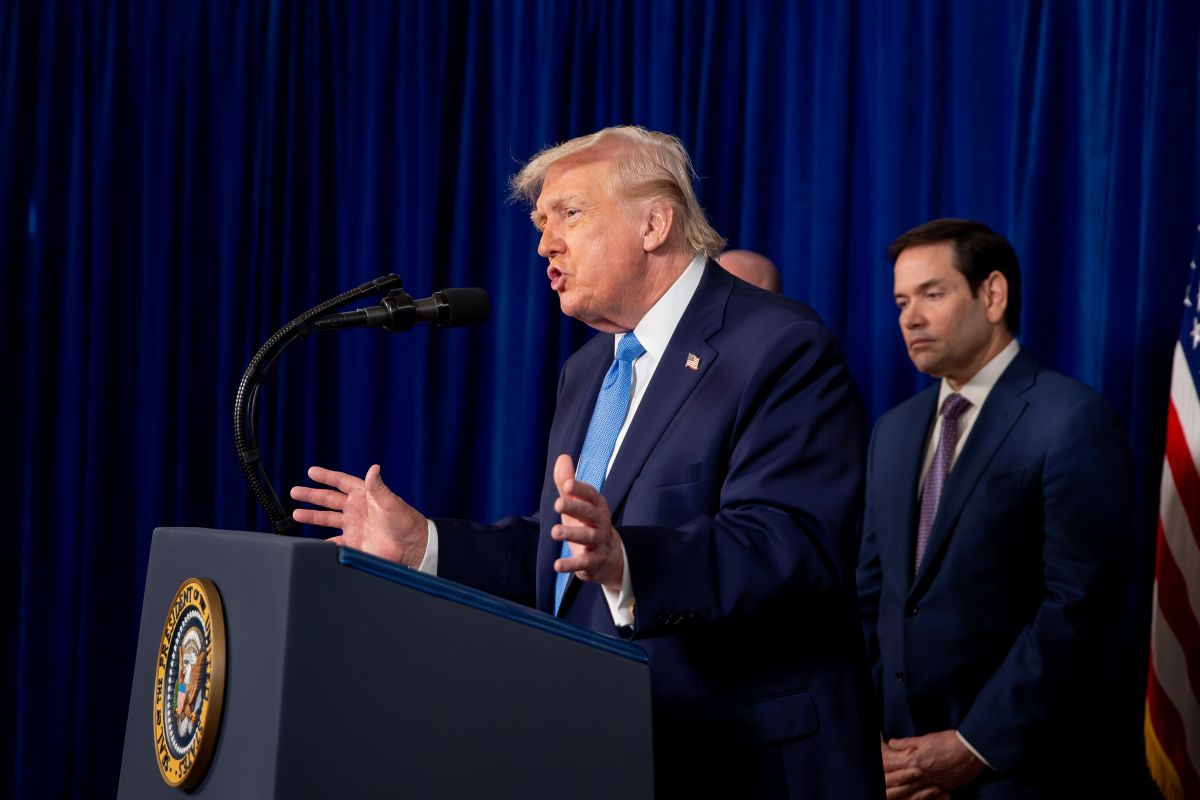 U.S. President Donald Trump speaks during a news conference at the Mar-a-Lago Club in Palm Beach, Florida on Jan. 3.
“We’re going to have our very large United States oil companies — the biggest anywhere in the world — go in, spend billions of dollars, fix the badly broken infrastructure — the oil infrastructure — and start making money for the country,” Trump said. “They will be reimbursed.”
That kind of oil industry reconstruction would almost be without precedent, and Trump left many crucial questions unanswered. He didn’t commit to sending U.S. troops to aid in a transition, saying only that his government would help ensure oil infrastructure was protected and improved.
It’s unclear how willing oil giants like Exxon Mobil Corp., Chevron Corp., ConocoPhillips and others are to pour substantial sums of money into a country run by a temporary U.S.-backed government without established legal and fiscal rules. Chevron continues to operate in Venezuela under a special license from the U.S., it said in a statement.
ConocoPhillips said it’s monitoring developments in Venezuela and their potential implications for global energy supply and stability, adding it would be “premature to speculate on any future business activities or investments.” Exxon didn’t respond to a request for comment on January 3.
Analysts and traders say it could easily take years for critical infrastructure to be fully repaired and for oil to freely flow out of Venezuela, which currently accounts for less than 1% of global supplies even though it has the world’s largest reserves.
Venezuela offers abundant below-ground oil potential, but it comes with substantial above-ground risks that haven’t disappeared following the U.S. apprehension of Maduro, said an industry representative who asked for anonymity to speak candidly about the matter.
Low oil prices are another deterrent, especially given the level of investment that could be required. Some of the concerns have been communicated to Trump administration officials, the person said.
Trump’s plan for Venezuela is in line with his expansive vision of U.S. energy dominance — with American companies not only driving record oil and gas production domestically but exerting their influence globally.
The president has repeatedly said he prizes low oil and gasoline prices, as he seeks to tame inflation and address cost-of-living concerns that are set to be a factor in November’s midterm elections. Oil prices ended 2025 with the steepest annual loss since 2020, and the global benchmark has slumped toward $60 a barrel.
Trump said the U.S. will work with Venezuelan Vice President Delcy Rodríguez to transition to a democratically elected government after Maduro’s capture, but she and other regime leaders have thus far appeared uncooperative.
If Rodríguez is a willing partner, she could help the U.S. ease a transition by maintaining stability with the current institutions in Venezuela.
Still, the amount of rebuilding that would need to be done is extensive. “Just stabilizing existing production will require low single-digit billions of dollars for workovers, power, water handling and export infrastructure repairs,” said Bob McNally, president of Rapidan Energy Group.
Big Oil
Chevron is in pole position to help unlock more Venezuelan oil production as it already produces about 20% of the country’s oil, having operated under a sanctions waiver from the U.S. government for most of the last decade.
Exxon and ConocoPhillips also have experience operating in Venezuela, but quit the country after their assets were nationalized by Maduro’s predecessor, Hugo Chavez, in the mid-2000s. Exxon has previously said it would look at investing in Venezuela but only under the right conditions.
“We’d have to see what the economics look like,” Exxon CEO Darren Woods said in November. “So I wouldn’t put it on the list or take it off the list.”
Strong economics and higher oil prices over the coming years could also entice other companies that are on the sidelines to reconsider operations in Venezuela, if they can see signs of stability and are offered concessions, analysts said.
Nearly every major oil company has been beguiled by the underground riches of Venezuela. Over the past century, they have discovered that there was a lot of money to be made, but also a lot to lose. Two waves of nationalization left a bad taste in the mouth of the likes of Shell Plc, Exxon and ConocoPhillips, with the latter two still due billions of dollars in compensation after their assets were seized.
ConocoPhillips has “significant incentives to return” and collect the more than $10 billion it’s owed, said Francisco Monaldi, director of Latin American energy policy at Rice University in Houston. But “it’s highly unlikely that major Western oil companies will engage in talks until there is political stability that clarifies the key players and the legal framework.”
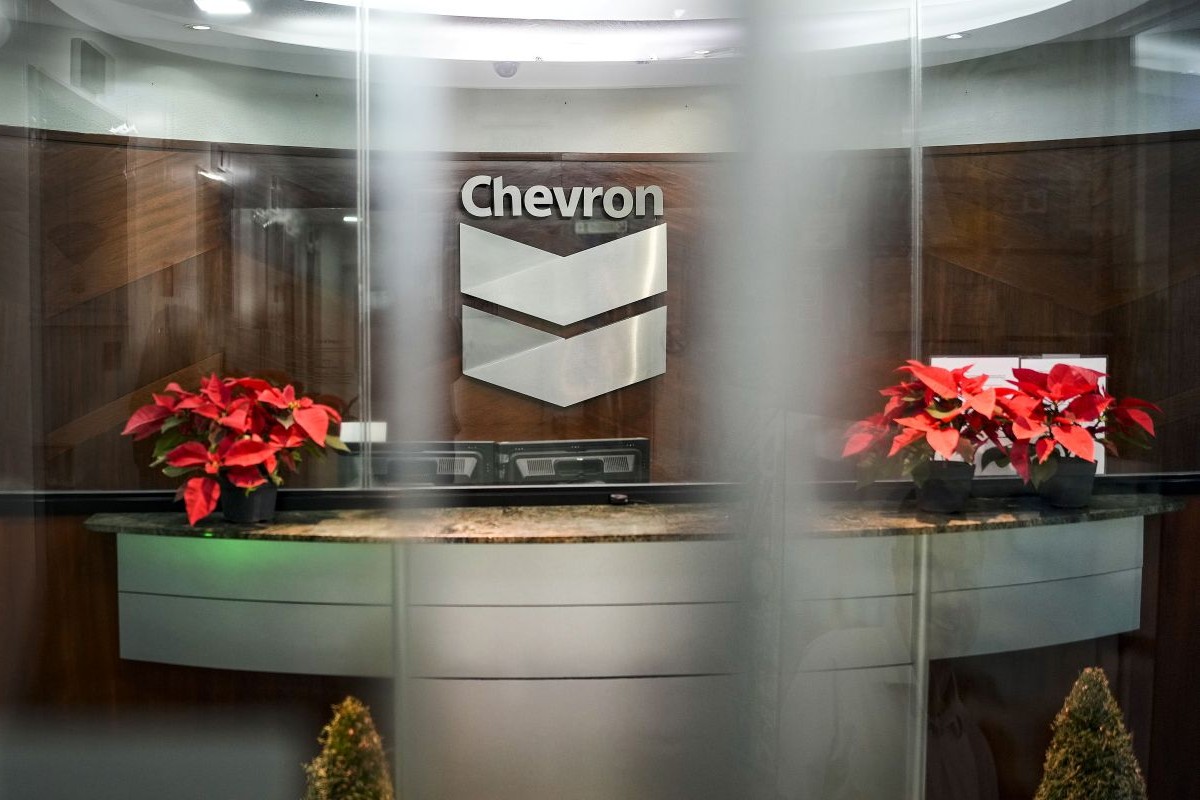 The Chevron Corp. offices in Caracas on Dec. 1, 2022. Source: BloombergThe exception is Chevron, which currently pumps about 140,000 barrels a day from Venezuela and ships it to refineries on the Gulf Coast under special license from the U.S. government. The Houston-based company negotiated a series of deals to stay in the country under Chavez and continued operating with U.S. permission under both Republican and Democrat administrations.
 The company continues “to operate in full compliance with all relevant laws and regulations,” it said in a statement January 3. Chevron is focused on the safety of its employees and the integrity of its assets, it said.
Until now, Chevron’s focus has largely been on getting its own debts repaid rather than pumping fresh dollars into growing production.
Uncertain Flows
While companies may be hesitant to re-enter Venezuela without assurances, a significant consideration for oil market watchers is whether crude tankers can keep loading. Several ships have turned away from Venezuela as the U.S. launched a blockade in mid-December to seize vessels transporting oil that help fund the regime of Nicolas Maduro.
Trump said the oil blockade remains in place. But it’s clear he wants a U.S.-backed administration to revive the country’s oil industry, bringing it back to its former heights in the mid-20th century, when it was the world’s largest exporter, and a founding member of OPEC.
The U.S. president said on January 3 that America would sell “large amounts” of oil to current buyers and additional clients, without elaborating.
Trump suggested Venezuelan oil revenue could help fund a variety of causes — from reimbursing the U.S. government for its spending in the country to compensating oil companies that have seen regional operations disrupted and assets seized. Venezuelans, both inside and outside the country, also will be “taken care of,” Trump promised.
China — the biggest buyer of oil from the South American country, as well as its largest creditor — condemned the U.S.’s military strikes. Officially, China hasn’t taken the Venezuelan crude since March, but third-party and ship-tracking data indicate flows to the Asian nation remained robust last year.
Currently, Venezuela produces around 800,000 barrels of oil a day, less than 1% of global output, according to Kpler, which tracks shipping data. Production could rise by about 150,000 barrels a day within a few months if sanctions are lifted, but getting back to two million barrels a day or higher would require “massive reforms” and large investments from international oil companies, according to Matt Smith, Americas lead oil analyst at Kpler.
The scale of reviving Venezuela’s oil industry is immense. To get there, companies would need to fix the country’s derelict oil infrastructure, overlooked by decades of mismanagement, corruption and lack of investments. Millions fled the country, including skilled oil personnel that now staff oil refineries, drilling companies and trading desks in the U.S., Middle East and Europe.
There’s also the question of other countries’ assets in Venezuela.
Spain’s Repsol, Italy’s Eni SpA and France’s Maurel et Prom SA are still present in Venezuela and partner in oil and gas ventures with state-owned Petroleos de Venezuela SA.
“Chinese firms are heavily invested in Venezuela’s infrastructure (power, telecoms) so efforts to exclude Chinese investments and operators from the country could lead to unintended consequences,” Michal Meidan, director of the China Energy Programme at Oxford Institute for Energy Studies, said on LinkedIn.
Popular Stories




SupplyChainBrain 2026 ESG Guide: ESG — The Supply Chain’s Biggest Secret
VIEW THE LATEST ISSUECase Studies


Visit Our Sponsors |
|
|
| |
|
|
|
|
|
|
|
|
|
|
|
|
|
|
|
|
|
|
|
|
|
|
|
|
|
|
|
|