.webp?height=100&t=1782792122&width=150 "005_veteran_winemaker_gallo_embarks_on_an_ai_journey_v2-(540p).jpg")
Greenland Standoff Ends Without Tariffs, but Uncertainty Remains
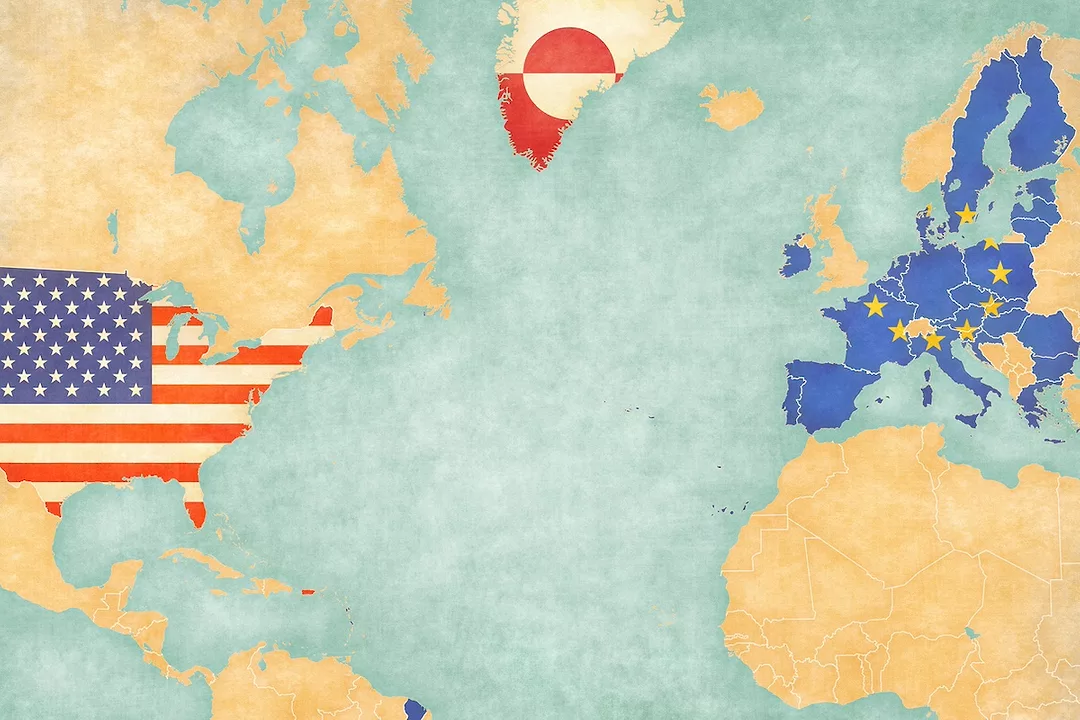
Photo: iStock / Artindo
Following days of speculation and uncertainty, President Donald Trump has backed off of threats to impose tariffs against eight European nations, after claiming that he's reached a framework of a trade deal regarding Greenland.
In the lead-up to the World Economic Forum in Davos, Switzerland, Trump was repeatedly insistent that the U.S. should assume control of Greenland for national security purposes, while hinting at times that military force could be an option if his demands weren't met. The situation escalated further after a group of NATO countries sent a small cadre of troops to Greenland in a show of solidarity for the island. In retaliation, Trump threatened to impose 10% tariffs against the eight nations that participated in the military exercise, despite claims from the countries involved that their goal was to demonstrate their commitment to collective defense and regional stability, rather than signal aggression toward the U.S.
The European Union punched back against Trump's tariff threats days later, when its legislative body halted approval of a trade deal agreed to between the bloc and the U.S. in 2025. At the time, EU leaders said that the tariff threats and comments on Greenland were incompatible with good-faith negotiations, and warned that progress on transatlantic trade would remain frozen as long as tensions over the semi-autonomous Arctic territory continued. Then, as stock markets plunged and U.S. government bonds were sold off in response to the trade turmoil, Trump did what he's frequently done over the last 12 months when it comes to threatened tariffs: he stopped short of following through, with the supposed promise of a trade deal that appears to fall well short of his initial demands.
Still, much remains unclear at this point. Although Trump told Fox Business on January 22 that the framework deal would give the U.S. military "total access" to Greenland, European allies have yet to confirm any such terms. According to The New York Times, the proposal on the table would potentially be modeled off of the United Kingdom's "sovereign base" agreement in Cyprus, where U.K. military bases are treated as British territory. However, Greenland Prime Minister Jens-Frederik Nielsen has described the idea of American sovereignty as a "red line" in negotiations, while NATO Military Committee Chairman Admiral Giuseppe Cavo Dragone said at a press briefing that talks were still "at the very early stage."
With the two sides appearing to remain far apart, the saga has brought on renewed concerns over the ongoing geopolitical and economic uncertainty that has become a hallmark of Trump's second term in office. For now, the threatened tariffs remain shelved, but the standoff has left European officials bracing for renewed volatility as negotiations over Greenland continue.
Popular Stories




SupplyChainBrain 2026 ESG Guide: ESG — The Supply Chain’s Biggest Secret
VIEW THE LATEST ISSUECase Studies


Visit Our Sponsors |
|
|
| |
|
|
|
|
|
|
|
|
|
|
|
|
|
|
|
|
|
|
|
|
|
|
|
|
|
|
|
|