
Mastering Returnable Transport Items (RTIs) in Peak Seasons
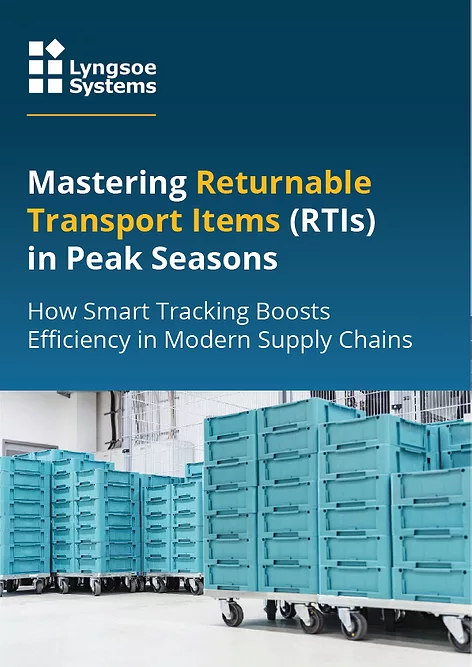
Returnable Transport Items (RTI) losses of 10–15% and lack of real-time visibility are critical bottlenecks in peak-season supply chains. RFID and BLE tracking enable end-to-end asset visibility, reducing costs, improving throughput, and strengthening operational resilience.
Key Takeaways
- 10–15% RTI loss drives avoidable cost and capital spend
- Lack of visibility creates peak-season bottlenecks and service risk
- Manual tracking doesn’t scale in high-volume operations
- RFID + BLE enable real-time control, reducing shrinkage and dwell time
- Proven ROI: better asset utilization, less manual work, stronger network performance
What is causing bottlenecks in peak-season supply chains? Increasingly, the answer is not labor or transport capacity—but the lack of visibility and control over Returnable Transport Items (RTIs). Pallets, roll cages, totes, and reusable containers form the backbone of high-volume logistics, and when they are missing or imbalanced, operations slow down or stop entirely.
Peak periods amplify these challenges. Many organizations experience annual RTI losses of 10–15%, while manual tracking methods fail to keep pace with demand. This leads to higher costs, increased dwell time, and reduced service performance when it matters most.
How can supply chains regain control? RFID and Bluetooth Low Energy (BLE) technologies—supported by platforms such as Lyngsoe Systems’ real-time supply chain visibility solutions—enable end-to-end tracking across warehouses, transport hubs, and customer locations. By assigning each asset a digital identity, companies gain a single source of truth that improves planning, forecasting, and operational responsiveness.
In a large-scale logistics company managing more than 100,000 returnable assets across multiple sites, real-time tracking has delivered measurable results: significantly reduced shrinkage, lower manual workload through automated data capture, and more balanced asset distribution during peak demand.
Ultimately, supply chain leaders must elevate RTIs to strategic assets, digitize their lifecycle, and collaborate across partners. Those who do can reduce costs, improve resilience, and ensure critical assets are always available when and where they are needed most.

Popular Stories





SupplyChainBrain 2026 ESG Guide: ESG — The Supply Chain’s Biggest Secret
VIEW THE LATEST ISSUECase Studies


Visit Our Sponsors |
|
|
| |
|
|
|
|
|
|
|
|
|
|
|
|
|
|
|
|
|
|
|
|
|
|
|
|
|
|
|
|