
SCB FEATURE
FMC Eyes Expanded Role in Protecting U.S. Cargo
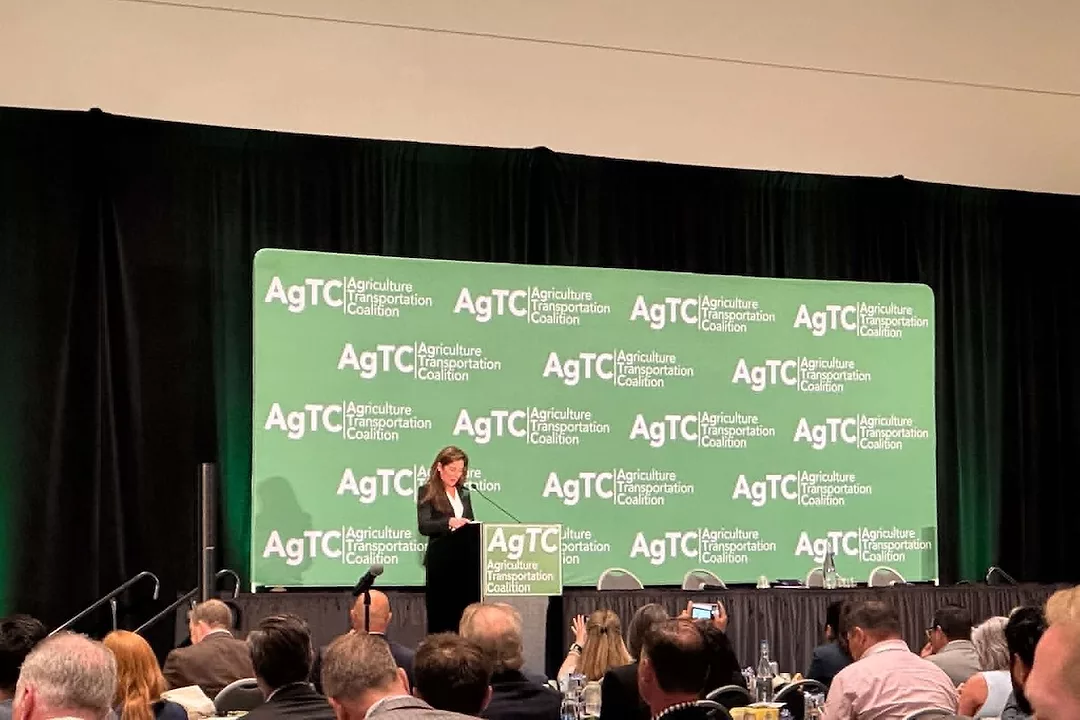
FMC Chairman Laura DiBella speaking at AgTC 2026 in Tacoma, Washington. Photo: SCB File Photo
As geopolitical tensions and supply chain disruptions continue to reshape global shipping, the Federal Maritime Commission is looking to take a more aggressive role in protecting U.S. cargo interests.
Speaking at 2026's Agriculture Transportation Coalition conference in Tacoma, Washington, on May 19, FMC Chairman Laura DiBella detailed what she described as the agency's return to its roots.
“Our whole role was designed to support the U.S. flag,” DiBella said. “We are returning back to what we were originally created for."
That starts with the U.S. Maritime Action Plan, a wide-ranging initiative designed to expand the country's shipbuilding infrastructure, strengthen the U.S.-flagged commercial fleet, and reduce reliance on foreign-controlled shipping networks. Released by the Trump administration in February, the plan would look to dramatically increase the number of U.S.-flagged vessels and American seafarers, distribute a series of special loans and tax breaks to American shipbuilders, and charge a fee at U.S. ports of 1 cent per kilogram on all imported cargo transported by foreign-made ships.
A Regulatory Focus
DiBella asserted that the FMC needs to be more active on the regulatory front, particularly when it comes to protecting U.S. shipping interests internationally. That includes an investigation into Spain's refusal to grant port access to U.S.-flagged ships carrying military cargo bound for Israel. Dating back to 2024, Spanish authorities have denied entry to at least three separate U.S. vessels under that policy. Although the FMC has yet to issue a ruling, DiBella noted that the agency has the authority to sanction Spanish cargo, issue fines, and even deny entry to Spanish-flagged vessels at U.S. ports.
Another major regulatory focus for the FMC is its ongoing investigation into “flags of convenience,” where a firm will register a vessel under a foreign flag to operate under less stringent regulations and oversight. The practice has been linked to the rise of shadow fleets, which countries like Russia have used to evade sanctions and move oil and other cargo through opaque shipping networks. While the FMC has yet to release the full results of its probe, DiBella warned that the agency's preliminary findings have been "worse than we could have ever expected," stoking concerns about the environmental, economic and security risks tied to poorly regulated vessels operating across global shipping lanes.
DiBella said that the FMC is also "paying close attention" to China's recent treatment of Panamanian-flagged vessels. In January, the FMC warned of a surge in detentions of Panama-flagged vessels at Chinese ports "under the guise of port state control," in response to Panama's decision to void Hong Kong-based CK Hutchison's canal terminal concessions. DiBella noted that the situation is particularly troubling given that Panama holds the world's second largest ship registry, and carries a substantial amount of U.S.-bound cargo.
"It is an extremely concerning situation," she said.
The Strait of Hormuz
DiBella framed the Strait of Hormuz as one of the clearest examples of how geopolitical conflicts can threaten global shipping chokepoints and disrupt cargo flows worldwide. She said the FMC is actively studying major maritime chokepoints through an ongoing investigation examining vulnerabilities tied to global trade routes.
She described the strait as a real-time example of how “bad actors would weaponize a natural occurring choke point,” while noting that the U.S. is currently feeling the conflict’s impact more through fuel prices than direct cargo disruptions. And while U.S. cargo exposure in the region is somewhat limited compared to other countries, the broader economic effects remain significant given the strait’s role in global energy markets, she added.
Net Zero Shipping
Elsewhere, negotiations between the FMC and the International Maritime Organization regarding the latter's Net-Zero Framework (NZF) are ongoing. UN member states approved an initial draft of the NZF in April 2025, before a final vote was pushed back to late 2026 following pressure from the Trump administration. DiBella said that while she supports decarbonization, she's opposed to the methodology the IMO is using to achieve it, labeling the agency's proposal "a penalty against the U.S. shipper."
After gathering in London in late April, the IMO expressed optimism regarding the NZF moving forward, with IMO Secretary-General Arsenio Dominguez stating that "we are back on track." However, DiBella stressed that the U.S. remains firmly opposed to any framework that would impose what she described as an inflationary tax on American cargo owners and consumers in the name of decarbonization.
Popular Stories




100 Great Supply Chain Partners 2026: The Secret to Supply Chain Success
VIEW THE LATEST ISSUECase Studies


Visit Our Sponsors |
|
|
|
|
|
|
|
|
|
|
|
|
|
|
|
|
|
|
|
|
|
|
|
|
|
|
|
|
|
|
|
|
|
|
|
|
|
|
|
|
|
|
|
|
|
|
|
|
|
|
|