.webp?height=100&t=1783959879&width=150 "014_how_ai_is_transforming_the_transportation_back_office_v1-(540p).jpg")
Report: Chinese Suppliers Embedded in U.S. Space Sector
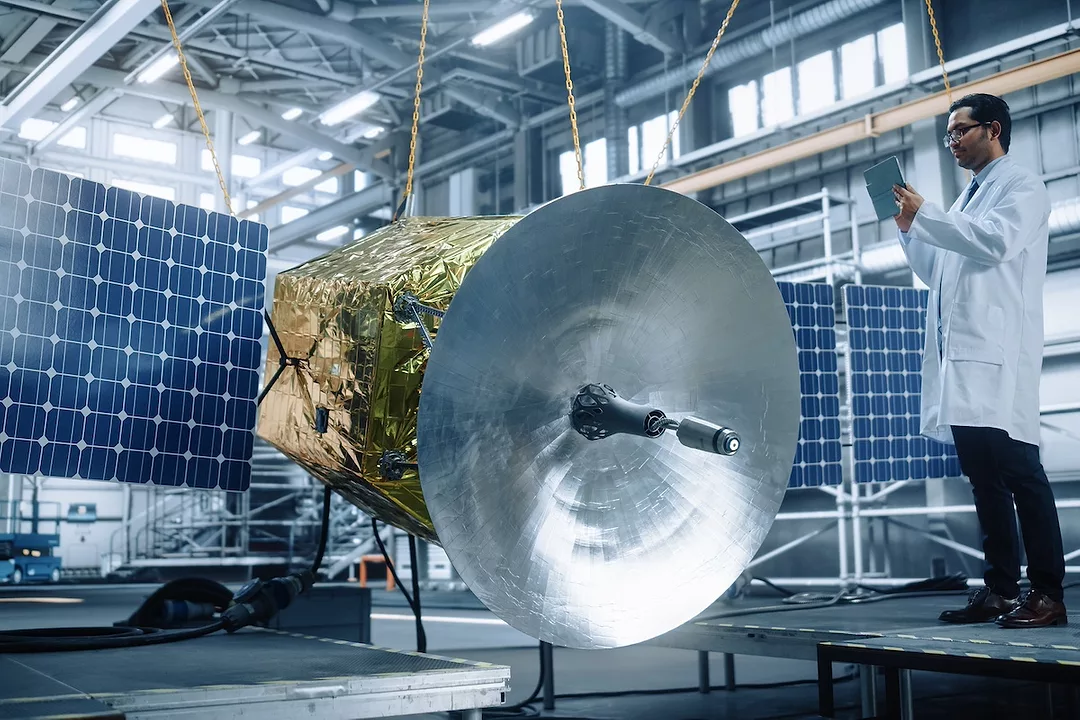
Photo: iStock / gorodenkoff
More than 849,000 commercial space imports into the U.S. have had exposure to components sourced from Chinese suppliers since 2022, while another 15,000 imports had exposure to suppliers in Russia.
A study released on May 20 by AI supply chain software company Altana analyzed nearly 300 contractors, sub-contractors and suppliers in the U.S. commercial space industry. In its analysis, Altana identified a widespread pattern of what it labeled as "adversarial manufacturing exposure," where Chinese and Russian suppliers were present across the U.S. industrial space supply chain. It also uncovered a significant reliance on Taiwanese manufacturing, which poses a significant potential risk if China ever stages an invasion of the long-disputed island nation.
"The geopolitical implications are stark," the report reads. "A Chinese ground invasion of Taiwan — a scenario that defense planners increasingly model — would not only disrupt the global semiconductor supply chain, but would specifically compromise the production of the most advanced components that space systems depend on."
In total, nearly 27% of the U.S. commercial space industry's semiconductor imports had exposure to manufacturers in Taiwan dating back to 2022. And as Altana points out, radiation-hardened space-grade semiconductors that come from Taiwan can't be quickly sourced from other suppliers in the event of a geopolitical disruption.
This all comes as the U.S. has entered into an unprecedented era of growth for its space sector, despite the country's supply chains having struggled to keep up with that demand. According to a March report from the Aerospace Industries Association and accounting firm PwC, many space manufacturers have struggled to secure reliable sources for critical parts, while relying on a fragile supplier base and limited domestic manufacturing capacity for many of the specialized components required in space systems.
“Critical component shortages are delaying major programs as space companies compete with larger sectors for the same limited supplies," the AIA and PwC noted.
Popular Stories


.webp?height=100&t=1783656185&width=150 "017_turning_disruption_into_opportunity_v1-(540p).png")


SupplyChainBrain 2026 ESG Guide: ESG — The Supply Chain’s Biggest Secret
VIEW THE LATEST ISSUECase Studies


Visit Our Sponsors |