Established U.S. logistics firms say digital-friendly freight startups that are drawing growing interest in Silicon Valley still lack the scale and customer relationships to threaten their share of the market.
No less an authority than Wikipedia attributes the origin of the proverb “the enemy of my enemy is my friend” to Sanskrit, an ancient Hindu language. How appropriate, then, that the saying’s latest proof point is the battle unfolding among global tech players in India.
Africa needs to take advantage of the economic potential of its ports if it is to realize its growth ambitions, and investment is not always about building new ports or terminals. That's one of the key findings in a recent analysis of port development in sub-Saharan Africa issued by PwC.
DP World and Los Angeles-based Virgin Hyperloop One this week launched their partnership, DP World Cargospeed — a venture intended to spearhead the development of hyperloop technology in the Middle East for the transportation of cargo.
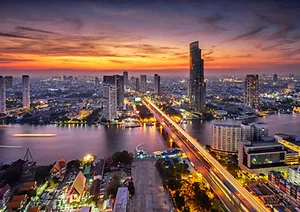
Thailand government officials have a number of colorful ways of characterizing the state of the nation’s economy just prior to the military coup of May, 2014.
Decades ago, Bradley Jacobs studied math and piano (classical and jazz) at Bennington and Brown before dropping out to make money. Now the balding 61-year-old CEO of XPO Logistics invokes that background to explain how he's parlayed sequential roll-ups in the gritty businesses of garbage collection, heavy equipment rentals and delivering stuff into a $2.6bn net worth.
Amazon.com Inc. Chief Executive Jeff Bezos said the e-commerce giant has exceeded 100 million paid Prime subscribers and will continue to invest to meet "ever-rising" customer expectations.
DHL has been expanding its locations around the world to keep up with growing e-commerce and international trade demand — and its most recent expansion in southern California has doubled its intake capacity in Ontario, the company says.
China will let foreign automakers from Volkswagen AG to Ford Motor Co. own more than 50 percent of local ventures, removing a two-decade restriction and giving a boost to global companies seeking to capture a greater share of the world’s largest car market.