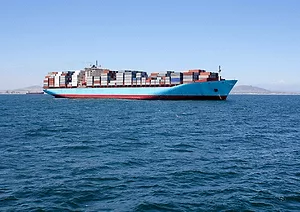
Shipping emissions in ports are substantial, accounting for 18 million tonnes of CO2 emissions, 0.4 million tonnes of NOx, 0.2 million of SOx and 0.03 million tonnes of PM10 in 2011, according to an International Transport Forum's report. Around 85 percent of emissions come from containerships and tankers. Containerships have short port stays, but high emissions during these stays.
The Amazon effect is raising consumer expectations for delivery services - expectations that logistics providers are struggling to meet without degrading margins, says Robert Lieb, supply chain management professor at Northeastern University. Lieb discusses this and other trends revealed in the annual survey of global 3PL CEOs.
The operational performance of the world's container terminals shows wide variation depending on location, terminal size and traffic type, according to the Container Terminal Capacity and Performance Benchmarks report published by shipping consultancy Drewry.
Import cargo volume at the nation's major retail container ports is expected to slow down this month following record levels seen in September and October as retailers rushed to bring merchandise into the country ahead of a possible shutdown of West Coast ports, according to the monthly Global Port Tracker report released by the National Retail Federation and Hackett Associates.
New York-based Natural Resources Defense Council has released a report on air pollution in China citing shipping as a major contributor and recommending the introduction of emission control areas.
A shortage of transportation equipment and possible labor disruptions at the Los Angeles/Long Beach port complex, the nation's busiest, is delaying shipping containers for up to three weeks, threatening timely delivery to retailers for the holiday season.
Import cargo volume at the nation's major retail container ports is expected to see a final surge and set a new monthly record in October as the holiday season approaches, according to the monthly Global Port Tracker report released by the National Retail Federation and Hackett Associates.
Businesses are continuing to shift resources from brick-and-mortar and other traditional sales channels to an e-commerce environment. What began primarily for business-to-consumer shopping is being emulated by merchants in the business-to-business sector, and has thus far been successful.