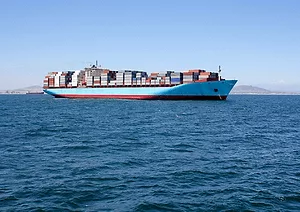
Following the Panama Canal expansion in 2016, up to 10 percent of container traffic to the U.S. from East Asia could shift from West Coast ports to East Coast ports by 2020, according to research conducted by the Boston Consulting Group and C.H. Robinson. Rerouting that volume is equivalent to building a port roughly double the size of the ports in Savannah and Charleston.
A robust improvement in consumption demand, generous government support, and rise in public sector infrastructure spending are expected to result in steady growth in the Middle East and Africa in 2015, according to a report from Frost & Sullivan.
Industrial distributors are facing changing market conditions that are challenging their long-standing business models, according to a study conducted by research firm TNS on behalf of UPS.
Liner schedule reliability improved for the fourth consecutive month in May as the aggregate on-time performance for the three core East-West trades jumped by 4.0 percentage points to reach a new data-series high of 71.6 percent, according to Carrier Performance Insight, the online schedule reliability tool provided by Drewry Supply Chain Advisors.
A small collection of metropolitan markets produce, consume and distribute the vast majority of all U.S. goods, a concentration that puts enormous pressure on specific infrastructure, and demonstrates how problems in one market can spread across the entire country.
Omnichannel retailers are gearing up for a holiday season that will likely find shoppers even more inclined to buy on line -- but not necessarily take delivery at home, says Gregg Aamoth, chief executive officer of POPcodes.
The boom in natural gas production in the U.S. is "rippling downstream" to the plastics industry, and chemical companies will need to invest more in export logistics facilities as they ramp up U.S. plastics production, says Owen Kean, senior director of the American Chemistry Council. "For the most part, what's happening in the chemical industry is largely an export story."