Six companies dominate the business of farm supplies. The interest of Monsanto, the world's biggest seed producer, in buying Syngenta, the largest agrochemicals firm, had threatened to whittle them down to five. That raised worries about whether the reduction in competition would mean less innovation - and thus slower improvements in crop yields - as well as higher costs for farmers.
Teens are shopping like their parents during the back-to-school season, and that's putting a lot of pressure on retailers to change the way they market to them.
The City of New Orleans and private businesses that struggled to survive the devastation of Hurricane Katrina learned some valuable lessons. One of the primary caveats when it comes to business continuity is to mitigate risk by embracing the cloud.
If the company is the bus and its leader is the driver, as Jim Collins' famous analogy states, then it stands to reason that when the bus is moving, the driver should mostly be looking out the windshield (toward the future) rather than consulting the rear-view mirror.
It is a nightmare for any employer: what to do with a volatile, constantly aggrieved worker who has had angry, even frightening confrontations with fellow workers - yet has committed no crime.
Seventy-eight percent of chief financial officers say the legislation over the Affordable Care Act has not affected their hiring patterns, according to a survey by Consero Group, which reported results as part of the 2015 Corporate Finance Data Survey.
Noelle Walsh, corporation vice president of supply chain with The Dow Chemical Company, outlines the chemical industry giant's efforts to become more customer-focused, while synchronizing its supply chain upstream to suppliers, and downstream to customers.
On average, $10m is the cost of a recall on a food company. Add this to the fact that recalls have been doubling every year from the 2002-2014 period in the United States, and it should worry any stakeholder in the manufacturing and processing facilities. Yet many of them are surprisingly optimistic about the chance of a recall affecting business, and it's their belief of invincibility that leaves them unprepared to weather a storm when one blows up. When manufacturers take a risk on their customers' health, they take a risk on their business’s health.
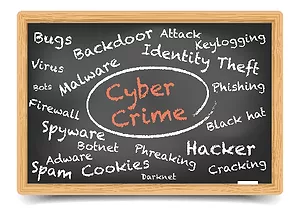
With the current state of IoT security, we might call it the Internet-of-Vulnerable-Things. It's all the more alarming because of the types of physical machines/systems that are increasingly network-connected - traffic lights, airplanes, nuclear power plants, and other critical or potentially lethal systems.