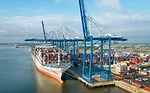
These are challenging times for emerging markets. China's economy is expanding at the slowest pace in more than a decade, and annual growth in once-booming nations like Brazil, Mexico, Russia, and South Africa has slowed to about 1.5 to 2.5 percent. Look around the developing world, and currencies are weakening, worries about asset bubbles and rising debt are mounting, and foreign direct investment has fallen sharply. This volatility leaves many companies wondering if they are overexposed to the risks of emerging markets.
Gartner Inc. has released the findings from its 10th annual Supply Chain Top 25, and for the seventh year in a row Apple has topped the list. McDonald's took second place, and Amazon came in third.
Supply chains in the Asia-Pacific (APAC) region pose a unique set of challenges for the organizations that rely upon them. With a land mass four times the size of Europe, transportation and distribution issues are complex and challenging. The region's diversity, in terms of regulations and political climate, as well as its sheer size makes it difficult to think of an integrated Asia-Pacific supply chain.
If you're still not convinced that sustainability can be a big marketing tool for global brands, then take a glance at the latest "Conscious Actions" report from Hennes & Mauritz AB - known to clothing shoppers around the world as H&M.
Today, businesses of all stripes are sowing the seeds of Big Data everywhere. And if we think Big Data is big, just think how that data multiplies and branches out when rooted in the multifaceted field of supply chain management.
When TransCanada first proposed the Keystone XL pipeline in 2008, the company hoped it would be done by 2012 and begin carrying heavy crude from the Alberta oil sands in Western Canada down to the U.S. Gulf Coast. Six years later the pipeline remains in limbo, stymied by Department of State reviews, route adjustments, lawsuits, environmental and economic studies, and (most important) an Obama administration that appears truly divided on the issue. Last month the State Department announced that no decision would come until after November's midterm elections.