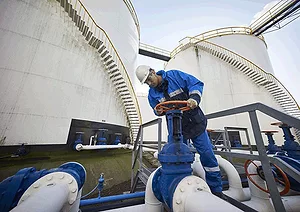
Analyst Insight: The chemical industry is a critical partner to many other industries, with nearly 96 percent of all manufactured products being touched in some way by chemistry. The accelerating pace of product life-cycles, driven by demand for new and innovative products, plays an important role in driving the need for innovation in the chemical industry. To drive innovation and improve business performance, chemical companies are looking at the role of digital transformation as a lever to improving the innovation process. – John Santagate, Research Manager, IDC
Analyst Insight: Most products arrive in the hands of customers through traditional processes. Sales and operations build forecasts, make procurement plans, and order the necessary materials to produce the products, and manufacturing builds the products at the planned production rates. Distribution plans are established to account for some variation in demand, and customers are promised specific delivery dates. If all goes well, the gap between demand and supply at every point in the system will be small. But that rarely happens. –Eduardo Alvarez, principal, PwC, and Rodger Howell, principal, PwC
DHL Express is piloting a cargo bicycle program for inner-city deliveries. The bikes, called 'DHL Cubicycles' are customized, four-wheel bikes that can carry a container with a load of up to 125 kilograms (one cubic meter in volume). The program reduces emissions by minimizing the mileage and time spent on the road by standard delivery vehicles. As e-commerce volumes surge, efforts to minimize the industry's high carbon footprint are increasingly important.
Analyst Insight: The Internet of Things (IoT) was originally the concept of "things talking." In the early days we envisioned RFID tags on everything, helping to identify and locate any object in the universe. The RFID tag would uniquely identify the item, determine its location, and put a time stamp to the transaction. It was a straightforward concept. It was either there, or it was not. It was all about identity and location. – Eric Peters, executive vice president, Tompkins International
Nissan has called on the U.K. government to invest millions in attracting car part manufacturers or risk a "house of cards" collapse in the industry post-Brexit.
Analyst Insight: When people talk about the Internet of Things, they can mean many different things, even within one industry. For a manufacturer, there are four major areas where IoT may have an impact: the manufacturing plant, the supply chain, service and the product. – Bill McBeath, chief research officer, ChainLink Research
Analyst Insight: The chemical/energy industry market is ripe with mergers and acquisitions on a global basis as a way for businesses to position themselves for sustained growth. With low fuel prices, foreign competition and an uncertain economy, processors are shuffling their portfolios to offset losses. – Simon Hardy, senior supply chain evangelist, Elemica
One thing that's often missed in President Donald Trump's complaints about the U.S. trade deficit is America's $248bn surplus in exports of services like education, banking and software.
Analyst Insight: The global supply chains of today are tremendously complex. They consist of a global network of suppliers, manufacturing facilities, warehouses, distribution centers, and the broader fulfillment network. Supply-chain planning and execution occur across all areas of the supply chain, and the success of operations is largely reliant upon the success of the supply chain. Such complexity and the abundance of touch points are driving the need for modern supply chains to implement an integrated approach to supply-chain management. – John Santagate, research manager, IDC