Here are five challenges facing supply chain managers today, with guidance on how a partnership approach that combines process, people and technology can help.
While the task and responsibility for managing the data supply chain is primarily the responsibility of information technology professionals, the concepts and tools we use every day directly apply to the data supply chain as well as the physical supply chain.
Achieving supply chain visibility isn't a matter of spending years to acquire a fixed view of suppliers, says Jack Dobson, commercial account lead with Palantir. It's about managing relationships that are in constant flux.
To improve collaboration and responsiveness, enterprises need what one might call “end-to-endless” visibility — advanced analytics that’s greater than the sum of its parts.
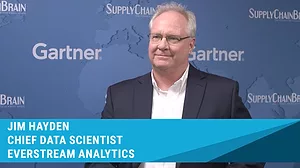
With multiple layers of suppliers, artificial intelligence and big data can help companies get clean and useful information, says Jim Hayden, chief data scientist at Everstream Analytics.
While for some companies the concept of digital twins may be new, others in the manufacturing space have been using them for years now, proving not just their effectiveness, but also their ability to drive innovation in an increasingly competitive economy.
E.D. Etnyre & Co., the venerable manufacturer of heavy equipment for road maintenance and preservation, looks for a way to share data from multiple legacy systems across the organization.
Is your data logger living up to its potential? Many fall short in providing actionable data analytics and supply chain insights — it's time to expect more.
Decision intelligence is becoming key to the ability of companies to deal with an unprecedented volume of data that's necessary to making supply chain decisions today, says Fred Laluyaux, president and chief executive officer of Aera Technology.
The latest news, analysis, trends and solutions for big data, blockchain and the internet of things (IoT) and their impact on supply chain management. Big data describes the large volume of data that inundates a business on a day-to-day basis and can be analyzed for strategic business insights. IoT is the means that collects and sends data from a range of “things” — anything from watches to fridges to cars — that are connected to the internet with sensors or computer chips. Learn how companies around the world are using big data, blockchain and IoT for supply chain optimization and competitive advantage.
Subscribe to our Daily Newsletter!
Timely, incisive articles delivered directly to your inbox.