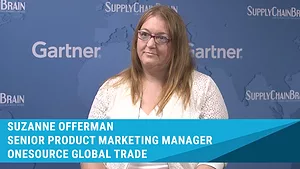
Suzanne Offerman, senior marketing manager for Onesource Global Trade at Thomson Reuters, describes the technology needed to avoid forced labor in manufacturing supply chains.
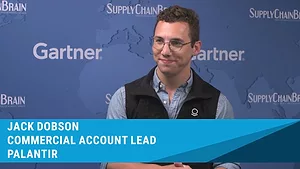
Achieving supply chain visibility isn't a matter of spending years to acquire a fixed view of suppliers, says Jack Dobson, commercial account lead with Palantir. It's about managing relationships that are in constant flux.
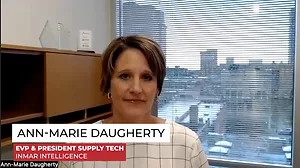
Ann-Marie Daugherty, executive vice president and president of supply tech with Inmar Intelligence, talks about the company's e-commerce post-purchase partnership with Doddle.
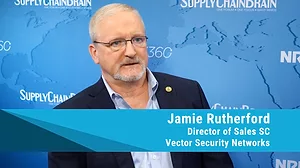
Jamie Rutherford, director of sales for supply chain with Vector Security Networks, describes recent innovations in security for the supply chain, many of them suggested by customers themselves.
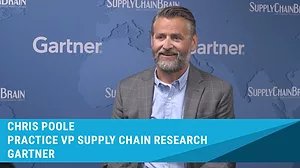
A record-breaking number of attendees at the 2022 Gartner Supply Chain Symposium heard about resilience and other hot topics in supply chain, according to Chris Poole, practice vice president, supply chain research, Gartner.
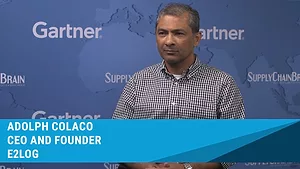
Disruption caused by the pandemic has served as a "rude awakening" among top executives about the need for new technology to create true visibility across international logistics, says Adolph Colaco, founder and chief executive officer of e2log.
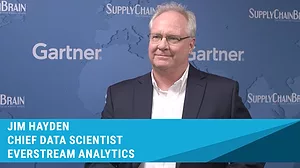
With multiple layers of suppliers, artificial intelligence and big data can help companies get clean and useful information, says Jim Hayden, chief data scientist at Everstream Analytics.
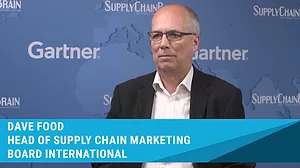
Supply chains are in flux, and planners will need to deal with continuing challenges in the near future, says David Food, head of supply chain marketing at Board International.
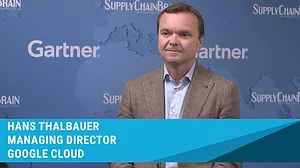
Regionalization of supply chains is becoming more of a reality in a post-outsourcing world, says Hans Thalbauer, managing director of supply chain and manufacturing with Google Cloud.