





As e-commerce and direct-to-consumer deliveries have skyrocketed during the pandemic, so have orders for large and bulky items, says Brenda Stoner, founder of Pickup. And so have the accompanying supply chain challenges.
Courtney Muller, president of Manifest, reviews Manifest 2022, the first-time gathering of logistics industry leaders and innovators held in Las Vegas January 25-27, and offers a peek into next year's event.
A discussion about the key role that supply chains play in fighting climate change and ensuring sustainability in their operations, with two analysts from Accenture: Kris Timmermans, senior managing director of strategy consulting and supply chain and operations lead, and Matias Pollmann-Larsen, sustainability lead for supply chain and operations.
Interest in supply chain and logistics technology is on the increase and will continue to grow, says Alex Yeager, senior vice president of Redwood Logistics.
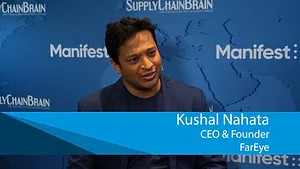
Speed and accuracy of delivery enhance the customer experience, says Kushal Nahata, chief executive officer and founder of FarEye. Visibility is what ties it all together.
Juan Cazorla, head of the Transportation and Logistics Specialized Industry Group of Regions Bank, offers both a short-term and long-term outlook for the transportation and logistics industry.
JP Wiggins, vice president of logistics for 3Gtms, describes how shippers and brokers can meet and overcome transportation obstacles and driver shortages.
Mark Pilkington, author of the new book Retail Recovery: How Creative Retailers Are Winning in Their Post-Apocalyptic World, describes the “new normal” of an industry undergoing the shift to a multi-channel model, one that’s radically transforming the relationship between sellers and buyers.
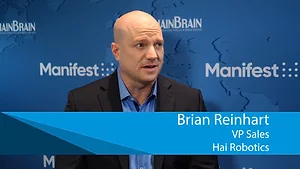
Brian Reinhart, vice president-sales U.S. with Hai Robotics, details the major trends that are impelling distribution operations to embrace automation solutions.
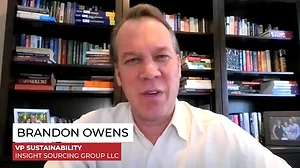
Brandon Owens, vice president sustainability with Insight Sourcing Group, describes the challenge of meeting environmental, social and governance (ESG) requirements in global supply chains, especially with regard to measuring the carbon emissions of independent vendors and suppliers.