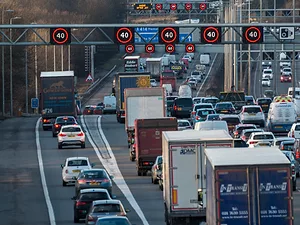
Prime Minister Boris Johnson said he won’t fall back on immigration to solve the U.K.’s truck driver shortage, as he presented supply chain troubles that have left supermarket shelves bare and gas stations dry as a “period of adjustment” in the wake of Brexit and the pandemic.
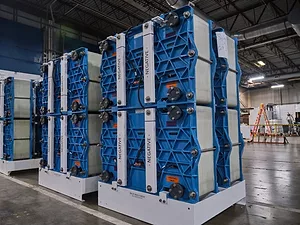
The world’s electric grids are creaking under the pressure of volatile fossil-fuel prices and the imperative of weaning the world off polluting energy sources. A solution may be at hand, thanks to an innovative battery that’s a cheaper alternative to lithium-ion technology.
As automakers scramble to make electric vehicles with longer ranges and speedier charging times, the chip industry has a message for them: You’re doing it wrong.
The U.S. and the European Union agreed to work together to shape the rules and standards around crucial technologies and coordinate their approaches to key trade issues at an inaugural meeting of a new cooperation body.
China’s current energy crisis can be traced back in part to a legal amendment targeting miners that garnered little notice when it went into effect in March.
From high-class problems to difficulties finding life’s necessities, the pandemic has convulsed global supply chains on such a scale that few industries, socio-economic classes or regions are immune.
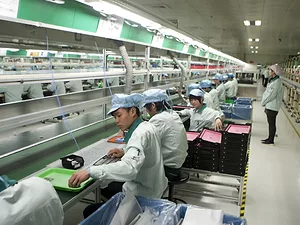
China’s energy crisis is shaping up as the latest shock to global supply chains as factories in the world’s biggest exporter are forced to conserve energy by curbing production.
The U.K. wants to issue visas for truckers to ease a shortage that’s led to gasoline stations running dry and hit food supply chains. The hard part could be persuading drivers from eastern Europe, the biggest pool of labor in recent years, to come back.
Ford Motor Co. and South Korea’s SK Innovation Co. plan to spend $11.4 billion to construct three battery factories and an assembly plant for electric F-Series pickup trucks in Tennessee and Kentucky, the biggest investment in the U.S. automaker’s history.