RSS
RSS.webp?height=100&t=1782792122&width=150 "005_veteran_winemaker_gallo_embarks_on_an_ai_journey_v2-(540p).jpg")
 Time again for what has proved to be the most popular event hosted by the San Francisco Roundtable of the Council of Supply Chain Management Professionals. For the third year in a row, the Roundtable assembled an after-dinner panel of supply-chain executives, who hazarded their predictions for the coming year and beyond. The twist: they received immediate feedback from the audience and fellow panelists, who were invited to explain why they agreed or disagreed with the prognosticators. (We old-timers used to call this a discussion, or even a debate. Now it's considered "interactive.")
Here, then, is what five experts (one of them represented by a proxy) believe the near future holds for supply-chain management and the economy in general.
Prediction: The early part of 2012 will be a "slight deflationary period," during which consumer demand will be slow to return and cash will still be king, believes Mark Buck, global supply chain and procurement leader with Bio-Rad Laboratories, Inc. (Buck's views were presented by Marty McMahon, managing director of technology and innovation with executive search firm Fleming Martin LLC. Buck was prevented from attending by a minor auto accident on his way to the dinner - an event that he didn't predict.) Manufacturers will see lower prices for key components, Buck added, although real recovery must await the return of demand later in the year.
Response: Jim Miller, vice president of worldwide operations with Google, pointed out that the current state of the economy is pretty much what it was a year ago, and shows little sign of improvement. "There's a lot of trepidation in the supply chain," he said. "Nobody is willing to make full bets." On the contrary, faced with stagnant demand, transportation providers are removing capacity from the market in order to bump up rates. Laura Wilkin, divisional vice president of supply chain with Wal-Mart Stores, Inc., took issue with Buck's prediction about falling component prices. She sees costs as continuing to climb, driven by increases in wages in Asia, raw materials and fuel. There was also plenty of disagreement with Buck among audience members, some of whom stated the belief that economic stagnation will continue at least through the coming year.
Prediction: Wilkin foresees a "blurring of channels" among retailers with both online and brick-and-mortar operations. Those with physical stores will become more sophisticated in how they utilize their resources. Wal-Mart, for example, is offering free shipping on items ordered online and picked up at a store. Buyers can also reserve store stock online. E-tailers, meanwhile, must find ways to leverage their infrastructure better. They face the prospect of having to charge sales tax, stripping them of a major competitive advantage over store-based merchandisers. At the same time, they will be challenged by excess capacity. Amazon.com, which has revised its fourth-quarter earnings forecast sharply downward, is building 17 new distribution centers over roughly a 12-month period. "That's an awful lot of capacity sitting out there that's idle for three-quarters of a year," said Wilkin. She recalled another online merchandiser that invested in a large number of DCs. "Their name was Webvan."
Response: Maybe Wal-Mart can successfully offer creative incentives that combine online and store resources, but others? "I can't see any of the places where I shop being able to pull this off," said McMahon (speaking, in this instance, for himself). "There will probably be a lot of losers." Audience member Eric Sargeson, who oversees supply-chain risk management within AT&T's Global Business & Operations Sourcing function, said Amazon will also be looking for creative ways to serve customers, through lockers and FedEx locations.
Prediction: Miller reiterated his prediction from last year that China will become a less attractive source for low-cost manufacturing. With an eye toward better risk management, global companies are diversifying their supply bases, in some cases reestablishing manufacturing capacity in the U.S. China, meanwhile, is making it even tougher on local business by forcing plants to move to remote locations inland, away from congested coastal cities. Miller said global companies will move away from centralized manufacturing, in favor of regional production models that are driven by the rising cost of fuel.
Response: Kerry McCracken, vice president of business solutions with contract manufacturer Flextronics, disagreed. "China will always be there," she said. "It will still be the answer." Manufacturers will continue to be drawn to China in part because of emerging consumer markets in Northeast and Southeast Asia. "They aren't going to build in the U.S. for that." There was also dissension in the audience, with some saying that cheap-labor operations might move away, but those requiring skilled and educated workers will continue to find China an attractive place for making products.
Prediction: Companies are going to get better at executing risk-mitigation strategies, said McCracken. Recent catastrophes such as the Japanese earthquake and tsunami have made them hyper-aware of the need for alternative sources of supply. They are working to obtain a more comprehensive view of their supply chains, in order to understand exactly which suppliers and parts of the world present the greatest amount of risk. "It takes a while to pick up a factory and move it," McCracken said, adding that companies will respond to uncertainty by engaging in "a reactive inventory grab."
Response: There was little disagreement with McCracken's statement, although Ron Keith, chief executive officer of Riverwood Solutions, said companies will improve their reactivity through better planning, rather than amassing large amounts of inventory. Miller, in a subsequent prediction, said they won't get much better at quantitative risk management. The tools and sense of diligence simply aren't there, he said. Manufacturers scramble for solutions in the six months following a major disaster, then "go back to business as usual."
Prediction: Environmental and economic factors will force companies "to take Lean to the extreme," said Warner de Gooijer, business operations manager with Cisco Systems, Inc. They will be pumping up efforts to eliminate inventory and other forms of waste from multiple links in the supply chain, utilizing classic Lean techniques. A major driver is the economic crisis in Europe, particularly in Greece, which has resulted in a steep decline in consumer purchasing power. Business will be forced to respond by stripping inventories to the bare minimum.
Response: McCracken doesn't think so. "Companies have not got a clue as to how they would execute this stuff," she said. Typically, excess inventory gets pushed further up the supply chain, instead of being eliminated altogether. "Moving inventory ownership onto somebody else's books is not a supply-chain innovation," she said. The audience was evenly split, with some saying that companies won't cut costs until they're forced to.
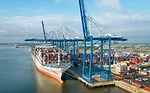
Prediction: Wilkin sees a continuing constriction of capacity, especially in the full-truckload sector, along with a shift of trans-Pacific import volumes from the U.S. West Coast to the Southeast, driven by expansion of the Panama Canal.
Response: Others in the audience felt that the Canal expansion will prove to be a "bust." That remains to be seen, but there's always the question of how successful ocean carriers will be in operating their giant new containerships, which are limited in the number of ports they can call. So far, the trend has been toward ever-larger vessels, but it has to stop somewhere.
Prediction: Call this an anti-prediction, because it's about what isn't happening. According to McCracken, "we haven't seen a significant supply-chain innovation in about 20 years.... Some folks can't even figure out how to set up an order electronically." Businesses are far from the goal of fully automating their relations with trading partners, she said.
Response: "There will always be leaders and laggards," commented Miller. "Leaders are in the minority."
My bold prediction: We will never run out of people willing to predict the future. Anyone care to disagree?
- Robert J. Bowman, SupplyChainBrain
Comment on This Article