RSS
RSS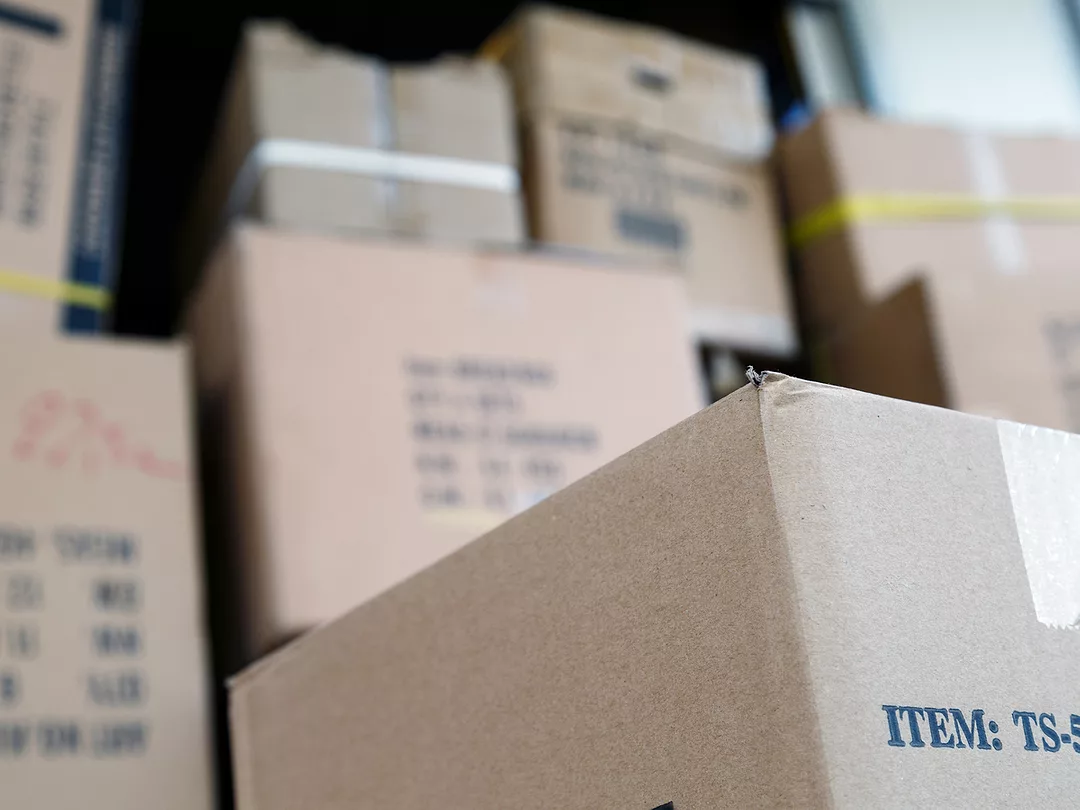

With all the recent attention paid to plastic and the damage that it’s wreaking on the environment, one might assume cardboard to be the acceptable “green” alternative. Think again.
Turns out the humble cardboard box carries its own set of environmental consequences, especially in the high-volume age of e-commerce.
The problem is that cardboard boxes were originally designed for use in parcel post, involving a manageable number of deliveries of a limited range of items, says Scott Gravelle, founder and chief executive officer of Attabotics, a provider of supply-chain automation systems.
Now, with the evolution of digital commerce, every retailer struggles to meet ever-higher consumer expectations. Even Amazon.com has invested heavily in parcel-post sortation technologies. The problem, says Gravelle, is that such systems were “designed to get cookies from Grandma at Christmas, not be the backbone of modern commerce.”
Obviously, some kind of sturdy box is called for, in order for goods to survive the “violence” of conveyor-based sortation. Yet the result is mountains of discarded cardboard lying outside homes and businesses, which generate a significant carbon footprint even if recycled.
About that recycling stage: It was a viable option when the tossed-out cardboard had somewhere to go. For many years, that place was mostly China, but it’s no longer accepting America’s waste in massive volumes for processing and reuse. And the U.S. lacks the infrastructure and economy for domestic recycling at the necessary scale. “When we were baling it and shipping it to Asia, we were sweeping the problem under the rug,” says Gravelle. “But that’s not happening anymore.”
The very act of delivering e-commerce orders within a day or two is a money loser for many retailers. (A $9 Amazon Prime order costs an average of $10 to fulfill, Gravelle notes.) Never mind the additional cost of taking back packaging and funneling it through a recycling stream. Bottom line, in a literal sense: “No one’s making money. The transportation of single items and packaging has made the cost of modern commerce for retailers very high.”
What’s needed is a wholesale rethinking of the way in which product is fulfilled and moved. Start with the propensity for shipping large amounts of air, in boxes that weren’t properly sized for their contents. Then there’s the larger question about whether the classic hub-and-spoke model of moving packages makes sense anymore. “FedEx has everything flown into a centralized hub,” says Gravelle. “That doesn’t support modern consumer behavior.”
He argues for a “distributed supply-chain ecosystem,” relying almost entirely on the use of reusable bins. Now combine that with a system built around the “micro-fulfillment” of goods from multiple locations, rather than a giant centralized warehouse.
The model dramatically lessens the cost of transportation to the consumer, as well the time required for processing by sortation-based systems. Packages destined for a particular community can be consolidated at a local mini-hub, from which drivers can deliver multiple orders. Location technology lets the buyer know when to expect a package, so that it’s not sitting unattended on the doorstep for hours.
Gravelle’s vision of a micro-fulfillment center relies heavily on robotics to sort orders and transfer them into reusable bins. There’s no need to keep huge stocks of a given item on hand; replenishment takes place by backfilling inventory over high-density transportation networks.
The size of the micro-fulfillment center can vary according to the needs of the local community. An Attabotics system in Toronto processes orders of medical supplies using just 500 reusable bins. In Los Angeles, by contrast, another center is scaled to support a service area of up to 500,000 people. In all cases, claims Gravelle, the system is using less than 15% of the space that would be required in a typical Amazon fulfillment center.
There’s a counter-trend of large distribution centers being built in urban areas, for faster delivery to consumers. A planned one-million-square-foot D.C. in the Bronx will support more than 10 million people in Manhattan and adjacent areas in New York City.
Attabotics’ systems take a different approach. They might support an operation of just 150,000 square feet, but even that space would be divided into five smaller centers that enable deliveries within an hour or less to the local population.
“Transportation in those highly dense markets still has a significant cost,” says Gravelle. “Amazon drops boxes on sidewalks and people come with carts to physically walk them where they need to go. That’s not an efficient solution.” The micro-fulfillment approach, by contrast, makes use of retail brick-and-mortar stores as sites from which orders can be shipped directly.
For the moment, Gravelle’s model seems best suited to areas of high population density. The idea is be within an hour’s drive of the consumer for the bulk of orders. Micro-fulfillment centers track well with the placement of shopping malls, which typically support between 200,000 and 500,000 people living within a relatively short distance. And grocery stores, often just a five- to 10-minute drive from tens of thousands of consumers, are ideal hubs for final-mile distribution.
Gravelle sees the micro-fulfillment model as an answer to both environmental concerns and the growing service demands of e-commerce buyers. Exactly how the system will evolve — whether it will favor home delivery or designated pickup locations, and how it will handle returns — remains to be seen. But retailers can’t go on forever using wasteful packaging materials and trying to force the flood of e-commerce through a very narrow pipe, all the while losing money on every order. Says Gravelle: “There’s going to have to be a shift in expectations.”