 RSS
RSS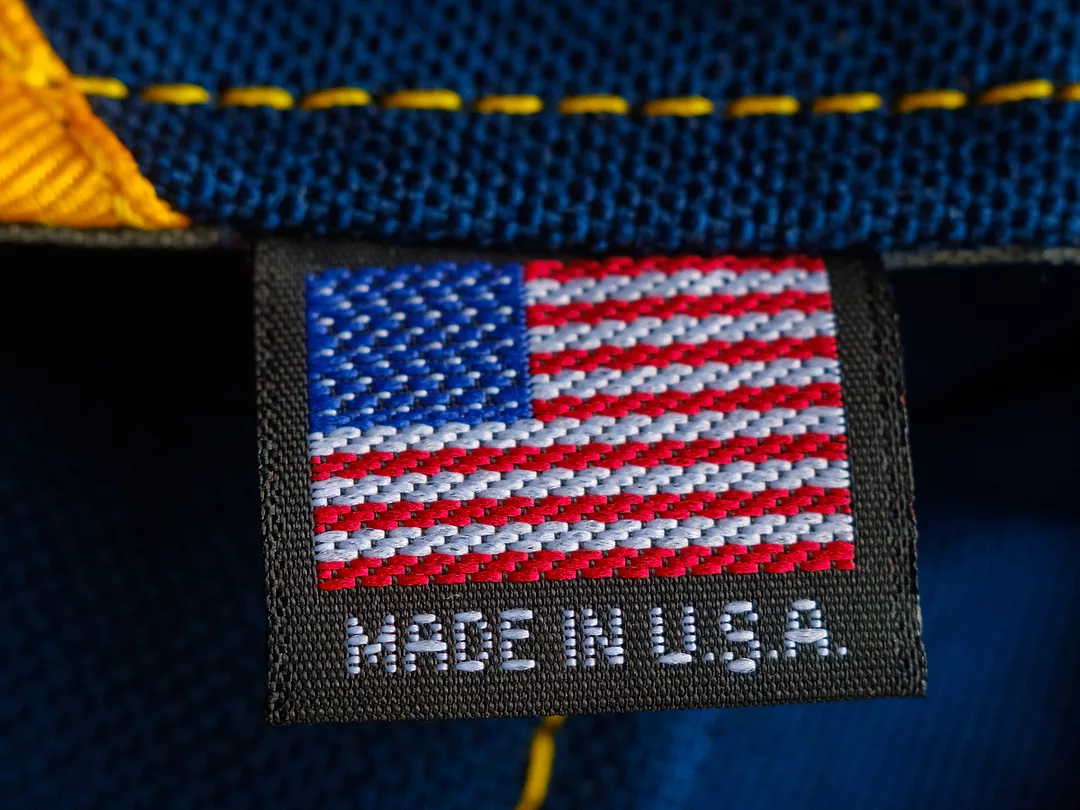
.webp?height=100&t=1784835632&width=150 "LSG26_LTAgentEdgeImage_DB-1313-1 (1).png")
In late March, the Federal Trade Commission (FTC) fined Williams-Sonoma $1 million for making overly broad and misleading U.S. origin claims about certain houseware and furniture products. Here's what we can learn from the FTC’s enforcement action — and practical advice for companies interested in making “Made in USA” and other U.S. origin claims in their advertising and labeling.
The “Made in USA” Standard
The FTC regulates U.S. origin claims in advertising and labeling pursuant to Section 5 of the FTC Act, which prohibits “unfair or deceptive acts or practices.” U.S. origin claims can be express (e.g., Made in USA” or “American-made”) or implied, which are context-specific and generally involve the use of U.S. symbols (such as flags) or references to U.S. locations.
Under FTC rules, an unqualified U.S. origin claim (such as “Made in USA”) must be substantiated by evidence that the product is “all or virtually all” made in the U.S. The term "all or virtually all" means that all significant parts and processing that go into the product must be of U.S. origin (i.e., the product may only contain a negligible amount of foreign content). In effect, this means that the final assembly or processing must take place in the U.S. Beyond that, the FTC will consider other factors, such as the extent to which the product’s total manufacturing costs are foreign origin, and the significance of any non-U.S.-origin content.
Most states defer to the FTC's "all or virtually all" standard when determining whether a U.S-origin claim is appropriate. The notable exception is California, which until recently prohibited the presence of any foreign components when making U.S. origin representations, forcing some companies to adopt two sets of labels: one for California and another for the rest of the country. In 2016, California relaxed its “Made in USA” law, but it still limits the presence of foreign components to no more than 5% of the final wholesale value of the manufactured product (or 10% if the manufacturer makes a showing that it cannot produce or source the component within the U.S. for reasons other than cost).
Historic Enforcement of FTC Claims
Section 5 of the FTC Act authorizes the FTC to issue civil penalties to companies for false or misleading U.S. origin claims. As a matter of practice, however, the FTC has only seldomly issued fines, and when it has, it has limited enforcement to repeat offenders.
In recent years, the FTC has settled charges with companies following a cease-and-desist, “no-fault, no-money” approach. For example, in 2018, the FTC ordered three companies that made false U.S. origin claims involving hockey pucks, military-style backpacks and mattresses to stop marketing the products as U.S.-made. None was fined or forced to admit fault.
The weak enforcement of Made in USA laws has prompted lawmakers, industry groups, and even an FTC commissioner to call on the FTC to do more to protect the authenticity of Made in USA claims, by seeking monetary relief, requiring violators to provide notice to customers, and other tailored remedies.
The Williams-Sonoma Settlement
The FTC investigated Williams-Sonoma in 2018 after receiving reports that the company claimed in ads and promotional materials for Pottery Barn-branded mattress pads that those products were “Crafted in America from local and imported materials,” when in fact the pads were made in China. Williams-Sonoma quickly remediated the issue by changing the country-of-origin information on the mattress pads, and agreed to undertake a comprehensive review of its origin verification processes. As a result, the FTC closed out the investigation without issuing a monetary penalty.
However, in 2019, the FTC received new reports indicating that Williams-Sonoma may have made misleading claims that certain bakeware and upholstered furniture products, including raw materials and subcomponents, were all or virtually all made in the U.S. This time, in addition to requiring Williams-Sonoma, its officers, and company representatives to cease and desist from making unsubstantiated U.S. origin claims, the FTC fined Williams-Sonoma $1 million.
Takeaways for Companies
- Consider qualified U.S.-origin claims. Given the very high standard applicable to unqualified U.S.-origin claims, and the increasingly real risk of financial penalties for non-compliance, the use of qualified U.S.-origin claims is sometimes more appropriate and worth considering. Examples of permissible qualified claims include: (a) claims noting the existence of foreign content (“Made in USA of U.S. and Turkish parts”); (b) claims specifying the amount of U.S. content (“50% U.S. content”); and (c) claims indicating the presence of imported parts (e.g., “Made in USA from imported cotton”).
- The Williams-Sonoma settlement paves the way for greater FTC enforcement. By fining Williams-Sonoma, the FTC signaled that it is willing to exercise its civil penalty authority to protect the “Made in USA” label after several years of inaction. The $1 million fine is meaningful because it concerns a publicly traded company and the penalty amount is higher than in previous cases. We expect that the real threat of penalties will encourage others to denounce false or misleading U.S. origin claims, and that the FTC will continue to fine repeat offenders. What is less clear is whether the mounting pressure to do something will prompt the FTC to seek civil penalties or pursue other remedies against first-time offenders.
- False or misleading U.S.-origin claims can have consequences beyond FTC enforcement. For example, companies accused of making false or misleading U.S.-origin claims have been forced to defend putative class action lawsuits brought under state laws. Those suits have often resulted in costly settlements and remedial action plans. In addition, companies that sell products to both the U.S. government and the general public must be careful to ensure that their advertising practices do not call into question the U.S. origin certifications provided to the U.S. government. To mitigate these risks, companies should make it a habit of memorializing the substantiation for any U.S. origin claim.
Richard Mojica and Alex Sarria are members, and Nicole Gokcebay is an associate, with Miller & Chevalier.


.webp?height=100&t=1784491177&width=150 "030_ai_in_the_warehouse-_real_use_cases_v1-(540p).png")


