• Advertise
  • Contact Us
  • Supplier Directory
  • SCB YouTube
  • About Us
  • Login
  • Subscribe
  • Logout
  • My Profile
  • LOGISTICS
    • Air Cargo
    • All Logistics
    • Facility Location Planning
    • Freight Forwarding/Customs Brokerage
    • Global Gateways
    • Global Logistics
    • Last Mile Delivery
    • Logistics Outsourcing
    • LTL/Truckload Services
    • Ocean Transportation
    • Parcel & Express
    • Rail & Intermodal
    • Reverse Logistics
    • Service Parts Management
    • Transportation & Distribution
  • TECHNOLOGY
    • All Technology
    • Artificial Intelligence
    • Cloud & On-Demand Systems
    • Data Management (Big Data/IoT/Blockchain)
    • ERP & Enterprise Systems
    • Forecasting & Demand Planning
    • Global Trade Management
    • Inventory Planning/ Optimization
    • Product Lifecycle Management
    • Robotics
    • Sales & Operations Planning
    • SC Finance & Revenue Management
    • SC Planning & Optimization
    • Supply Chain Visibility
    • Transportation Management
  • GENERAL SCM
    • Business Strategy Alignment
    • Customer Relationship Management
    • Education & Professional Development
    • Global Supply Chain Management
    • Global Trade & Economics
    • Green Energy
    • HR & Labor Management
    • Quality & Metrics
    • Regulation & Compliance
    • Sourcing/Procurement/SRM
    • SC Security & Risk Mgmt
    • Supply Chains in Crisis
    • Sustainability & Corporate Social Responsibility
  • WAREHOUSING
    • All Warehouse Services
    • Conveyors & Sortation
    • Lift Trucks & AGVs
    • Order Management & Fulfillment
    • Packaging
    • RFID, Barcode, Mobility & Voice
    • Warehouse Automation
    • Warehouse Management Systems
  • INDUSTRIES
    • Aerospace & Defense
    • Apparel
    • Automotive
    • Chemicals & Energy
    • Consumer Packaged Goods
    • E-Commerce/Omni-Channel
    • Food & Beverage
    • Healthcare
    • High-Tech/Electronics
    • Industrial Manufacturing
    • Pharmaceutical/Biotech
    • Retail
  • THINK TANK
  • WEBINARS
    • On-Demand Webinars
    • Upcoming Webinars
    • Webinar Library
  • PODCASTS
  • WHITEPAPERS
  • VIDEOS
Home » Blogs » Think Tank » The Hidden Greenwashing Behind Recycled Plastic

Think Tank
Think Tank RSS FeedRSS

The Hidden Greenwashing Behind Recycled Plastic

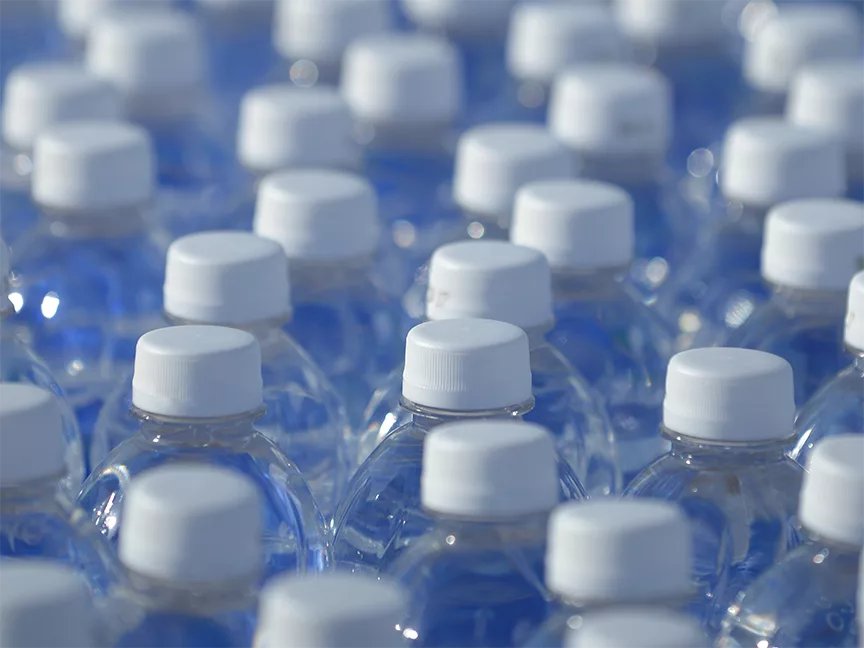
plastic bottles
Rows of plastic water bottles. Photo: Getty.
March 29, 2022
Anaita Sarkar, SCB Contributor

In an age of internet-savvy consumers, companies have employed increasingly sophisticated greenwashing tactics to avoid taking meaningful environmental action, while reaping the reputational benefits of appearing eco-friendly. But it’s only a matter of time before consumer knowledge catches up with industry practices. Some materials will continue to pose a problem in the supply chain no matter what is done with them.

Plastics industry, I’m talking about you.

One of the most common ways that businesses practice greenwashing is by focusing on one “sustainable” aspect of the product while ignoring the rest of the product’s lifecycle. Recycled plastic is one of those things that we think will have a positive effect, but that doesn’t fully address the impact of all plastics in the supply chain.

The truth is that every time plastics are recycled, their quality degrades, thus limiting their capacity to be made into anything useful. According to one investigation into the limits of the plastics recycling industry, five of the seven main types of plastic hardly ever get recycled due to cost constraints and the complicated processes required to do so. And that’s not even factoring in the toxic stream of carcinogens and pollutants that makes plastics recycling even more undesirable.

We all know that plastics pollution is a huge issue that comes at a cost to our land, biodiversity and collective wellbeing. According to McKinsey data, the U.S. consumes a whopping 37 million tons of plastic every year, and of this 16 million tons are food service-related single plastics like takeout containers and cutlery. This equates to about 100 pounds per person per year of food-related plastics alone.

Plastics recycling, with its associated collateral damage in terms of carbon emissions, conventional energy use and toxic binding agents, is just another Band-Aid solution. Even higher-grade plastics like polyethylene terephthalate (PET), used for items like single-use water bottles, and high-density polyethylene (HDPE), used in plastic bags and detergent bottles, reach a point of diminishing returns when it comes to recycling.

In parts of the fashion industry, where increasing amounts of plastic are being repurposed into clothing, plastics recycling is acknowledged to be an imperfect solution due to limitations around end-of-life recyclability, sustainability of production and the difficulties of keeping plastic microfibres out of the environment. “We really try to stay away from the term ‘sustainable garment,’ because that implies that we’ve reached the destination,” said Gap Inc. director of product sustainability and product circularity Alice Hartley. “We really haven’t — it’s a continuous journey.”

According to the World Wildlife Fund, a single plastic cup or water bottle takes approximately 450 years to break down. At the end of its life, a plastic product is likely to go straight to a landfill where it will outlast our lifespans and those of our children and grandchildren. It makes no difference how many times a plastic product is recycled. Sooner or later its end destination will be the same place where most plastics go.

The groundswell of eco-conscious consumers has increased in the wake of the devastating impact of pollution. A 2015 Nielsen poll showed that 66% of global consumers are willing to fork out extra cash for products that are environmentally sustainable. All over the world, sustainability concerns are driving consumer purchasing decisions. By far the most popular way consumers are supporting the environment is by cutting down on single-use plastics.

Greenwashing tactics like using terms that are vague and unprovable make it harder for consumers to make an informed choice in their purchasing decisions, and will ultimately hurt the businesses that employ them. Common offenses include the use of labels such as “green,” “sustainable,” “eco-friendly” and “biodegradable” without any transparency around how the biodegradable process actually works.

Empty rhetoric, slogans, misleading imagery, general unproven or unprovable claims, blatant deployment of the color green and the use of a narrow set of criteria to label a product as eco-friendly round out the list of manipulative practices aimed at winning over consumer hearts and dollars.

So far, only eight U.S. states have banned single-use plastic bags, a disappointing result for the world’s second biggest plastic waste generator, but that could soon change as campaigners continue to pressure legislators into taking more action. Beyond the regulatory framework, there’s an opportunity for businesses to lead the plastic-free revolution and find real solutions, instead of paying lip service to the message of sustainability. Our environment is too precious for us to do otherwise.

Anaita Sarkar is co-founder of Hero Packaging.

General SCM Warehousing Regulation & Compliance Sustainability & Corporate Social Responsibility Packaging

RELATED CONTENT

RELATED VIDEOS

Subscribe to our Daily Newsletter!

Timely, incisive articles delivered directly to your inbox.

Featured Product

Popular Stories

  • 005_veteran_winemaker_gallo_embarks_on_an_ai_journey_v2-(540p).jpg

    Watch: Veteran Winemaker Gallo Embarks on an AI Journey

    Artificial Intelligence
  • SCB_Q326_Made4Net_Top5_THUMB.jpg

    Five Costly WMS Selection Mistakes Warehouse Leaders Keep Making

    Logistics
  • Stacks of blue shipping containers in a shipyard

    Why 2026 is Testing Global Supply Chains Like Never Before

    Global Supply Chain Management
  • A container ship with cargo docked at the Port of Charleston

    Port of Charleston to Pause Operations at Leatherman Terminal

    Global Gateways
  • US Treasury Check with Tariff Stamp

    Will Trump’s New Tariffs Wipe Out Importers’ IEEPA Refunds?

    Global Trade & Economics

Digital Edition

2026 esg cover main scb q2 2026 cover

SupplyChainBrain 2026 ESG Guide: ESG — The Supply Chain’s Biggest Secret

VIEW THE LATEST ISSUE

Case Studies

  • Recycled Tagging Fasteners: Small Changes Make a Big Impact

  • A GRAPHIC SHOWING MULTIPLE FORMS OF SHIPPING, WITH A HUMAN STANDING AT THE CENTER, TOUCHING A SYMBOLIC MAP OF THE WORLD

    Enhancing High-Value Electronics Shipment Security with Tive's Real-Time Tracking

  • A GRAPHIC OF INTERLACING HONEYCOMBED ELEMENTS REPRESENTING GLOBAL BUSINESS TRANSACTIONS

    Moving Robots Site-to-Site

  • JLL Finds Perfect Warehouse Location, Leading to $15M Grant for Startup

  • Robots Speed Fulfillment to Help Apparel Company Scale for Growth

Visit Our Sponsors

4flow Arkieva Blue Yonder
Carton Cloud CoEnterprise Dassault
Duravant E2Open EPG
General Logistics Systems GEP Hy-Tek
iGPS Korber Lyngsoe
Procurability Quinyx SAP
Sikick Staples Systech
S&P Global Mobility TADA Tive
TransImpact US Bank Werner Enterprises
WSI
  • More From SCB
    • Featured Content
    • Video Library
    • Think Tank Blog
    • SupplyChainBrain Podcast
    • Whitepapers
    • On-Demand Webinars
    • Upcoming Webinars
  • Digital Offerings
    • Digital Issue
    • Subscribe
    • Manage Email Preferences
    • Newsletters
  • Resources
    • Events Calendar
    • 2026 Event Coverage
    • SCB's Great Supply Chain Partners
    • Supplier Directory
    • Case Study Showcase
    • Supply Chain Innovation Awards
    • 100 Great Partners Form
  • SCB Corporate
    • Advertise on SCB.COM
    • About Us
    • Privacy Policy
    • Contact Us
    • Data Sharing Opt-Out

All content copyright ©2026 Keller International Publishing Corp All rights reserved. No reproduction, transmission or display is permitted without the written permissions of Keller International Publishing Corp

Design, CMS, Hosting & Web Development :: ePublishing