• Advertise
  • Contact Us
  • Supplier Directory
  • SCB YouTube
  • About Us
  • Login
  • Subscribe
  • Logout
  • My Profile
  • LOGISTICS
    • Air Cargo
    • All Logistics
    • Facility Location Planning
    • Freight Forwarding/Customs Brokerage
    • Global Gateways
    • Global Logistics
    • Last Mile Delivery
    • Logistics Outsourcing
    • LTL/Truckload Services
    • Ocean Transportation
    • Parcel & Express
    • Rail & Intermodal
    • Reverse Logistics
    • Service Parts Management
    • Transportation & Distribution
  • TECHNOLOGY
    • All Technology
    • Artificial Intelligence
    • Cloud & On-Demand Systems
    • Data Management (Big Data/IoT/Blockchain)
    • ERP & Enterprise Systems
    • Forecasting & Demand Planning
    • Global Trade Management
    • Inventory Planning/ Optimization
    • Product Lifecycle Management
    • Robotics
    • Sales & Operations Planning
    • SC Finance & Revenue Management
    • SC Planning & Optimization
    • Supply Chain Visibility
    • Transportation Management
  • GENERAL SCM
    • Business Strategy Alignment
    • Customer Relationship Management
    • Education & Professional Development
    • Global Supply Chain Management
    • Global Trade & Economics
    • Green Energy
    • HR & Labor Management
    • Quality & Metrics
    • Regulation & Compliance
    • Sourcing/Procurement/SRM
    • SC Security & Risk Mgmt
    • Supply Chains in Crisis
    • Sustainability & Corporate Social Responsibility
  • WAREHOUSING
    • All Warehouse Services
    • Conveyors & Sortation
    • Lift Trucks & AGVs
    • Order Management & Fulfillment
    • Packaging
    • RFID, Barcode, Mobility & Voice
    • Warehouse Automation
    • Warehouse Management Systems
  • INDUSTRIES
    • Aerospace & Defense
    • Apparel
    • Automotive
    • Chemicals & Energy
    • Consumer Packaged Goods
    • E-Commerce/Omni-Channel
    • Food & Beverage
    • Healthcare
    • High-Tech/Electronics
    • Industrial Manufacturing
    • Pharmaceutical/Biotech
    • Retail
  • THINK TANK
  • WEBINARS
    • On-Demand Webinars
    • Upcoming Webinars
    • Webinar Library
  • PODCASTS
  • WHITEPAPERS
  • VIDEOS
Home » Blogs » Think Tank » What About the Overstock Problem?

Think Tank
Think Tank RSS FeedRSS

What About the Overstock Problem?

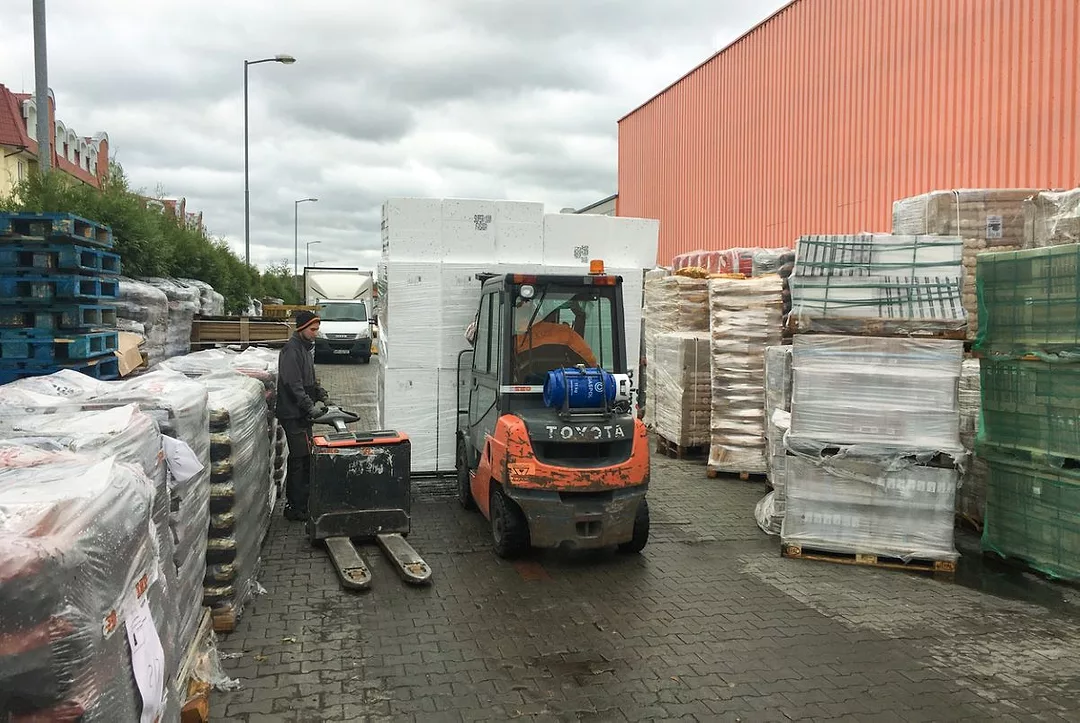
Two fork lifts pass each other unloading merchandise in an overcrowded storage area

Photo: iStock.com/Julian J Rossig

May 2, 2023
Troy Prothero, SCB Contributor

Over the past three years, retailers have been wrestling with product shortages and increasingly painful out-of-stock issues. More recently, however, in the face of inflation, they’ve been struggling with overstocks, made worse by soaring food prices and tight financial times.

According to the most recent Consumer Price Index from the Bureau of Labor Statistics, food prices increased last month in nearly every grocery category. The U.S. Department of Agriculture said food prices are expected to increase by nearly 9% this year, well above the decades-long historical average.

Retailers need to prepare for excess inventory, and the result could be dramatic. Last summer, Walmart reported a 32% leap in inventory that drastically slowed the supply chain and left some stores with the dreaded image of boxes piled high in corners.

To get ahead of the overstock problem, retailers must have a reliable process in place to manage inventory — and automation could be a major advantage.

Consumers, meanwhile, are finding ways to deal with higher costs, including buying more bulk-sized value packs, items on promotion and private-label goods at a lower price than national brands. According to SymphonyAI Retail CPG’s analysis of 630 million transactions from 60 million shoppers in Europe, the U.S. and Asia, households seeking private label as an alternative increased from 28.7% in the first quarter of 2022 to nearly 30% in the fourth quarter of 2022. The data also found that:

  • Nearly 85% of households purchased at least one item on promotion in Q4 of 2022, up from nearly 83% in Q1 2022, and
  • The number of households deemed “price-sensitive” — those who often seek to save with promotions — increased from 26.1% in Q1 2022 to 28% in Q4 2022.

From the national brand side, in its recent quarterly report, Mondelez International executives said inflation is continuing to increase food prices in the U.S. and Europe, giving rise to concerns about how consumers will shop its products.

This is all to say that consumers with money-saving habits could slow their buying, focusing on basic needs and not splurging. Retailers that don’t accurately understand their customers’ needs, and that fail to optimize assortments and monitor inventory, could be stuck with excess product.
 
To get out in front of the overstock problem, artificial intelligence and machine learning can make retailers smarter, significantly reducing overstocks and out-of-stocks. Smart automation is a key driver in multiple areas, including:

Demand forecasting. Retailers can replace slower, manual processes for predicting stock and shelf planning by implementing AI-driven demand forecasting, which is also significantly more accurate than traditional statistical modelling. AI can factor in external data sources such as weather forecasts, seasonal increases on items and any contextual data that highlights unusual outliers or activities that could impact demand and, therefore, inventory planning. Machine learning can rapidly discover what shoppers are buying to save money, such as pack sizes and value brands, greatly increasing visibility for the retailer.

Allocation insight. A fully connected, automated supply chain can also reveal insights into allocation, which is an imperative for overstock issues. The connected system doesn’t work in silos but instead manages a product’s entire lifecycle, whether a product is inbound to stores or outbound to a distribution center. Teams can make decisions all along the way, such as altering the flow of products from one or several locations. Retailers can also gain visibility on a store-by-store basis, enabling direct-store delivery, as well as movements back to a distribution center and supplier.

Replenishment planning. Mitigating the possibility of too much versus not enough product is a constant balance for retailers, especially when it comes to fresh and prepared foods. Automated supply chains provide retailers insight into weighted inventory coming to store kitchens, which can impact recipe plans. What’s more, food retailers are dealing with hundreds of suppliers, and working off legacy-based systems can cause gaps in fresh food product visibility. In the end, food retailers that aren’t monitoring product orders close enough will be wasting food and dollars.

If inflation continues to rise, consumers will continue to look for new ways to shop, and that could include buying only the basics. Retailers need to be on an overstock watch, as some product lines could be stuck in the backroom.

Too much stock can force retailers to re-strategize ways to get products off the shelf and out of their stores. A bottleneck of inventory can be just as worrisome as a drought, and to respond, retailers need a supply chain built on insights and high-level data to maintain consistency.

Troy Prothero is senior vice president of product management, supply chain solutions, with SymphonyAI Retail CPG.

Inventory Planning/ Optimization Consumer Packaged Goods Food & Beverage Retail

RELATED CONTENT

RELATED VIDEOS

Subscribe to our Daily Newsletter!

Timely, incisive articles delivered directly to your inbox.

Featured Product

Popular Stories

  • 014_how_ai_is_transforming_the_transportation_back_office_v1-(540p).jpg

    Watch: How AI Is Transforming the Transportation Back Office

    Artificial Intelligence
  • A blue shipping container with an image of the EU flag on it, being held by a crane above the ground and surrounded by other multi-colored containers

    In Europe, Supply Chain Eligibility Is About to Replace Efficiency

    Global Supply Chain Management
  • GIST-webinar-SAP.png

    Delivering Flawless Field Service with Predictive Insights and AI

  • ROBOTIC ARMS PERFORM ARC WELDING ON A PIECE OF ELECTRIC MACHINERY

    U.S. Electrical Manufacturers Want Fewer Tariffs, More Investment in Domestic Production

    Global Trade & Economics
  • 013_what's_really_needed_for_'lights-out'_capability_v1-(540p).png

    Watch: What’s Really Needed for Lights-Out Capability

    Artificial Intelligence

Digital Edition

2026 esg cover main scb q2 2026 cover

SupplyChainBrain 2026 ESG Guide: ESG — The Supply Chain’s Biggest Secret

VIEW THE LATEST ISSUE

Case Studies

  • Recycled Tagging Fasteners: Small Changes Make a Big Impact

  • A GRAPHIC SHOWING MULTIPLE FORMS OF SHIPPING, WITH A HUMAN STANDING AT THE CENTER, TOUCHING A SYMBOLIC MAP OF THE WORLD

    Enhancing High-Value Electronics Shipment Security with Tive's Real-Time Tracking

  • A GRAPHIC OF INTERLACING HONEYCOMBED ELEMENTS REPRESENTING GLOBAL BUSINESS TRANSACTIONS

    Moving Robots Site-to-Site

  • JLL Finds Perfect Warehouse Location, Leading to $15M Grant for Startup

  • Robots Speed Fulfillment to Help Apparel Company Scale for Growth

Visit Our Sponsors

4flow Arkieva AutoStore
Blue Yonder Carton Cloud CoEnterprise
Dassault Descartes Duravant
E2Open EPG General Logistics Systems
GEP Hy-Tek iGPS
Korber Lyngsoe Odyssey Logistics
PeakAI Procurability Quinyx
SAP Sikick Staples
S&P Global Mobility Systech TADA
Tive TransImpact US Bank
Werner Enterprises WSI
  • More From SCB
    • Featured Content
    • Video Library
    • Think Tank Blog
    • SupplyChainBrain Podcast
    • Whitepapers
    • On-Demand Webinars
    • Upcoming Webinars
  • Digital Offerings
    • Digital Issue
    • Subscribe
    • Manage Email Preferences
    • Newsletters
  • Resources
    • Events Calendar
    • 2026 Event Coverage
    • SCB's Great Supply Chain Partners
    • Supplier Directory
    • Case Study Showcase
    • Supply Chain Innovation Awards
    • 100 Great Partners Form
  • SCB Corporate
    • Advertise on SCB.COM
    • About Us
    • Privacy Policy
    • Contact Us
    • Data Sharing Opt-Out

All content copyright ©2026 Keller International Publishing Corp All rights reserved. No reproduction, transmission or display is permitted without the written permissions of Keller International Publishing Corp

Design, CMS, Hosting & Web Development :: ePublishing
