
• Advertise
  • Contact Us
  • Supplier Directory
  • SCB YouTube
  • About Us
  • Login
  • Subscribe
  • Logout
  • My Profile
  • LOGISTICS
    • Air Cargo
    • All Logistics
    • Facility Location Planning
    • Freight Forwarding/Customs Brokerage
    • Global Gateways
    • Global Logistics
    • Last Mile Delivery
    • Logistics Outsourcing
    • LTL/Truckload Services
    • Ocean Transportation
    • Parcel & Express
    • Rail & Intermodal
    • Reverse Logistics
    • Service Parts Management
    • Transportation & Distribution
  • TECHNOLOGY
    • All Technology
    • Artificial Intelligence
    • Cloud & On-Demand Systems
    • Data Management (Big Data/IoT/Blockchain)
    • ERP & Enterprise Systems
    • Forecasting & Demand Planning
    • Global Trade Management
    • Inventory Planning/ Optimization
    • Product Lifecycle Management
    • Robotics
    • Sales & Operations Planning
    • SC Finance & Revenue Management
    • SC Planning & Optimization
    • Supply Chain Visibility
    • Transportation Management
  • GENERAL SCM
    • Business Strategy Alignment
    • Customer Relationship Management
    • Education & Professional Development
    • Global Supply Chain Management
    • Global Trade & Economics
    • Green Energy
    • HR & Labor Management
    • Quality & Metrics
    • Regulation & Compliance
    • Sourcing/Procurement/SRM
    • SC Security & Risk Mgmt
    • Supply Chains in Crisis
    • Sustainability & Corporate Social Responsibility
  • WAREHOUSING
    • All Warehouse Services
    • Conveyors & Sortation
    • Lift Trucks & AGVs
    • Order Management & Fulfillment
    • Packaging
    • RFID, Barcode, Mobility & Voice
    • Warehouse Automation
    • Warehouse Management Systems
  • INDUSTRIES
    • Aerospace & Defense
    • Apparel
    • Automotive
    • Chemicals & Energy
    • Consumer Packaged Goods
    • E-Commerce/Omni-Channel
    • Food & Beverage
    • Healthcare
    • High-Tech/Electronics
    • Industrial Manufacturing
    • Pharmaceutical/Biotech
    • Retail
  • THINK TANK
  • WEBINARS
    • On-Demand Webinars
    • Upcoming Webinars
    • Webinar Library
  • PODCASTS
  • WHITEPAPERS
  • VIDEOS
Home » Blogs » Think Tank » In the Transition to Electric Vehicles, Components Sourcing Will Be a Growing Challenge

Think Tank
Think Tank RSS FeedRSS

In the Transition to Electric Vehicles, Components Sourcing Will Be a Growing Challenge

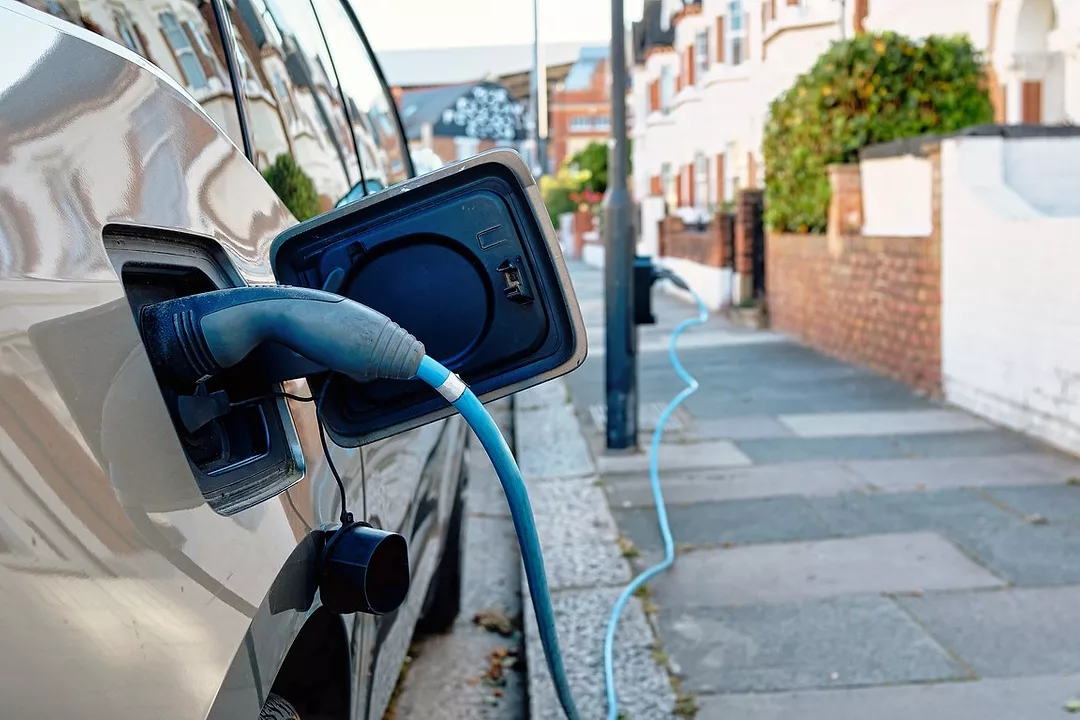
An electric car charges on a sunny day on a London street.

Photo: iStock.com/Angel Santana Garcia

April 12, 2024
Roger Brereton, SCB Contributor

Global momentum toward sustainable transportation, propelled by government initiatives and consumer demand, has catalyzed the rise of electric vehicles. In the U.S. under the Biden Administration, there has been a 70% increase in publicly available charging ports. 

The trend is no longer confined to the consumer automotive sector; the commercial vehicle sector is following suit. The recent Busworld exhibition in Brussels bore testament to the transformation, with a conspicuous absence of diesel vehicles among the 200 buses that were showcased. Instead, the emphasis was on electric and hydrogen-powered alternatives. This change is all the more remarkable, given that the size and weight of these vehicles make them less suitable for electrification.  

While welcome from a sustainability perspective, the shift creates challenges for companies that supply traditional components and the original equipment manufacturers that rely on them. The intricate components that make up the internal combustion engine are rendered obsolete in the EV domain. For instance, while an electric powertrain typically has a mere 20 parts, its ICE counterpart has around 2,000.

Companies like Dana Inc., a stalwart in axle and driveshaft manufacturing, are redirecting their focus toward electric vehicles and associated components. In a recent feature for the New York Times, the company’s chief executive officer said the choice was between adaptation and obsolescence: “Sooner or later, you’d be a melting iceberg.”

Additional repercussions can be seen in the labor market. Forecasts indicate a looming specter of job losses, with the automotive sector already feeling the impact. The Center of Automotive Management in Germany projects a 20% workforce decrease among suppliers due to the shift toward EVs.

A recent report from McKinsey & Company underscores two critical risks for suppliers. The first is “diseconomies of scale.” As the supply of ICE components dwindles, their price will inevitably increase. The second risk is the prospect of recalls and aftermarket shortages post-2030.

A consequence of some suppliers shifting resources away from traditional components in favor of e-mobility is the growing difficulty in sourcing components. When a major parts supplier suddenly discontinues a key component, OEMs and tier-one suppliers find themselves scrambling for alternatives, even as they face the dual risks of diseconomies of scale and recalls.

While EV and advanced electric components will occupy a growing market share, core components such as suspension and steering parts will still represent a larger, albeit decreasing, share of the market. Some will need to be adapted. We’re seeing, for example, enquiries about reducing the weight of traditional components like sliding shafts.

In the short term, the chassis and body structure of EVs won’t change fundamentally from that of their ICE predecessors. Thus, there will be a continuing need for parts suppliers to offer flexibility, able to supply components for both ICE and electric vehicles.

Unfortunately for many of the biggest suppliers, such an approach isn’t the most commercially advantageous strategy.  Large-volume parts suppliers are likely to put most of their eggs in the e-mobility basket, and significantly cut production of traditional components like steering drag links or steering gears. This scenario is already beginning to unfold, and is forcing smaller manufacturers and aftermarket suppliers to seek alternative supply to service existing fleets and lower-volume production.

There is a growing need for parts suppliers that can offer the necessary design flexibility and customized engineering to plug the gap. This is especially the case when a component is not officially discontinued, and the manufacturer is not obliged to share drawings or designs.

Recently there has been a surge of customers coming to us in the wake of large suppliers cutting production, and lacking access to the original drawings. As a result, our engineering team has had to start with the basics, such as measurements, working angles, loads and envelope. This process inevitably increases the time taken for companies looking to source parts for lack of standard off-the-shelf options.

Our philosophy has always centered on design flexibility, and that will guide our strategy in the transition to e-mobility. While on the one hand we’re working on steering components for electric last-mile delivery vans and hydrogen buses, we also expect a rise in enquiries for traditional components, as large suppliers dramatically curtail production.

Roger Brereton is head of sales at Pailton Engineering.

Green Energy Sustainability & Corporate Social Responsibility Automotive

RELATED CONTENT

RELATED VIDEOS

Subscribe to our Daily Newsletter!

Timely, incisive articles delivered directly to your inbox.

Featured Product

Popular Stories

  • A LARGE CYLINDRICAL OBJECT SHRINK-WRAPPED IN WHITE PLASTIC IS LOWERED BY CRANE ONTO A FLAT BED TRUCK ON A DOCK

    AI Boom Has European Buyers Paying Extra to Secure Gas Turbines

    Technology
  • 021_what_is_ai_in_warehousing_and_the_supply_chain- (540p).png

    Watch: What Is AI in Warehousing and the Supply Chain?

    Artificial Intelligence
  • TWO WORKERS IN A WAREHOUSE PUSH ROLLING CARTS LOADED WITH BRIGHT BLUE BINS

    Walmart Caps Usage of an AI Tool for Employees After High Demand

    Artificial Intelligence
  • Close-up hands of unrecognizable man holding and using smartphone standing on city street.

    Five Supply Chain Security Risks Hiding Inside Your Mobile Apps

    Supply Chain Visibility
  • Businessman using AI agent system on laptop computer.

    AI in Supply Chain Can’t Succeed Without Foundational Systems

    Artificial Intelligence

Digital Edition

2026 esg cover main scb q2 2026 cover

SupplyChainBrain 2026 ESG Guide: ESG — The Supply Chain’s Biggest Secret

VIEW THE LATEST ISSUE

Case Studies

  • Recycled Tagging Fasteners: Small Changes Make a Big Impact

  • A GRAPHIC SHOWING MULTIPLE FORMS OF SHIPPING, WITH A HUMAN STANDING AT THE CENTER, TOUCHING A SYMBOLIC MAP OF THE WORLD

    Enhancing High-Value Electronics Shipment Security with Tive's Real-Time Tracking

  • A GRAPHIC OF INTERLACING HONEYCOMBED ELEMENTS REPRESENTING GLOBAL BUSINESS TRANSACTIONS

    Moving Robots Site-to-Site

  • JLL Finds Perfect Warehouse Location, Leading to $15M Grant for Startup

  • Robots Speed Fulfillment to Help Apparel Company Scale for Growth

Visit Our Sponsors

4flow Arkieva Blue Yonder
Carton Cloud CoEnterprise Dassault
Duravant E2Open General Logistics Systems
Hy-Tek iGPS Korber
Lyngsoe Procurability Quinyx
SAP Sikick Systech
S&P Global Mobility TADA TransImpact
US Bank Werner Enterprises WSI
  • More From SCB
    • Featured Content
    • Video Library
    • Think Tank Blog
    • SupplyChainBrain Podcast
    • Whitepapers
    • On-Demand Webinars
    • Upcoming Webinars
  • Digital Offerings
    • Digital Issue
    • Subscribe
    • Manage Email Preferences
    • Newsletters
  • Resources
    • Events Calendar
    • 2026 Event Coverage
    • SCB's Great Supply Chain Partners
    • Supplier Directory
    • Case Study Showcase
    • Supply Chain Innovation Awards
    • 100 Great Partners Form
  • SCB Corporate
    • Advertise on SCB.COM
    • About Us
    • Privacy Policy
    • Contact Us
    • Data Sharing Opt-Out

All content copyright ©2026 Keller International Publishing Corp All rights reserved. No reproduction, transmission or display is permitted without the written permissions of Keller International Publishing Corp

Design, CMS, Hosting & Web Development :: ePublishing