• Advertise
  • Contact Us
  • Supplier Directory
  • SCB YouTube
  • About Us
  • Login
  • Subscribe
  • Logout
  • My Profile
  • LOGISTICS
    • Air Cargo
    • All Logistics
    • Facility Location Planning
    • Freight Forwarding/Customs Brokerage
    • Global Gateways
    • Global Logistics
    • Last Mile Delivery
    • Logistics Outsourcing
    • LTL/Truckload Services
    • Ocean Transportation
    • Parcel & Express
    • Rail & Intermodal
    • Reverse Logistics
    • Service Parts Management
    • Transportation & Distribution
  • TECHNOLOGY
    • All Technology
    • Artificial Intelligence
    • Cloud & On-Demand Systems
    • Data Management (Big Data/IoT/Blockchain)
    • ERP & Enterprise Systems
    • Forecasting & Demand Planning
    • Global Trade Management
    • Inventory Planning/ Optimization
    • Product Lifecycle Management
    • Robotics
    • Sales & Operations Planning
    • SC Finance & Revenue Management
    • SC Planning & Optimization
    • Supply Chain Visibility
    • Transportation Management
  • GENERAL SCM
    • Business Strategy Alignment
    • Customer Relationship Management
    • Education & Professional Development
    • Global Supply Chain Management
    • Global Trade & Economics
    • Green Energy
    • HR & Labor Management
    • Quality & Metrics
    • Regulation & Compliance
    • Sourcing/Procurement/SRM
    • SC Security & Risk Mgmt
    • Supply Chains in Crisis
    • Sustainability & Corporate Social Responsibility
  • WAREHOUSING
    • All Warehouse Services
    • Conveyors & Sortation
    • Lift Trucks & AGVs
    • Order Management & Fulfillment
    • Packaging
    • RFID, Barcode, Mobility & Voice
    • Warehouse Automation
    • Warehouse Management Systems
  • INDUSTRIES
    • Aerospace & Defense
    • Apparel
    • Automotive
    • Chemicals & Energy
    • Consumer Packaged Goods
    • E-Commerce/Omni-Channel
    • Food & Beverage
    • Healthcare
    • High-Tech/Electronics
    • Industrial Manufacturing
    • Pharmaceutical/Biotech
    • Retail
  • THINK TANK
  • WEBINARS
    • On-Demand Webinars
    • Upcoming Webinars
    • Webinar Library
  • PODCASTS
  • WHITEPAPERS
  • VIDEOS
Home » Blogs » Think Tank » The Price of Doubt: How AI Hesitance Impacts Overstocking

Think Tank
Think Tank RSS FeedRSS

The Price of Doubt: How AI Hesitance Impacts Overstocking

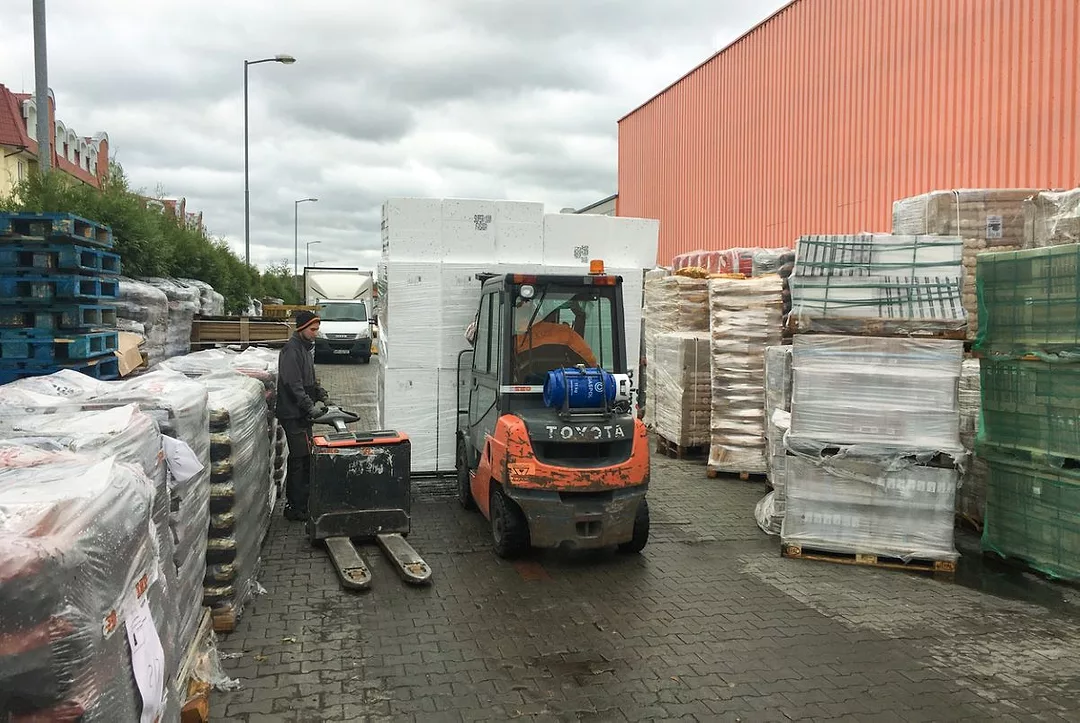
Two fork lifts pass each other unloading merchandise in an overcrowded storage area

Photo: iStock.com/Julian J Rossig

May 20, 2024
Tom Summerfield, SCB Contributor

Overstocking cost businesses $562 billion in 2023, but it's only one part of a much bigger picture, with out-of-stocks set to cost an additional $1.2 trillion.

If you’ve got stock to manage, you’ve probably got an inventory distortion challenge. Not just a problem for supply chain teams, inventory distortion results in missed sales, dissatisfied customers, excess wastage and capital tied up in stocks.

Amid current economic instability, where every penny matters, overstocking poses a particular challenge. Businesses are paying to store large volumes of safety stock for fear of not being able to satisfy customer demand. With all that cash tied up in stock, they’re restricted in their ability to invest in other areas, such as technology, that could help them to combat the root cause. 

Five years ago, supply chain managers focused on achieving the perfect demand forecast. Now, with more frequent, headline-hitting shocks to upstream supply, the job has become much harder.

The integration of artificial intelligence-driven inventory management offers a promising solution. AI can analyze vast amounts of historical data and real-time information, including seasonality, trends and even weather, to accurately forecast demand for products. It also enables just-in-time inventory practices using dynamic replenishment strategies, which continuously analyze sales data and adjust inventory levels accordingly.

With greater visibility across the supply chain, AI-driven inventory management allows supply chain teams to be more proactive, identifying potential disruptions sooner and mitigating their knock-on impact — for example, by finding alternative suppliers or adjusting production schedules.

Successfully implementing AI is no easy feat. In an SAP Insights survey of 4,200 global business leaders, 40% reported difficulty making the needed organizational, process and technology upgrades.

While common, these challenges risk derailing your AI journey. Data professionals need to be better integrated into commercial teams, lest they struggle to produce models that meet the needs of the business. Team members and end users should be involved in shaping the end solution. Mapping processes to desired outcomes is a critical early step to ensuring your AI will deliver the value you intend it to. There’s so much more than just getting the technology to work. Integrating it into existing business processes, and having team members buy in, is crucial.

Despite its potential, AI’s adoption rates remain low in sectors heavily connected to supply chain activity. In a survey of 3,000 senior leaders, 53% of retail and 41% of logistics leaders reported using AI, significantly below the global average of 63%.

In a follow up survey of 3,000 workers – ranging from entry-level positions to middle management – only 28% of retail and 18% of logistics workers felt AI could make their job easier and more enjoyable, below the global average of 35%.

The waning enthusiasm for AI use in these sectors could be attributed to wide-ranging skepticism around the technology. When asked how best to describe their feelings about AI in their workplace, 10% of retail and logistics workers said it worried them. This was slightly above the global average of 8%, but significantly above the 3% of technology workers, who will undoubtedly have more exposure to AI.

The correlation between attitudes toward AI and its subsequent use poses a threat to the future of supply chains and the ability to manage overstocking and out-of-stocks. What, then, can supply chain leaders do to ensure that AI projects are successful at every step of the change required at every level of the organization?

AI offers significant benefits to industries struggling with inventory distortion and the need to remain competitive. In the next few years, the “haves” and “have-nots” will come to light.  The latter won’t just be those who didn’t try. The key to succeeding will be adopting AI in a way that works for each business and team, understanding what the concerns are at every level, and addressing them.

As AI matures, devices such as performance guarantees are becoming more prominent. Not only do they provide budget holders with confidence that their AI investment will return value, but they’re pivotal in providing teams with reassurance in the performance of the technology.

A 20% reduction in stock tied up in inventory would result in more than $100 billion saved globally every year. That’s the true price of AI hesitance for supply chains.

Tom Summerfield is retail director at Peak.AI.

Artificial Intelligence Inventory Planning/ Optimization All Warehouse Services Warehouse Automation

RELATED CONTENT

RELATED VIDEOS

Subscribe to our Daily Newsletter!

Timely, incisive articles delivered directly to your inbox.

Featured Product

Popular Stories

  • Close-up hands of unrecognizable man holding and using smartphone standing on city street.

    Five Supply Chain Security Risks Hiding Inside Your Mobile Apps

    Supply Chain Visibility
  • A DIRTY PAIR OF HANDS CAN BE SEEN HOLDING BRICKS OF COAL ABOVE A MUCH BIGGER PILE OF COAL.

    Trump Announces $700M Investment in U.S. Coal Industry

    Chemicals & Energy
  • A plane bearing the IndiGo insignia flies through the sky

    Airbus Delays XLR Deliveries to IndiGo as War Hits Suppliers

    Air Cargo
  • HANDS OPERATE A COMPUTER KEYBOARD, OVERLAIN WITH IMAGES OF PROCUREMENT ACTIVITIES

    Beroe and Kearney Launch MAX Procurement Platform

    Technology
  • The grey, silver chassis of an unfinished electric vehicle sitting in a white, sterile room

    Canada Sees Shrinking EV Manufacturing Prospects, Despite Subsidies

    Green Energy

Digital Edition

2026 esg cover main scb q2 2026 cover

SupplyChainBrain 2026 ESG Guide: ESG — The Supply Chain’s Biggest Secret

VIEW THE LATEST ISSUE

Case Studies

  • Recycled Tagging Fasteners: Small Changes Make a Big Impact

  • A GRAPHIC SHOWING MULTIPLE FORMS OF SHIPPING, WITH A HUMAN STANDING AT THE CENTER, TOUCHING A SYMBOLIC MAP OF THE WORLD

    Enhancing High-Value Electronics Shipment Security with Tive's Real-Time Tracking

  • A GRAPHIC OF INTERLACING HONEYCOMBED ELEMENTS REPRESENTING GLOBAL BUSINESS TRANSACTIONS

    Moving Robots Site-to-Site

  • JLL Finds Perfect Warehouse Location, Leading to $15M Grant for Startup

  • Robots Speed Fulfillment to Help Apparel Company Scale for Growth

Visit Our Sponsors

4flow Arkieva Blue Yonder
Carton Cloud CoEnterprise Dassault
Duravant E2Open General Logistics Systems
Hy-Tek iGPS Korber
Lyngsoe Procurability Quinyx
SAP Sikick Systech
S&P Global Mobility TADA TransImpact
US Bank Werner Enterprises WSI
  • More From SCB
    • Featured Content
    • Video Library
    • Think Tank Blog
    • SupplyChainBrain Podcast
    • Whitepapers
    • On-Demand Webinars
    • Upcoming Webinars
  • Digital Offerings
    • Digital Issue
    • Subscribe
    • Manage Email Preferences
    • Newsletters
  • Resources
    • Events Calendar
    • 2026 Event Coverage
    • SCB's Great Supply Chain Partners
    • Supplier Directory
    • Case Study Showcase
    • Supply Chain Innovation Awards
    • 100 Great Partners Form
  • SCB Corporate
    • Advertise on SCB.COM
    • About Us
    • Privacy Policy
    • Contact Us
    • Data Sharing Opt-Out

All content copyright ©2026 Keller International Publishing Corp All rights reserved. No reproduction, transmission or display is permitted without the written permissions of Keller International Publishing Corp

Design, CMS, Hosting & Web Development :: ePublishing