 RSS
RSS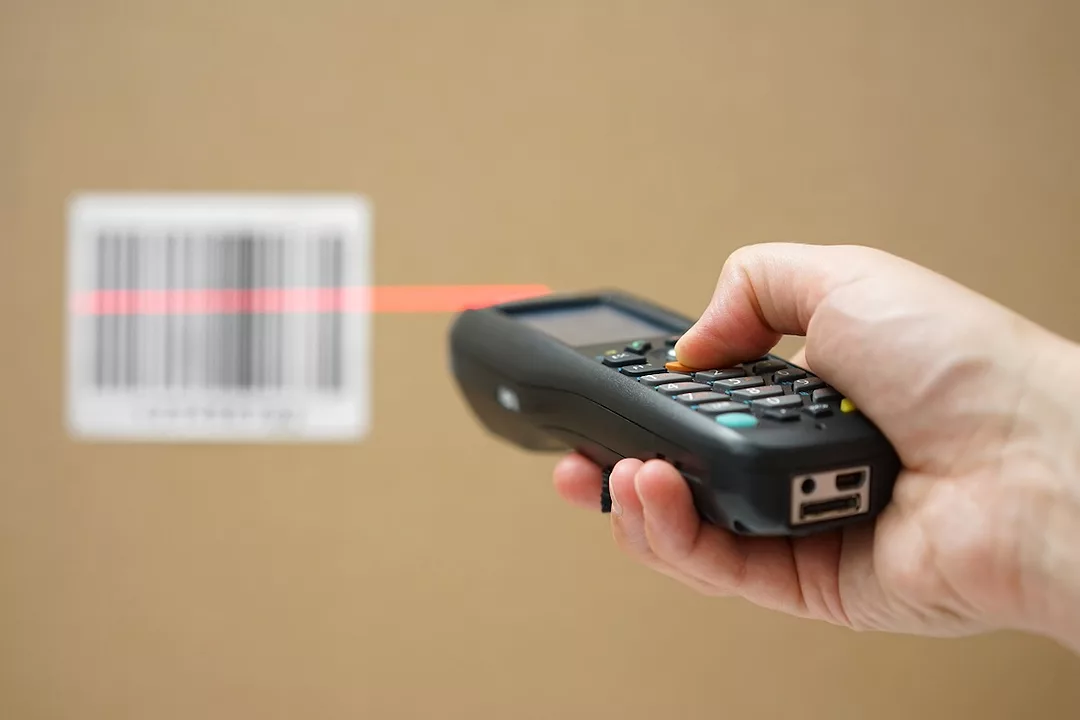
.webp?height=100&t=1783959879&width=150 "014_how_ai_is_transforming_the_transportation_back_office_v1-(540p).jpg")
Beep. That’s the sound heard over 10 billion times a day around the world. The barcode, an unassuming symbol formed from black and white lines and spaces, has become a fixture in global commerce, adorning over 100 million products for 2 million companies globally,
The barcode is the backbone of supply chain infrastructure as we know it, used to identify products and facilitate information sharing within and across supply chains, including product details and shipment information, as well as the path a product took in its journey. To understand how a piece of technology came to revolutionize supply chain operations — and our daily lives — let’s trace its history back to the first scan, 50 years ago.
On June 26, 1974, at Marsh Supermarket in Troy, Ohio, a cashier named Sharon Buchanan made history. A 10-pack of Wrigley's chewing gum became the first item ever scanned with a Universal Product Code (UPC) barcode at checkout. The choice of chewing gum wasn’t only intentional but significant; skeptics had doubted whether small packages could be effectively imprinted and scanned at scale. Wrigley proved them wrong.
Following this milestone, major retailers like Kmart and Walmart became the first to adopt the new technology, recognizing its potential to transform their operations, specifically for product cataloging and tracking. What started as an idea for improving speed at checkout quickly snowballed into a revolution, spurring innovation in inventory management, market research and production.
Prior to the barcode’s introduction, managing inventory was a painstaking task. Grocery stores would frequently shut down to count each item by hand. Cashiers had to manually punch in item prices at checkout, leading to long lines and frequent mistakes. Inventory and asset tracking relied heavily on pen and paper. Retailers needed a solution that would enable faster, more productive service.
The barcode provided a method to simplify, automate and standardize data sharing. The code would carry information, including a product’s Global Trade Item Number (GTIN) to identify the product, and stores would “read” this information with scanners. The price of the item would then be automatically returned at checkout. Lines became shorter, and inventory more precise.
Over time, uses for the UPC barcode grew to solve a number of other challenges for retailers. Today, stores can instantly track sales data, generate detailed reports on product performance, identify popular items, and adjust inventory accordingly. This resulting visibility into the supply chain allows for more efficient management of inventory, reducing excess stock, waste and storage.
Yet through all of this innovation, the barcode’s design remained unchanged. While the UPC has served supply chains admirably for the last 50 years, the demands of consumers, coupled with unprecedented supply chain disruptions and the need to comply with environmental, social and governance (ESG) requirements, are necessitating a more digitized upgrade for a data-first world.
Phase Two: The Barcode Revolution
Enter the next generation of barcodes: two-dimensional (2D) barcodes, or QR codes, that can store much more information than their one-dimensional UPC counterparts. Compared with the linear UPC, which encodes just the product’s identification, the 2D barcode supports a host of use cases for product traceability, transparency and even consumer safety. Through the use of GS1 Digital Link, 2D barcodes such as the QR code can connect to the web, are smartphone-interactive, and can still transact with point-of-sale (POS) systems.
Together, industry is collaborating to formally transition to the use of 2D barcodes on products, with the ultimate goal of meeting consumers’ demand for more product information. A recent GS1 US survey found that 77% of consumers say product information, including ingredients, origin and production methods, is important when making a purchase. This level of visibility is especially valuable for ensuring food safety, as shoppers can check for allergens or verify expiration dates before purchasing. Food recalls are becoming more common — in fact, the amount of recalls recently reached a five-year high. When a product is recalled, retailers will be better equipped to trace the specific infected batches, immediately alert affected consumers, and remove tainted items from shelves.
For clothing retailers, a consumer may scan a shirt or a pair of shoes and see where and how it was made. Forty-six percent of shoppers actively seek out sustainable products or those with a reduced climate impact. Understanding if a product was ethically produced, or accessing detailed care and end-of-life-instructions, can enhance brand loyalty. For their part, retailers can ease inventory management by seeing exactly what’s in stock, according to item, brand, color and size. They can even reduce product shrink or theft by tying a radio frequency identification (RFID) tag to a 2D scan at POS.
Innovation Takes Time
The opportunities for 2D barcodes are endless, but like that first scan of Wrigley’s gum, it may take some time before their full potential unfolds. Innovation and implementation don’t happen overnight. It wasn't until the 1980s that barcodes gained widespread adoption, despite their introduction six years earlier. Retailers were initially hesitant to install scanners until manufacturers adopted barcodes, and manufacturers didn’t want to put barcodes on products until enough retailers had the technology to scan them. However, the strong return on investment — 41.5% by 1980 — encouraged adoption at industry level, with more than 8,000 stores converting each year. By 2004, Fortune magazine estimated, 80% to 90% of the top 500 companies in the U.S. were using barcodes.
Today, the adoption of 2D barcodes is increasing as brands look for innovative ways to drive consumer engagement. Leading brands like Puma, Procter & Gamble, Patagonia and Pepsi are already incorporating them into their products, and retailers have committed to having the necessary technology in place for 2D barcode scanning at POS in the next three years, through the GS1-led initiative called Sunrise 2027. Industry leaders around the globe are coming together to create requirements, conduct testing, analyze results and provide recommendations to optimize 2D usage. The commitment to collaboration will ensure that this technological shift revolutionizes the way that products are tracked, managed, and purchased. With brands and retailers already transitioning ahead of the 2027 deadline, the future will be here faster than we think.
Gena Morgan is vice president of standards at GS1 US.


.webp?height=100&t=1784001702&width=150 "013_what's_really_needed_for_'lights-out'_capability_v1-(540p).png")



