RSS
RSS
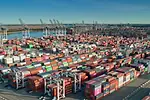
While there are signs of softening in warehouse construction, and a rise in vacancy rates, the U.S. warehouse market continues to defy all odds and demonstrate surprising resilience. In Q2 of 2025, national industrial rent averages reached an all-time high of $9.78 per square foot, highlighting not only the scarcity of strategically located logistics hubs, but also the growing reliance on warehouse operations as a linchpin for broader supply chain performance.
In addition to the shift from viewing the factory floor as a fixed asset to recognizing it as a performance driver, warehouse managers are using three strategic levers to enhance both efficiency and profitability:
Customer pricing optimization. Competitive pricing is increasingly tied to operational excellence. By consistently meeting or exceeding contractual SLAs, such as inventory accuracy, order fulfillment rates, dock-to-stock times, and OTIF metrics, warehouses can justify premium pricing. When differentiation is measured by performance scorecards, pricing becomes a strategic reward.
Acquisition strategy. Acquisitions remain a key method for expanding capacity and service coverage. However, success hinges on minimizing the time between acquisition and integration. Leading warehouse architectures support rapid onboarding and governance through scalable platforms, enabling faster network expansion
Digital transformation. Embracing technologies such as APIs, EDI and automated document processing allows for streamlined inventory management and customer interactions. This not only improves productivity and efficiency but also broadens the ideal customer profile, supporting scalable growth.
To reduce unnecessary inventory buffers, shorten cycle times, and respond more dynamically to shifts in customer demand, mid-sized manufacturers have begun automating the processes that connect their warehouse management systems (WMS) directly with upstream order intake and downstream transportation operations. The key to accomplishing this, though, is that manufacturers must synchronize their WMS platforms with enterprise resource planning (ERP) systems and transportation management systems (TMS).
In the same way that today’s companies cannot afford manual handoffs between systems, the logistical infrastructure itself is evolving to remove points of physical friction. For example, the proposed merger between Union Pacific and Norfolk Southern, would create the first coast-to-coast rail operator in U.S. history. The motivation is to reduce interchanges, accelerate transit speeds, and increase reliability. This same logic applies inside the warehouse, automating manual transitions and enabling seamless data flow results in higher performance, less friction, and the reduction of unnecessary inventory.
Inventory optimization, informed by real-time data visibility and better-connected supply chain ecosystems, has quickly become the new essential. Fragmented applications and systems can introduce discrepancies between actual and recorded stock levels, forcing warehouses to hold more safety inventory than necessary. This not only consumes valuable floor space but also drives up carrying costs.
That same clarity is also a driving force in workforce efficiency. By integrating AI into the warehouse environment, workforce efficiency is being redefined by transforming how warehouses plan, manage and scale logistics. Intelligent order intake and routing, increasingly powered by better scanning tech and/or digitalized spoken commands, reduce the overall time spent on paperwork or correcting mis-picks, while AI-driven demand forecasting aligns staffing and resources with actual production needs.
From a warehousing point of view, AI-enhanced inventory management streamlines digital order flows and replenishment queues to reduce any potential shortages or overstocks. For those in logistics, predictive insights optimize transportation routes and flag potential delays before they ripple downstream.
Beyond the four walls of the warehouse, AI-driven supply chain orchestration supports ecosystem relationship management by proactively alerting teams to risks in supplier performance or SLA compliance. Together, these capabilities enable warehouse employees to focus less on reactive problem-solving and more on building resilient, scalable operations that support growth.
By automating workflows and connecting ecosystem partners, AI lays the groundwork for addressing the sharper productivity demands highlighted by McKinsey’s Dan Swan. Warehouses operating in disconnected systems and relying on manual workflows leave margin and performance untapped. Connecting data across WMS, ERP and TMS platforms while unifying internal and external systems provides organizations the foundation to orchestrate their supply chains with accuracy. Once these essential data streams are implemented, automating the workflows that run across them becomes a critical lever to improve throughput and reduce operational drag.
Overall, this idea of agility underpins prediction and is being echoed across the logistics sector. FedEx and UPS both noted in recent earnings calls that China-to-U.S. freight capacity dropped by more than 30% in May and June 2025 due to trade tensions and a shifting global demand. This capacity did not disappear; it has simply moved. Carriers had to reposition resources, and those with connected systems responded faster, rerouting freight or adjusting capacity in near real-time.
With market uncertainty continuing in light of geopolitical and economic factors, forecasts are increasingly unreliable. Although a peaks will persist in some form or another, growing unpredictability makes it difficult to determine when those will occur, how significant they will be, or which direction they will take. Leaders today should avoid betting on a single path and instead plan across a range of scenarios, building operations that can flex and scale as conditions evolve.
The modern warehouse is not just a facility. It is a performance engine that must adapt to volatility, support speed, and drive visibility across the supply chain. Businesses that treat warehouses as static infrastructure, adjacent to their digital ecosystems, will struggle to meet today’s operational demands.
Conversely, companies that invest in supply chain orchestration and automation are proving that they can do more with less space, fewer manual processes, and greater agility. As trade policies evolve, customer expectations rise, and peak seasons grow increasingly unpredictable, it is not more floor space that delivers advantage. A true competitive advantage comes from gaining enhanced visibility into that space through connected systems and coordinating it as part of a broader, data-driven supply chain.
Frank Kenney is VP of go to market strategy & enablement at Cleo.