• Advertise
  • Contact Us
  • Supplier Directory
  • SCB YouTube
  • About Us
  • Login
  • Subscribe
  • Logout
  • My Profile
  • LOGISTICS
    • Air Cargo
    • All Logistics
    • Facility Location Planning
    • Freight Forwarding/Customs Brokerage
    • Global Gateways
    • Global Logistics
    • Last Mile Delivery
    • Logistics Outsourcing
    • LTL/Truckload Services
    • Ocean Transportation
    • Parcel & Express
    • Rail & Intermodal
    • Reverse Logistics
    • Service Parts Management
    • Transportation & Distribution
  • TECHNOLOGY
    • All Technology
    • Artificial Intelligence
    • Cloud & On-Demand Systems
    • Data Management (Big Data/IoT/Blockchain)
    • ERP & Enterprise Systems
    • Forecasting & Demand Planning
    • Global Trade Management
    • Inventory Planning/ Optimization
    • Product Lifecycle Management
    • Robotics
    • Sales & Operations Planning
    • SC Finance & Revenue Management
    • SC Planning & Optimization
    • Supply Chain Visibility
    • Transportation Management
  • GENERAL SCM
    • Business Strategy Alignment
    • Customer Relationship Management
    • Education & Professional Development
    • Global Supply Chain Management
    • Global Trade & Economics
    • Green Energy
    • HR & Labor Management
    • Quality & Metrics
    • Regulation & Compliance
    • Sourcing/Procurement/SRM
    • SC Security & Risk Mgmt
    • Supply Chains in Crisis
    • Sustainability & Corporate Social Responsibility
  • WAREHOUSING
    • All Warehouse Services
    • Conveyors & Sortation
    • Lift Trucks & AGVs
    • Order Management & Fulfillment
    • Packaging
    • RFID, Barcode, Mobility & Voice
    • Warehouse Automation
    • Warehouse Management Systems
  • INDUSTRIES
    • Aerospace & Defense
    • Apparel
    • Automotive
    • Chemicals & Energy
    • Consumer Packaged Goods
    • E-Commerce/Omni-Channel
    • Food & Beverage
    • Healthcare
    • High-Tech/Electronics
    • Industrial Manufacturing
    • Pharmaceutical/Biotech
    • Retail
  • THINK TANK
  • WEBINARS
    • On-Demand Webinars
    • Upcoming Webinars
    • Webinar Library
  • PODCASTS
  • WHITEPAPERS
  • VIDEOS
Home » Blogs » Think Tank » Why Trucking Spot Rates Are Soaring — and How to Cope With Them

Think Tank
Think Tank RSS FeedRSS

Why Trucking Spot Rates Are Soaring — and How to Cope With Them

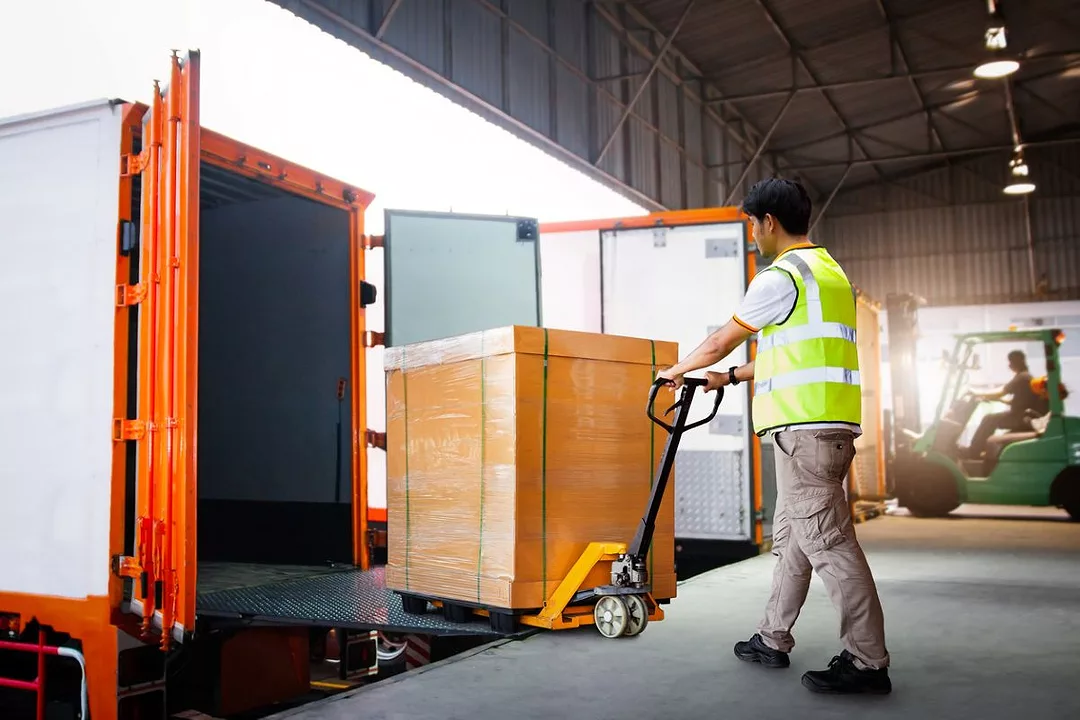
Workers Unloading Heavy Box into Container Truck.

Photo: iStock/1933bkk

May 27, 2026
Bill Loupée, SCB Contributor

According to SONAR’s National Truckload Index, spot rates have reached new daily highs of around $3.22 a mile, the highest since March, 2022, and after relative stability in 2024 and 2025. In the fresh produce industry, this recent rise signals a supply chain shift that directly impacts how food moves from field to shelf.

 On one hand, fresh produce is partially responsible for these increases. It’s no coincidence that prices are spiking as the season begins to really take hold. While produce is delivered year round, its busiest season in the U.S. kicks off around mid-April, as more crops mature and demand rises. Add the ongoing uncertainty around tariffs and the growing demand for local and U.S.-grown produce as a result, and we can begin to see why spot rates are under pressure. However, there’s far more happening behind the scenes.

Consider what’s being shipped. Aside from fresh produce, you might be surprised to learn that artificial intelligence is adding to the strain. Tech titans such as Meta are in a race to complete large-scale data centers, and need to transport specialized equipment like servers and cooling systems to their construction sites. In addition to the amount of loads these projects demand, that they often require climate-controlled reefer trucks similar to those used for produce to maintain freshness.

There’s more. For years, the freight industry has been buckling under increased financial pressures, causing smaller carriers to exit the market. Even in just the last few months, a large number of trucking companies, logistics providers and last-mile delivery services have filed for bankruptcy. And for those still in business, they’re feeling labor pains, struggling to hire or retain drivers due to changing immigration policy that’s limiting the available talent.

Another factor is the higher cost of fuel. The national fuel surcharge is rising across all equipment types, and in some cases, is double or triple what it was last year. As fuel gets more expensive, carriers become selective and prioritize expensive loads, further tightening capacity.

On the cost side, rising spot rates directly increase landed cost, the total cost of getting a product from origin to the customer. When transportation is more expensive, margins tighten unless those costs can be passed downstream. This is especially challenging in produce, where pricing is already highly competitive. And, at an operational level, tighter capacity means less flexibility, so it’s more difficult to secure trucks on short notice, increasing the risk of delays, missed pickups or spoilage.

However, there is a strategic upside, one that rewards distributors with strong relationships and planning discipline. Companies that invest in consistent carrier partnerships, forecast demand accurately, and lock in contract capacity where possible will be better positioned to manage volatility.

For the fresh produce industry, success will ultimately depend on shifting from a reactive to a proactive transportation strategy. Following are a few things wholesale distributors can do to reduce friction:

Forecast better. Planning ahead will always be the most effective way to avoid costly fixes in-the-moment. By comparing demand forecasts with harvest schedules, you can help plan freight days in advance, versus hours.

Improve load efficiency. Fresh produce can require short lead times and tight turnarounds due to the perishable nature of these commodities, but finding ways to consolidate shipments versus partial loads, or maximizing pallet utilization, can help stabilize costs.

Reduce docking and load times. Carriers factor in wait times when pricing loads, so ensuring fast turnarounds at your facility, such as better dock scheduling or extended receiving hours, can make a big difference.

Consider lane-specific or seasonal surcharges. If you need ways to absorb the extra cost but want to avoid sudden, across-the-board price hikes that can hurt customer relationships, consider lane or seasonal surcharges for specific regions and peak periods. These options offer transparency and eliminate the element of surprise.

Source local. When added cost gets baked into the entire supply chain, try to get ahead of increased spot pricing by limiting transportation up front, and source from growers that are in your backyard.

Spot sourcing will always be a reality in the fresh produce industry, but it doesn’t have to be a  budget-breaker either. With smart planning, distributors can prepare themselves to ride the wave of rising costs.

Bill Loupée is chief operating officer with Ben B. Schwartz & Sons. 

LTL/Truckload Services Sourcing/Procurement/SRM Food & Beverage

RELATED CONTENT

RELATED VIDEOS

Subscribe to our Daily Newsletter!

Timely, incisive articles delivered directly to your inbox.

Featured Product

Popular Stories

  • Businessman using AI agent system on laptop computer.

    AI in Supply Chain Can’t Succeed Without Foundational Systems

    Artificial Intelligence
  • A LARGE CYLINDRICAL OBJECT SHRINK-WRAPPED IN WHITE PLASTIC IS LOWERED BY CRANE ONTO A FLAT BED TRUCK ON A DOCK

    AI Boom Has European Buyers Paying Extra to Secure Gas Turbines

    Technology
  • DOMINO EFFECT FINANCIAL MONEY KNOCK-ON CONSEQUENCES iStock-Devrimb-1500012566.jpg

    Podcast | The Tariff Conundrum for Supply Chains: Pass Along, or Absorb?

    Supply Chain Finance & Revenue Management
  • 016_ai_and_data_transformation_in_distribution_v1-(540p).png

    Watch: AI and Data Transformation in Distribution

    Artificial Intelligence
  • A GLEAMING CAR SHOWROOM BEARS THE LETTERS BYD ABOVE THE DISPLAY FLOOR

    U.S. Adds BYD, Alibaba to ‘Chinese Military Companies’ List

    Global Trade & Economics

Digital Edition

2026 esg cover main scb q2 2026 cover

SupplyChainBrain 2026 ESG Guide: ESG — The Supply Chain’s Biggest Secret

VIEW THE LATEST ISSUE

Case Studies

  • Recycled Tagging Fasteners: Small Changes Make a Big Impact

  • A GRAPHIC SHOWING MULTIPLE FORMS OF SHIPPING, WITH A HUMAN STANDING AT THE CENTER, TOUCHING A SYMBOLIC MAP OF THE WORLD

    Enhancing High-Value Electronics Shipment Security with Tive's Real-Time Tracking

  • A GRAPHIC OF INTERLACING HONEYCOMBED ELEMENTS REPRESENTING GLOBAL BUSINESS TRANSACTIONS

    Moving Robots Site-to-Site

  • JLL Finds Perfect Warehouse Location, Leading to $15M Grant for Startup

  • Robots Speed Fulfillment to Help Apparel Company Scale for Growth

Visit Our Sponsors

4flow Arkieva Blue Yonder
Carton Cloud CoEnterprise Dassault
Duravant E2Open General Logistics Systems
Hy-Tek iGPS Korber
Lyngsoe Procurability Quinyx
SAP Sikick Systech
S&P Global Mobility TADA TransImpact
US Bank Werner Enterprises WSI
  • More From SCB
    • Featured Content
    • Video Library
    • Think Tank Blog
    • SupplyChainBrain Podcast
    • Whitepapers
    • On-Demand Webinars
    • Upcoming Webinars
  • Digital Offerings
    • Digital Issue
    • Subscribe
    • Manage Email Preferences
    • Newsletters
  • Resources
    • Events Calendar
    • 2026 Event Coverage
    • SCB's Great Supply Chain Partners
    • Supplier Directory
    • Case Study Showcase
    • Supply Chain Innovation Awards
    • 100 Great Partners Form
  • SCB Corporate
    • Advertise on SCB.COM
    • About Us
    • Privacy Policy
    • Contact Us
    • Data Sharing Opt-Out

All content copyright ©2026 Keller International Publishing Corp All rights reserved. No reproduction, transmission or display is permitted without the written permissions of Keller International Publishing Corp

Design, CMS, Hosting & Web Development :: ePublishing