RSS
RSS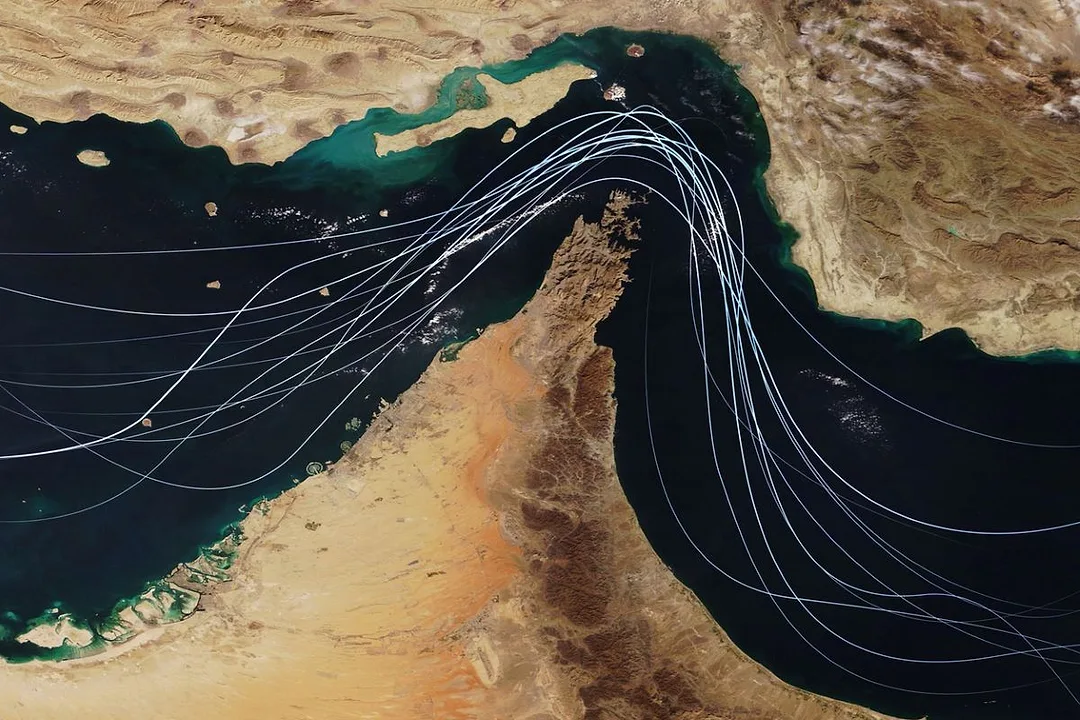
The on-again, off-again closure of the Strait of Hormuz has triggered a geopolitical and logistical crisis with consequences reaching well beyond the energy sector.
The blockading of ship traffic through the strait has disrupted the procurement and maintenance of local exhaust ventilation (LEV) systems in manufacturing plants. For facility managers and health and safety officers, that has had a direct impact on workplace compliance, worker health and equipment performance .
The Strait of Hormuz is the world's most critical maritime chokepoint. Its closure by Iran over recent months caused vessel traffic to fall to roughly 5% of pre-conflict levels. Major carriers including Maersk, CMA CGM, MSC and Hapag-Lloyd suspended transits following the withdrawal of war risk insurance in the region. QatarEnergy declared force majeure on all LNG shipments after Iranian attacks on its Ras Laffan facilities. Simultaneously, Houthi forces resumed attacks on commercial vessels in the Red Sea on February 28.
British industry in particular has therefore been contending with simultaneous disruptions in two major maritime corridors, with knock-on congestion building at key transshipment hubs including Jebel Ali in Dubai.
The Impact on LEV Systems
A functioning LEV system is an assembly of interdependent components: fans and motors, filter media, ducting, extraction arms, control panels, sensors and housing units. Each draws on a global manufacturing and logistics network.
Motors and drive equipment frequently originate from European or Asian manufacturers. High-efficiency filter media, particularly for fume extraction systems, rely on specialist production processes concentrated in a small number of countries. Electronic control components, already constrained by the global semiconductor shortage, remain subject to extended lead times across multiple industrial sectors.
The Persian Gulf and wider Middle East region is a critical transshipment corridor for goods manufactured in South and Southeast Asia bound for European markets. With Jebel Ali experiencing severe congestion and Hormuz effectively closed, shipments that would ordinarily reach U.K. industrial distributors within predictable windows have been subject to significant rerouting delays and additional freight costs, if not stranded entirely. When disruption of this magnitude strikes a supply chain, the consequences reach the procurement desks of businesses maintaining LEV installations across the U.K.
Procurement teams are facing a clear and immediate challenge in the continued extension of delivery timelines across critical categories of industrial equipment. Parts that already experienced delays after earlier disruptions are now taking even longer to arrive, as rerouted shipping lanes add weeks in transit and congestion builds at alternative ports.
At the same time, war risk surcharges and emergency freight premiums are driving container rates sharply upward on Asia-Europe routes, placing direct financial strain on importers of industrial components.
These disruptions carry real compliance risks. Refurbishments and system upgrades planned around annual maintenance cycles may encounter missing components at the point of purchase or face significantly inflated prices.
Without a proactive procurement approach, extended timelines can push scheduled maintenance beyond the window in which existing systems remain compliant with Health and Safety Executive (HSE) guidance under HSG258, which governs the thorough examination and testing of LEV equipment at defined intervals.
Parts Availability and Reactive Maintenance
The challenge compounds when systems require reactive maintenance following unexpected failures. Unplanned breakdowns demand rapid replacement of specific parts, often to a tight specification determined by the original system design. Where those components are subject to supply chain delays, facilities face a difficult choice: operate with degraded extraction performance, implement interim controls, or halt the process entirely until the hardware arrives.
For industries where continuous production is critical, including automotive body shops, metalworking facilities, woodworking operations, and pharmaceutical manufacturing environments, any interruption to extraction capability creates immediate health and safety risk for workers and potential exposure to enforcement action by the HSE.
Companies operating a reactive model, replacing parts only when failure occurs, are discovering that this approach carries significantly elevated risk. The availability of common spare parts demands active verification rather than assumption.
Building Resilience Into LEV Maintenance
The appropriate response to this environment is a structural shift in how LEV maintenance is planned and resourced. Those who work proactively with specialist providers are substantially better positioned to absorb supply chain volatility than companies operating outside a formal framework.
Service-level agreements represent one of the most effective tools available. A well-structured SLA provides access to pre-stocked inventory, priority scheduling for testing and servicing, and forward visibility of component requirements. A partner with established supplier relationships and significant procurement capacity will be far more capable of managing lead time constraints than a business attempting to source individual components on an ad hoc basis during periods of severe global disruption.
Planned preventive maintenance, scheduled around the 14-month maximum interval recommended under HSG258 guidance for LEV thorough examination, also reduces the frequency of reactive procurement. Systems inspected and serviced on a regular cycle are less likely to fail unexpectedly, and upkeep requirements identified during scheduled visits allow time for components to be sourced free from emergency pressure.
The disruption seen throughout early 2026 has highlighted a problem that has existed within industrial maintenance for years. Many businesses rely on supply chains that function efficiently under normal conditions, yet become fragile very quickly once global shipping routes come under pressure. LEV systems carry particularly high stakes, since failures can affect worker safety and attract regulatory scrutiny.
Businesses with structured maintenance plans already in place have generally handled these pressures far more effectively. Regular servicing, forward purchasing and ongoing support from specialist providers make it easier to keep systems operational when lead times suddenly increase, or key components become difficult to source.
In a supply chain environment shaped by the most significant maritime disruption since the 1970s, the value of a proactive LEV maintenance strategy has never been greater.
Jan Penalva is a senior copywriter with Activate Digital.