
With Whole Foods, Amazon on Collision Course With Wal-Mart
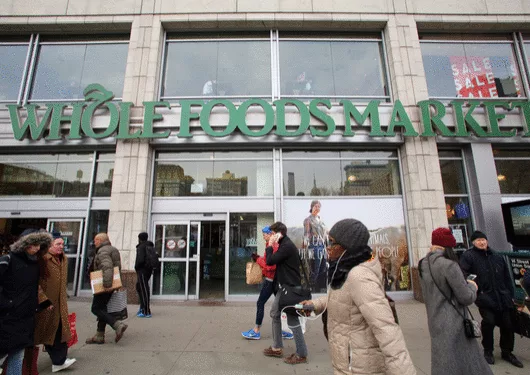
On Friday, Amazon.com Inc countered. With its $14bn purchase of grocery chain Whole Foods Market Inc, the largest e-commerce company announced its intention to take on Wal-Mart in the brick-and-mortar world.
The two deals make it clear that the lines that divided traditional retail from e-commerce are disappearing and sector dominance will no longer be bound by e-commerce or brick-and-mortar, but by who is better at both.
Amazon's purchase of Whole Foods also brings disruption to the $700bn U.S. grocery sector, a traditional area of retailing that stands on the precipice of a ferocious price war. German discounters Aldi and Lidl are battling Wal-Mart, which controls 22 percent of the U.S. grocery market, with each vowing to undercut whatever price the others offer.
The stakes are highest for Wal-Mart. Amazon's move aims at the heart of the Bentonville, Arkansas-based retail giant's business - groceries, which account for 56 percent of Wal-Mart's $486bn in revenue for the year ending Jan. 31. With the deal, Whole Foods’ more than 460 stores become a test bed with which Amazon can learn how to compete with Wal-Mart’s 4,700 stores with a large grocery offering that are also within 10 miles (16 km) of 90 percent of the U.S. population.
Popular Stories





100 Great Supply Chain Partners 2026: The Secret to Supply Chain Success
VIEW THE LATEST ISSUECase Studies


Visit Our Sponsors |
|
|
|
|
|
|
|
|
|
|
|
|
|
|
|
|
|
|
|
|
|
|
|
|
|
|
|
|
|
|
|
|
|
|
|
|
|
|
|
|
|
|
|
|
|
|
|
|
|
|
|