Ukraine’s Farmers Fight to Stave Off Global Food Crisis
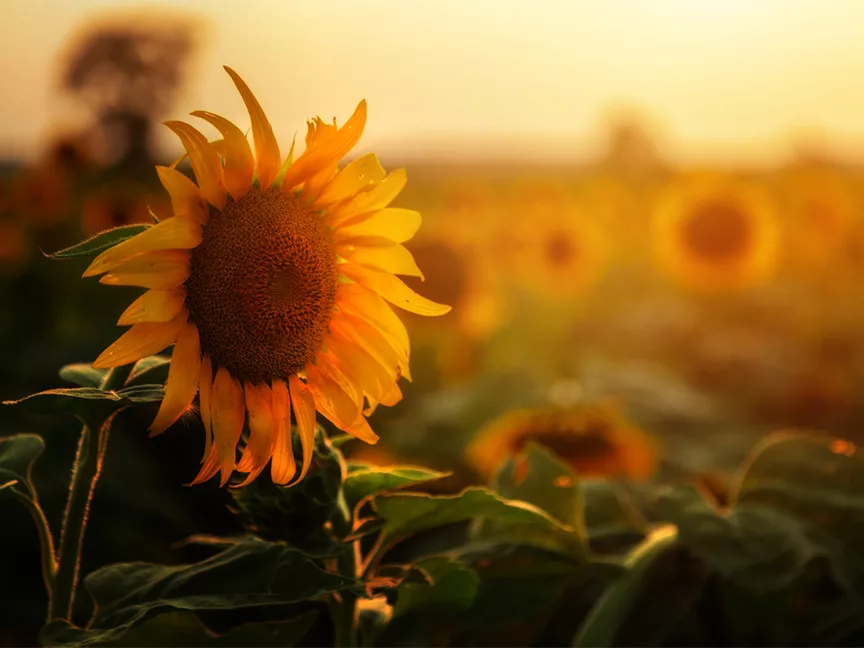
Around this time of year, Yaroslav Andrushko would normally be overseeing the sowing of crops on his 1,000-hectare farm in the Vinnytsya region of central Ukraine.
Instead, he swapped his workwear for fatigues, joining the army a day after Russia invaded his country. “Once a farmer always a farmer,” said Andrushko, the chief executive of a small agriculture company. “But circumstances required us to take up arms.”
As Ukrainians resist Russian President Vladimir Putin’s military machine, the 36-year-old is another example of the resilience shown by so many of his compatriots in protecting their nation’s statehood. Yet Andrushko and farmers like him are also defending a core component of the global food supply chain that’s increasingly in peril.
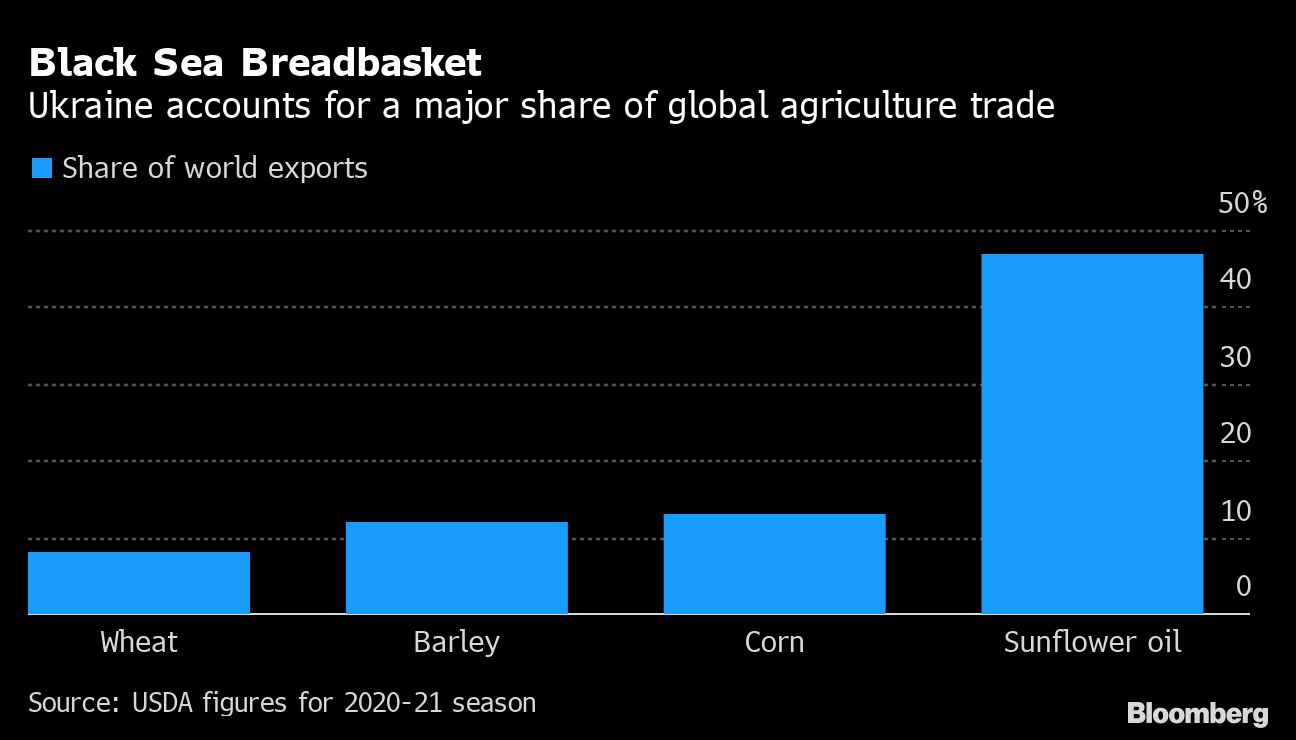
Ukraine is the world’s largest producer of sunflower oil and ranks among the top six exporters of wheat, corn, chicken and even honey. The money it earns from agriculture — $28 billion last year — is now more vital because of the war effort, and the produce more critical for a world where record prices are raising concerns about food security.
Egypt and Turkey, which rely on Russian and Ukrainian grain, are grappling with skyrocketing inflation. The government in Cairo is considering raising the price of subsidized bread for the first time in four decades. Shortages of sunflower oil in Europe, meanwhile, are forcing suppliers to seek alternatives. Supermarkets across the U.K. are limiting how much cooking oil customers can buy.
Read more: Ukraine Sunflower Oil Crisis Hits Food From Chips to Cookies
That, in turn, is sending vegetable oil prices soaring as far away as India, where street vendors are steaming food instead of frying it. There’s also increased demand for palm oil, which has been blamed for causing deforestation.
Ukrainian President Volodymyr Zelenskiy has said Russia, itself a key agricultural exporter, is deliberately targeting farmland, placing landmines in fields and destroying equipment and storage facilities. Those claims were supported by European Union Commissioner Janusz Wojciechowski, who said the bloc would seek to aid Ukraine’s farmers.
Not only is the country increasingly unable to export because transit routes have been severed, but Ukraine needs to keep its more limited supplies of produce to ensure its survival, Ukraine’s agriculture minister said last month.
Irish Prime Minister Micheal Martin echoed the warnings on April 20 after meeting with his Ukrainian counterpart, who was en route to Washington. “There’s a clear objective to create a food crisis on top of the energy crisis, as well as waging an immoral and unjust war on Ukraine itself,” Martin said.
The Russian military has consistently said it’s not targeting civilian facilities, despite widespread evidence to the contrary. Its limited pullback from Kyiv means that farmers can plant in previously occupied areas like Chernihiv, but harvests of some of Ukraine’s most important crops could still be cut in half this year.
It’s hard to overstate the importance of farming to Ukraine, nicknamed Europe’s breadbasket because of its rich, black fertile soil that’s ideal for cultivation. Agriculture accounted for more than 10% of Ukraine’s economy and 40% of its sales of exported goods before the war. Farmers are exempted from serving in the military in order to ensure the industry keeps going.
A former conscript, Andrushko decided to join up anyway, confident his workers can keep planting and harvesting. Indeed, he’s been relatively lucky. His farm grows wheat, corn, sunflowers and apples in a region that’s thus far been spared fighting, though money is running low and fuel supplies have been disrupted, he said.
The war has already destroyed some of the progress Ukraine has made in decades of scaling up its agriculture industry. Its wheat harvest in 2021 was the biggest since the collapse of the Soviet Union three decades earlier. Eventually, farmers will have to rebuild and rid their land of shells and chemical pollution.
The Organization for Security and Co-operation in Europe warned of the “potentially disastrous” environmental impact, including causing poor drinking water, chemical leaks and flooding.
“You have to restore supply networks, you have to get back people and you have to get back necessary capital, to restore production,” said Oleg Nivievskyi, assistant professor at the Kyiv School of Economics. “To get back to the previous export levels I would say that it will take two to three years. This is what farmers are telling themselves.”
For now, only small amounts of grain and other products are being transported out by rail after Russia blocked Ukraine’s Black Sea ports and shelled vital infrastructure. Ukraine is asking for Europe to provide river barges and trucks to keep the reduced exports flowing.
Across the world, countries reliant on Ukraine’s sunflower oil and animal feed are scrambling to find alternative supplies. Companies are rushing to replace sunflower oil in recipes from cookies to potato chips. Some supermarkets and fish-and-chip shops in the U.K. are looking at replacing sunflower oil with palm oil, boosting prices to records.
Read more: Soaring Prices Are Changing the Way People Eat
Palm has come under increasing scrutiny in recent years for its role in deforestation, and has been blamed for playing a role in destroying the habitat of endangered species like Orangutans, according to the World Wildlife Fund.
Farmers are running out of non-genetically modified animal feed which usually came from Ukraine, and the EU is relaxing import rules to make it easier to import from South America.
Then there’s the disruption of deliveries of food aid to nations at risk of hunger. Somalia gets nearly 70% of its wheat imports from Ukraine and the rest from Russia, and is currently threatened with the worst drought in years.
Tunisia and Libya also get more than a third of their wheat from Ukraine, according to United Nations trade data. Food aid deliveries of split peas and barley from Ukraine’s port of Odesa to West Africa are being disrupted, according to the World Food Program.
“Low income food deficit countries are always most vulnerable,” Laura Wellesley, a senior research fellow at Chatham House in London, said at a talk on the impact of the conflict on April 13. “But low-income households, all economies around the world are already experiencing household economic insecurity and food insecurity.”
Prices were already at record highs due to high energy prices and logistics issues as the global economy recovered from the pandemic, and now countries including Egypt, Hungary, Indonesia, Moldova and Serbia have brought in restrictions on exports of some foods.
Meanwhile, Russia is still exporting grain to some of its biggest customers, even as shipping costs soar and some traders seek to avoid Russian commodities. It may even get some new business. Israel, which often buys from Ukraine, bought some Russian wheat last month, according to Geneva-based crop data company Agflow.
In Europe, farmers used to moan about Ukraine’s cheaper food imports coming into the market. The EU is now delaying rules intended to make farming more green, including pushing back planned curbs on pesticide use. It’s also planning to free up almost 4 million hectares of fallow land to plant more cash crops.
“What’s going on in Ukraine is going to change our whole approach, and our view on the future of agriculture,” EU Commissioner Wojciechowski said on March 17. “We have to implement a policy that’s going to guarantee food security.”
For Andrushko in central Ukraine, the challenge is more immediate. Even though his company’s land has been untouched by war, the impact of severed supply chains is making it harder to keep farming. He urgently needs fuel to keep his business operating, he said by phone, declining to disclose his exact location because of military security.
The farm company used to send his apples via Russia to Uzbekistan, but now is trying to deliver them via a longer, more costly route through the Balkans and Turkey instead. And that’s while serving his country: “I did as my honor requires.”
Popular Stories


SupplyChainBrain 2026 ESG Guide: ESG — The Supply Chain’s Biggest Secret
VIEW THE LATEST ISSUECase Studies


Visit Our Sponsors |
|
|
|
|
|
|
|
|
|
|
|
|
|
|
|
|
|
|
|
|
|
|
| |
|
|
|
|
|
|
|
|
|
|
|
|
|
|
|