
Biden Set to Hit China EVs, Strategic Sectors With Tariffs
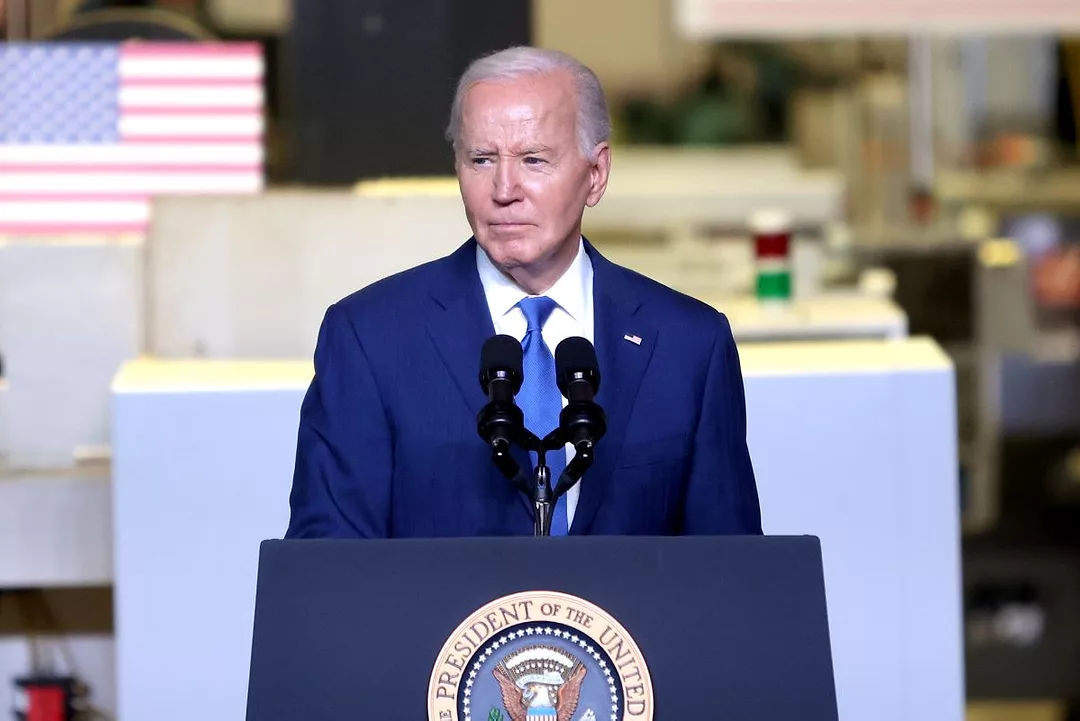
Photo: Bloomberg
President Joe Biden’s administration is poised to unveil a sweeping decision on China tariffs as soon as the week of May 13, one that’s expected to target key strategic sectors with new levies while rejecting the across-the-board hikes sought by Donald Trump, people familiar with the matter said.
The decision is the culmination of a review of Section 301 tariffs first put into place under Trump starting in 2018. The U.S. will impose new, elevated tariffs that focus on key industries including electric vehicles, batteries and solar cells. Other existing China levies are expected to largely be maintained. An announcement is scheduled for May 14, two of the people said.
While a decision could be delayed, it nonetheless represents one of Biden’s biggest moves in the economic race with China. It builds on his call in April to hike tariffs on Chinese steel and aluminum, and the formal launch of a fresh probe into China’s shipbuilding industry.
The yuan weakened on the news, while the CSI 300 Index of Chinese shares fell as much as 0.6% in early trading May 9, before rallying.
“It’ll definitely cause investors to pause on stocks that are potentially exposed,” said Xin-Yao Ng, director of investment at abrdn, adding that many green-tech brands such as battery giant Contemporary Amperex Technology Co. Ltd. already have limited U.S. exposure. “Everyone knows it’s a risk.”
The tariff rate on electric vehicles is expected to quadruple from roughly 25% to 100%, the Wall Street Journal reported May 3, citing people familiar with the plans. An additional 2.5% duty would apply to all automobiles imported into the U.S., the paper reported.
The full scope of the incoming tariffs — including rates and the total list of sectors that will be impacted — is not clear. The White House declined comment. It’s also unclear what, if any, sectors might see tariff reductions on particular goods, though large-scale reductions aren’t expected.
China’s Foreign Ministry said the tariffs imposed by the previous U.S. administration “seriously disrupted” economic and trade exchanges between the two countries. It called on Washington to cancel the restrictions, and added that China will take steps to defend its rights and interests.
“Instead of correcting its wrong practices, the United States continued to politicize economic and trade issues,” Lin Jian, a ministry spokesman, said at a regular briefing on Friday. “To further increase tariffs is to add insult to injury.”
President Xi Jinping’s strategy of ramping up manufacturing to arrest an economic slowdown at home has triggered alarm abroad. U.S. and European Union leaders have scolded Beijing over state support that they say has fueled a deluge of cheap exports that threaten jobs in their markets. The EU launched an EV subsidy investigation in October that may lead to additional tariffs by July.
The U.S. is standing up to China’s “unfair economic practices and industrial overcapacity,” Biden said in April. “I’m not looking for a fight with China. I’m looking for competition, but fair competition.”
The tariffs would likely have little immediate impact on Chinese firms, since its world-beating EV manufacturers have steered clear of the U.S. market due to tariffs. Its solar companies mostly export to the U.S. from third countries to avoid curbs, with U.S. firms seeking higher tariffs on that trade, too.
Biden and Trump are jockeying to be seen as tough on China as they head toward an election rematch in November. Biden signed into law a bill last month that began a countdown for video-sharing platform TikTok to divest from its Chinese parent ByteDance Ltd., or quit the American market.
Trump has promised to hike tariffs on China across the board if reelected, vowing a 60% tax on all Chinese imports. Many Democrats have dismissed that approach, in part because it would raise prices for U.S. consumers grappling with inflation.
During Trump’s last administration, Washington and Beijing became embroiled in a tit-for-tat trade war in which China retaliated with measures that aimed to exact pain in the American heartland by targeting agricultural exports.
U.S. Senator Chuck Grassley, an Iowa Republican, expects Beijing to respond again. “We know how China reacted when Trump put tariffs on,” he said. “They hit agriculture with it. I can’t be sure that China would hit agriculture the same as they did in the Trump ones, but they’re going to hit back.”
Strategic Tariffs
Biden’s announcement would be formally enacted by the office of U.S. Trade Representative Katherine Tai, who in April said that she expected a conclusion to a review that began in 2022 to end soon. The administration had been looking at ways to make the tariffs more strategic and effective, she added.
The move comes after Biden in April proposed new 25% tariffs on Chinese steel and aluminum as part of a series of steps to shore up the American steel sector and woo its workers in an election year. That vow was viewed as largely symbolic, because China currently exports little of either metal to the U.S.
Beijing responded with restraint to the threat of metal curbs, imposing tariffs on U.S. propionic acid, an export market worth $7 million to America last year, according to customs data. Still, ramping up tariffs on a broader spectrum of industries could prompt a stronger response from Chinese officials.
The full range of existing duties spans imports from industrial inputs, such as microchips and chemicals, to consumer merchandise including apparel and furniture. Trump imposed the first of the tariffs in 2018, citing section 301 of the Trade Act of 1974.
For years, internal divisions prevented Biden’s team from arriving at a consensus on what to do about the tariffs. Some officials, including Treasury Secretary Janet Yellen, had argued that reducing curbs on household items could help ease U.S. inflation.
While the Biden administration had considered the political implications of changes to the tariffs, U.S.TR in late 2022 began a legally required formal review of their impact. In the absence of such an evaluation, the curbs would have started to automatically expire in mid-2022.
Under Trump, Washington and Beijing reached the so-called phase one agreement in early 2020. That reduced some duties in exchange for China pledging to address intellectual-property theft and increase its purchases of energy, farm and manufactured goods, along with services, by $200 billion in the two years through the end of 2021. China fell more than one third short of its promises.
Biden’s tariff move comes after his nation’s turbulent relationship with China has stabilized in recent months amid a flurry of diplomatic engagements. After the U.S. president met his Chinese counterpart in California in November 2023, Biden said they had achieved “real progress.”
Popular Stories





SupplyChainBrain 2026 ESG Guide: ESG — The Supply Chain’s Biggest Secret
VIEW THE LATEST ISSUECase Studies


Visit Our Sponsors |
|
|
|
|
|
|
|
|
|
|
|
|
|
|
|
|
|
|
|
|
|
|
| |
|
|
|
|
|
|
|
|
|
|
|
|
|
|
|