
SCB FEATURE
Low Prices, Human Costs: Has Online Retail Crippled the Ethical Supply Chain?
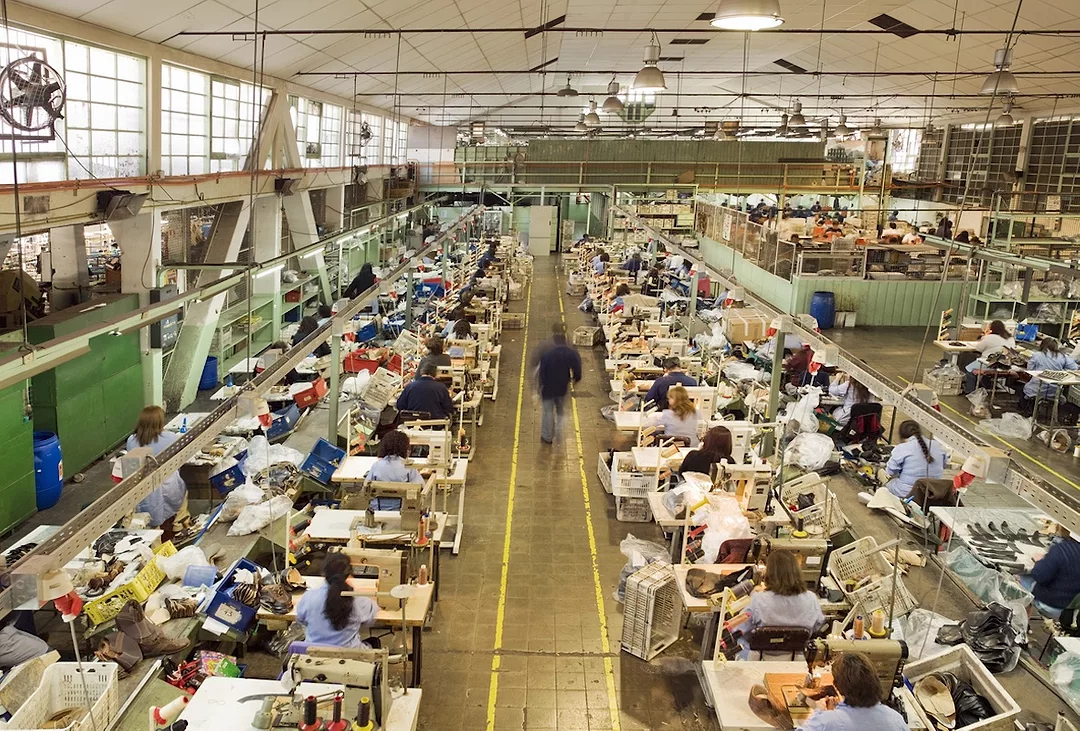
Photo: Felipe Dupouy, iStock
As consumers have become accustomed to a brave new world of online retail characterized by impossibly low prices, the human cost behind those products has been substantial.
The low-price trend has been led by retailers like Shein and Temu, known for inexpensive products that come paired with plenty of caveats. In April of 2023, a report from a U.S. congressional commission tied both companies — along with a smattering of other Chinese retailers — to allegations of forced labor and poor working conditions, including claims that employees at multiple Shein factories worked 18-hour days with no overtime pay and just one day off a month.
The issue hasn't been limited to just Shein and Temu, either, extending to a larger fashion industry plagued by questionable working conditions. According to Reuters, an Italian court ruled in June against a company that makes handbags for luxury fashion brand Dior, over allegations that the company had subcontracted its manufacturing out to Chinese suppliers who had forced workers to live in factories 24 hours a day. In its ruling, the court also asserted that the poor labor conditions highlighted by this case were endemic to the entire fashion industry at-large.
Read More: Shein — Supply Chain Innovator, or Rule-Breaker?
Globally, human rights watchdog group Walk Free estimates that $161 billion worth of clothing and textiles fall into an area of risk that makes them prone to being produced by forced labor annually, driven by a push to keep prices low, and labor costs down. And despite enthusiastic commitments to keeping supply chains ethical from many major players in the industry, the reality is that these are difficult promises to keep.
"The whole notion of an ethical supply chain is kind of at odds with what's been happening in the industry for pretty much the whole time I've been in it," says Richard Danderline, CEO for shipping container company Staxxon and former CFO at fashion retailer Kenneth Cole. "There has been a relentless drive in the United States to find low cost manufacturing sources, so if your objective ultimately is to drive the cost down, somewhere in the supply chain someone is paying that price."
Danderline — who also spent four years as the CFO/COO for Marc Fisher Footwear and 13 years as the CFO for shoe company Aerosoles — says that achieving an ethical supply chain has become "a checklist exercise," where retailers will require their suppliers to confirm that their labor practices are up to par, but will lack the resources to actually enforce the mandate. Even the most well-intentioned companies struggle to fully regulate their suppliers.
Attorney Angela Santos, who works with companies to navigate the world of ethical labor practices, has seen that firsthand.
"A U.S. retailer isn't able to review the labor practices of each and every supplier in every tier of their supply chain," she says. "That would be not only very expensive to do, but time-consuming."
A crucial part of that, Santos says, is the current lack of transparency, making it difficult for companies to effectively monitor the practices of what can often be thousands of suppliers, and where materials from a single item of clothing can come from multiple countries.
She uses the manufacturing process for a single shirt as an example, asserting that it can be nearly impossible to track whether all of its various materials were ethically sourced, how much the workers who sewed that shirt were paid, how much vacation (if any) they get regularly, whether employers retain their passports, or even if they're allowed to collectively bargain as a union.
Even so, she believes that the industry is still capable of making positive strides if there's enough buy-in from all involved. To that end, she says that any shift would have to be "a structural change for the entire supply chain," where governments, businesses, and suppliers are willing to work together to ensure workers are treated ethically and paid fairly at every level.
Read More: Nearly a Fifth of Tested Cotton Products Linked to Forced Labor in China
"You have to do the best you can using the resources that are available," Santos says, pointing out that many of the regulations designed to address these issues are still relatively new.
That includes the Uyghur Forced Labor Prevention Act (UFLPA) passed by the U.S. in 2022, which gave Customs and Border Protection the authority to detain any imports with presumed ties to forced labor in China's Xinjiang province. Two years later, the EU passed new regulations of its own, giving it the authority to investigate "suspicious" manufacturers alleged to be using forced labor, and then ban their products from the EU market if those suspicions prove to be true.
"Companies and their suppliers are still learning how to deal with this," Santos says. "I think they're doing a good job given the resources and how new this is, but there's work to do, and certainly there are gaps."
Danderline sees a much steeper climb, given the reluctance of retailers and consumers alike to absorb the higher cost of an ethical supply chain.
"Practically speaking, I think it's very difficult, if not impossible, to make giant strides," he says. "It would involve people accepting the concept that prices will have to go up, and I don't think that'll happen in my lifetime."
That's only been exacerbated by the rise of fast fashion, as Shein and Temu have seen their market values skyrocket while doubling down on ultra-low prices. Between 2017 and 2023, Shein saw its annual revenue rise from $1.55 billion to $32.5 billion. Temu has experienced a similarly meteoric rise, from $260 million in yearly revenue in 2017 to $34.8 billion in 2023.
"The whole concept of Shein and fast fashion is the total antithesis of an ethical supply chain," Danderline asserts. "Their whole reason for success is their pricing — do you think that they're going to be quick to upset that model, and perhaps cede market share that they've battled so hard over the past few years to achieve?"
Still, there are also success stories to be found outside the world of online retail. One such story involves British grocery chain Waitrose, which made a commitment in 2020 to ethically source the cocoa in its store-branded chocolate bars, and for all of its other branded products by 2024. This is in the face of a chocolate industry which has had its own issues with lax labor standards, with the U.S. Department of Labor estimating that there are more than 1.5 million child laborers in the cocoa sector in Ghana and the Ivory Coast, where half the world's supply of cocoa is grown.
So, Waitrose joined a global sourcing initiative to improve supply chain visibility and end child labor practices across the cocoa industry. Part of that was paying farmers more to ensure they're receiving a living wage, and then absorbing that higher cost by charging more for chocolate sold in stores. Since then, Waitrose says, it's actually seen sales for its chocolate bars increase year-over-year, and the reception from customers has been overwhelmingly positive.
And while Waitrose's approach is far from a one-size-fits-all solution, there are still lessons that can be applied to any industry.
"Knowing and learning about your supply chain is the starting point," says Chloé Rotureau, an ethics and sustainability specialist at Waitrose's parent company, the John Lewis Partnership. "You can't improve what you don't know or don't see. Equally, you can't set realistic standards and expectations without transparent and honest conversations with your partners."
Popular Stories



.webp?height=100&t=1781496076&width=150 "015_bringing_the_loading_dock_up_to_speed_v1 (540p).png")

SupplyChainBrain 2026 ESG Guide: ESG — The Supply Chain’s Biggest Secret
VIEW THE LATEST ISSUECase Studies


Visit Our Sponsors |
|
|
| |
|
|
|
|
|
|
|
|
|
|
|
|
|
|
|
|
|
|
|
|
|
|
|
|
|
|
|
|