
SCB FEATURE
ESG Backtracking Is an Invitation to Forge Ahead, With Revised Business Goals
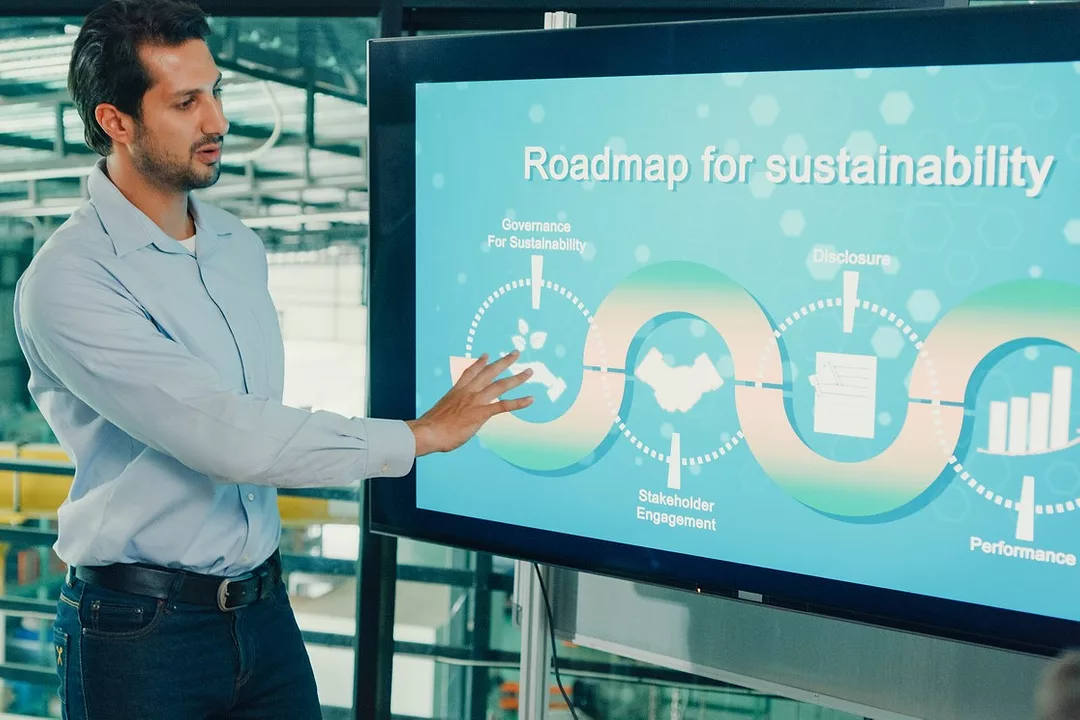
Photo: iStock/MTStock Studio
With environmental, social and governance regulations being rolled back worldwide (but most notably in the U.S.), it might be tempting for companies to take a break from pushing forward with previously stated initiatives. To be sure, fuel efficiency saves hard cash, and vetting suppliers for human rights violations can improve corporate brands and therefore sales. But, as most have discovered, ESG initiatives tend to involve time, money and complexity, along with resistance to change. As a result, some companies are considering throttling back on ESG.
Not so fast, says Scott Lehmann, vice president of operational risk and supply chain at Sphera, a sustainability and operational risk software company. It’s actually a great opportunity to reassess how ESG can serve business priorities, he says, and there’s little doubt that it can be done right. “This phase of the sustainability lifecycle is coming down to focusing on what matters most.”
ESG leaders generally believe that recent U.S. policy shifts could slow corporate progress on sustainability, decarbonization and the domestic energy transition, according to a May, 2025 report generated from a survey of 125 ESG executives — 80% of whom represent U.S.-headquartered firms — by the Conference Board entitled “Sustainability Under Scrutiny: Corporate ESG in an Uncertain Policy Environment.”
Many point to potential headwinds from regulatory rollbacks, reduced federal support for renewable energy, and legal challenges to climate-related accountability measures. Some also expect private investment in clean tech and supply chain sustainability to moderate amid heightened uncertainty. Notably, far more respondents expect the energy transition to slow more in the U.S. than globally. This reflects the view that momentum remains strong elsewhere, with China, the European Union and others accelerating investment, regulation and innovation — potentially positioning them to outpace the U.S. in setting standards and capturing market share.
Even before the current Trump administration embarked on its “anti-woke” policies that include renewed support for the fossil fuel industry, among other strategies, there were signs of drop-off. In September, 2024, the Harvard Law School Forum on Corporate Governance published its “State of U.S. Sustainability Reports,” which analyzed 250 reports from S&P 500 companies. It indicated a falling off of communications about ESG efforts. At the time of the study, the number of companies issuing press releases with sustainability reports stood at 49%, down from 75% when the forum first began tracking such activity in 2021 At the same time, the report’s authors said, ESG microsites are ubiquitous, providing stakeholders with a variety of opportunities to interact with a company’s ESG initiatives.
While concerns about a possible chilling effect in the U.S. are widespread, not all respondents anticipate uniform or lasting disruption, and many acknowledge that market forces, technological innovation and state- and international-level statutes will continue to drive progress despite federal policy changes.
Read More: How Retailers Resolve the Sustainability vs. Cost Dilemma in E-Commerce Home Delivery
In assessing companies' commitment to ESG, Lehmann sorts them into three groups. The first is those that were already out in front, and continue to move full speed ahead. Seond are the organizations that were on the bus because they had no choice, and are now questioning if they still have to move forward. But the biggest group, says Lehmann, falls in between. “They see this as a momentary breather where they’re saying: 'How do we reframe and reassess this? We have more time to figure it out.'”
For all, the emphasis now is (or should be) on figuring out how to tie ESG to broader business goals. “Some are saying: 'We were really ambitious trying to do everything, but how do we do this so it makes the most impact on our business? For example, what is the impact on our supply chain?” says Lehmann. He sees companies stepping back and figuring out the key issues in their specific industries. That might be human rights for fashion; pollution for chemical companies, or decarbonization for a range of other industries. It also makes a difference whether the company is B2B or B2C, the latter of which currently requires a stronger demonstration of ESG efforts.
Lehmann advises companies to recalibrate their ESG initiatives with their business objectives. Part of that effort is examining what he describes as the “alphabet soup” of regulations and oversight bodies, then figuring out how to harmonize all operations to maximize compliance. “You can say: 'We’ve got a little more time. Let’s get our house in order.”
Next, companies should look at their data strategy — how they collect, analyze and use it to automate operations and decisions with artificial intelligence. “It’s not just about data collection, but getting it in the right format,” Lehmann says. Data technology can also help companies look to the future, through modeling scenarios and making risk assessments. “That helps you figure out where to focus your efforts when you have to start reporting this.'”
Lastly, he says, it’s time to incorporate ESG goals into a company’s overall resilience efforts, and view it as something for everyone to implement and monitor. “Sustainability has become much more embedded into how an organization operates,” says Lehmann. “Yes, there are separate departments, and maybe a sustainability officer, but let’s bring this in companywide, so that it’s about everything we do, and is good for the business.”
Read More: Making the Green Math Work
For some companies, the temptation to abandon or severely limit ESG initiatives will be too much to resist. But Lehmann believes ESG will follow a path into the core of business practices similar to that of "quality" management in the 1970s and '80s. For organizations at the time, he says, "It became just part of the manufacturing process.”
Some ESG efforts will indeed be scaled back, Lehmann says, "But I don’t think you’ll see a lot of it being completely abandoned, Customers want this, and they’re wary of greenwashing. Even those looking for the off-ramp won’t be able to completely get off it.”
Popular Stories





100 Great Supply Chain Partners 2026: The Secret to Supply Chain Success
VIEW THE LATEST ISSUECase Studies


Visit Our Sponsors |
|
|
|
|
|
|
|
|
|
|
|
|
|
|
|
|
|
|
|
|
|
|
|
|
|
|
|
|
|
|
|
|
|
|
|
|
|
|
|
|
|
|
|
|
|
|
|
|
|
|
|