• Advertise
  • Contact Us
  • Supplier Directory
  • SCB YouTube
  • About Us
  • Login
  • Subscribe
  • Logout
  • My Profile
  • LOGISTICS
    • Air Cargo
    • All Logistics
    • Facility Location Planning
    • Freight Forwarding/Customs Brokerage
    • Global Gateways
    • Global Logistics
    • Last Mile Delivery
    • Logistics Outsourcing
    • LTL/Truckload Services
    • Ocean Transportation
    • Parcel & Express
    • Rail & Intermodal
    • Reverse Logistics
    • Service Parts Management
    • Transportation & Distribution
  • TECHNOLOGY
    • All Technology
    • Artificial Intelligence
    • Cloud & On-Demand Systems
    • Data Management (Big Data/IoT/Blockchain)
    • ERP & Enterprise Systems
    • Forecasting & Demand Planning
    • Global Trade Management
    • Inventory Planning/ Optimization
    • Product Lifecycle Management
    • Robotics
    • Sales & Operations Planning
    • SC Finance & Revenue Management
    • SC Planning & Optimization
    • Supply Chain Visibility
    • Transportation Management
  • GENERAL SCM
    • Business Strategy Alignment
    • Customer Relationship Management
    • Education & Professional Development
    • Global Supply Chain Management
    • Global Trade & Economics
    • Green Energy
    • HR & Labor Management
    • Quality & Metrics
    • Regulation & Compliance
    • Sourcing/Procurement/SRM
    • SC Security & Risk Mgmt
    • Supply Chains in Crisis
    • Sustainability & Corporate Social Responsibility
  • WAREHOUSING
    • All Warehouse Services
    • Conveyors & Sortation
    • Lift Trucks & AGVs
    • Order Management & Fulfillment
    • Packaging
    • RFID, Barcode, Mobility & Voice
    • Warehouse Automation
    • Warehouse Management Systems
  • INDUSTRIES
    • Aerospace & Defense
    • Apparel
    • Automotive
    • Chemicals & Energy
    • Consumer Packaged Goods
    • E-Commerce/Omni-Channel
    • Food & Beverage
    • Healthcare
    • High-Tech/Electronics
    • Industrial Manufacturing
    • Pharmaceutical/Biotech
    • Retail
  • THINK TANK
  • WEBINARS
    • On-Demand Webinars
    • Upcoming Webinars
    • Webinar Library
  • PODCASTS
  • WHITEPAPERS
  • VIDEOS
Home » Building Better Demand Planning for Retail Manufacturers
FORECASTING & DEMAND PLANNING

Building Better Demand Planning for Retail Manufacturers
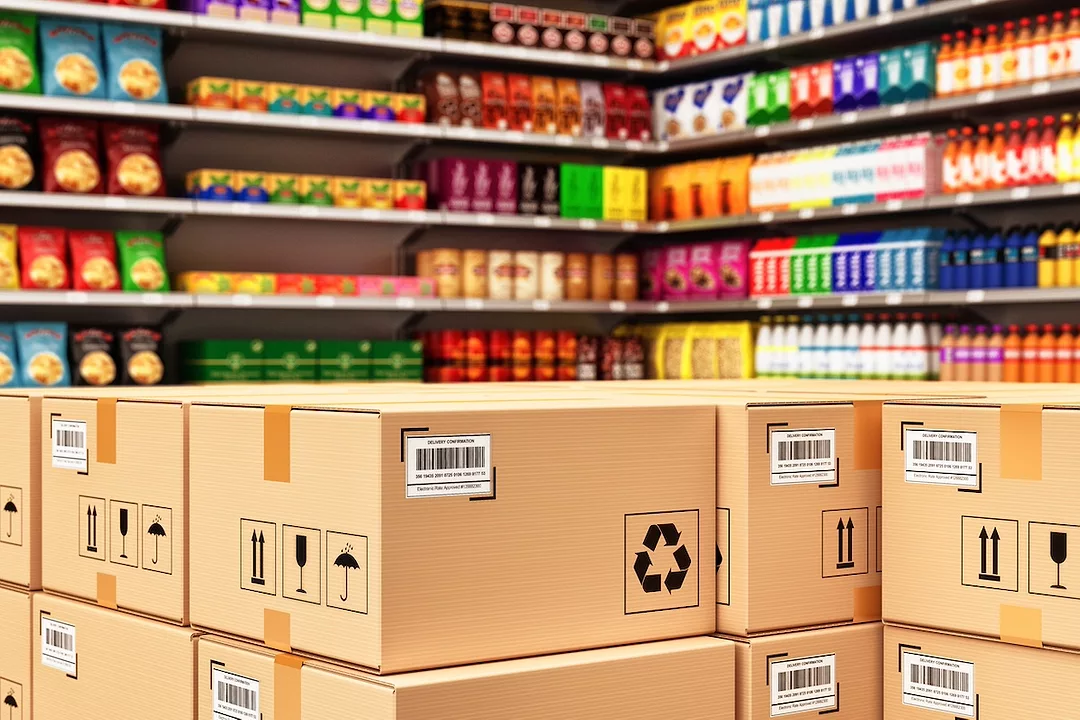
Shelves of multi-colored jars, cartons and potato chip bags, with a stack of brown cardboard boxes in the foreground

Photo: iStock / cybrain

February 2, 2026
Darryl Landvater, Business Advisor, Oliver Wight Americas

Oliver-Wight-Landvater.pngAnalyst Insight: For manufacturers, demands from their retail customers can be volatile and unpredictable, resulting in inventory swings, production disruptions and missed opportunities. The root cause of this problem is a lack of integration between the retailer and manufacturer. Manufacturers are attempting to predict what their retail customers need rather than directly connecting to a valid “model of the business,” in order to provide the most accurate prediction of what the retailer will buy. 

The problem isn’t a result of a lack of solutions. It’s built on a concept tested and proven for over 40 years: supplier scheduling. Central to systems like material requirements planning, supplier scheduling links a manufacturer’s planning system with its suppliers. The difficulty in applying this to retail has been building a practical “model of the business” for retailers. The biggest challenge is volume. Only recently have planning systems been capable of handling both the scale and retail-specific requirements in a practical, affordable way.

The most effective approach for manufacturers is to leverage the output of a retailer’s own planning system — the supplier schedule derived from store-level/DC-level distribution requirements planning (DRP). With an accurate supplier schedule, the manufacturer can use this schedule in place of a forecast, effectively eliminating guesswork, and replacing it with the retailer’s best prediction of what they will actually buy. 

For this to work reliably, the retailer’s system needs to be a true model of the business, and not just a forecasting and replenishment tool. A true model factors in real operational constraints that affect buying decisions, such as transportation needs, available storage space and cash flow or budget constraints. Because the DRP system accounts for these limitations, its output accurately reflects what the retailer will buy.

By incorporating real world constraints, the DRP model addresses retail volatility. It calculates separate baseline and promotion forecasts, scheduling initial distributions to ensure shelf displays are ready ahead of promotions and seasonal demand. 

While technology provides the infrastructure, the greatest improvements in demand planning accuracy are achieved through human judgment. 

For four decades, “best-in-class” performance has been driven by better assumptions, not more complex math or AI. Forecasting involves two fundamental concepts: the future will resemble the past, and the future will differ from the past. The latter depends on assumptions. Continuously applying and revising assumptions is what makes the biggest difference in demand planning accuracy. When manufacturers receive a DRP-derived supplier schedule, they’re essentially receiving the retailer’s core assumptions, drastically reducing their own guesswork.

With this in mind, it’s key for manufacturers to vet the quality of these schedules. Simply running planning software does not guarantee its accuracy. 

Furthermore, true partnership starts when both parties align culturally and strategically.

Retailers have insights such as on-hand balances and new store openings, while manufacturers see the broader picture and overall product trends across many different retailers. Acknowledging that both parties involved have key insights that the other needs allows the shift towards a more collaborative partnership that encourages more information sharing. 

Resource Link: https://www.oliverwight-americas.com/

Outlook: Better demand planning is achieved when manufacturers and retailers embrace a collaborative culture, and leverage systems that function as a true model of the business. By validating retailer-derived supplier schedules, manufacturers can replace internal guesswork with reliable demand signals grounded in the retailer’s operational reality, transforming a decades-old problem into a powerful competitive advantage.

    RELATED CONTENT

    RELATED VIDEOS

    Artificial Intelligence Cloud & On-Demand Systems Data Management (Big Data/IoT/Blockchain) Forecasting & Demand Planning Business Strategy Alignment
    • Related Articles

      Aldata Unveils Omni-Shopper Suite for Retail, CPG Manufacturers

      Data-Driven Forecasting and Demand Planning for 2026

      NetSuite Adds Demand Planning; Partners for Cloud Computing

    Darryl Landvater, Business Advisor, Oliver Wight Americas

    More from this author

    Subscribe to our Daily Newsletter!

    Timely, incisive articles delivered directly to your inbox.

    Featured Product

    Popular Stories

    • Businessman using AI agent system on laptop computer.

      AI in Supply Chain Can’t Succeed Without Foundational Systems

      Artificial Intelligence
    • A LARGE CYLINDRICAL OBJECT SHRINK-WRAPPED IN WHITE PLASTIC IS LOWERED BY CRANE ONTO A FLAT BED TRUCK ON A DOCK

      AI Boom Has European Buyers Paying Extra to Secure Gas Turbines

      Technology
    • DOMINO EFFECT FINANCIAL MONEY KNOCK-ON CONSEQUENCES iStock-Devrimb-1500012566.jpg

      Podcast | The Tariff Conundrum for Supply Chains: Pass Along, or Absorb?

      Supply Chain Finance & Revenue Management
    • 016_ai_and_data_transformation_in_distribution_v1-(540p).png

      Watch: AI and Data Transformation in Distribution

      Artificial Intelligence
    • TWO WORKERS DISCUSS DATA SHOWN ON COMPUTER SCREENS

      Gartner: Gap in SC AI Talent Cannot Be Closed by Hiring Alone

      Artificial Intelligence

    Digital Edition

    2026 esg cover main scb q2 2026 cover

    SupplyChainBrain 2026 ESG Guide: ESG — The Supply Chain’s Biggest Secret

    VIEW THE LATEST ISSUE

    Case Studies

    • Recycled Tagging Fasteners: Small Changes Make a Big Impact

    • A GRAPHIC SHOWING MULTIPLE FORMS OF SHIPPING, WITH A HUMAN STANDING AT THE CENTER, TOUCHING A SYMBOLIC MAP OF THE WORLD

      Enhancing High-Value Electronics Shipment Security with Tive's Real-Time Tracking

    • A GRAPHIC OF INTERLACING HONEYCOMBED ELEMENTS REPRESENTING GLOBAL BUSINESS TRANSACTIONS

      Moving Robots Site-to-Site

    • JLL Finds Perfect Warehouse Location, Leading to $15M Grant for Startup

    • Robots Speed Fulfillment to Help Apparel Company Scale for Growth

    Visit Our Sponsors

    4flow Arkieva Blue Yonder
    Carton Cloud CoEnterprise Dassault
    Duravant E2Open General Logistics Systems
    Hy-Tek iGPS Korber
    Lyngsoe Procurability Quinyx
    SAP Sikick Systech
    S&P Global Mobility TADA TransImpact
    US Bank Werner Enterprises WSI
    • More From SCB
      • Featured Content
      • Video Library
      • Think Tank Blog
      • SupplyChainBrain Podcast
      • Whitepapers
      • On-Demand Webinars
      • Upcoming Webinars
    • Digital Offerings
      • Digital Issue
      • Subscribe
      • Manage Email Preferences
      • Newsletters
    • Resources
      • Events Calendar
      • 2026 Event Coverage
      • SCB's Great Supply Chain Partners
      • Supplier Directory
      • Case Study Showcase
      • Supply Chain Innovation Awards
      • 100 Great Partners Form
    • SCB Corporate
      • Advertise on SCB.COM
      • About Us
      • Privacy Policy
      • Contact Us
      • Data Sharing Opt-Out

    All content copyright ©2026 Keller International Publishing Corp All rights reserved. No reproduction, transmission or display is permitted without the written permissions of Keller International Publishing Corp

    Design, CMS, Hosting & Web Development :: ePublishing