
SCB FEATURE
‘Smart’ Glasses Are Back: First, for the Warehouse. Then, Consumers
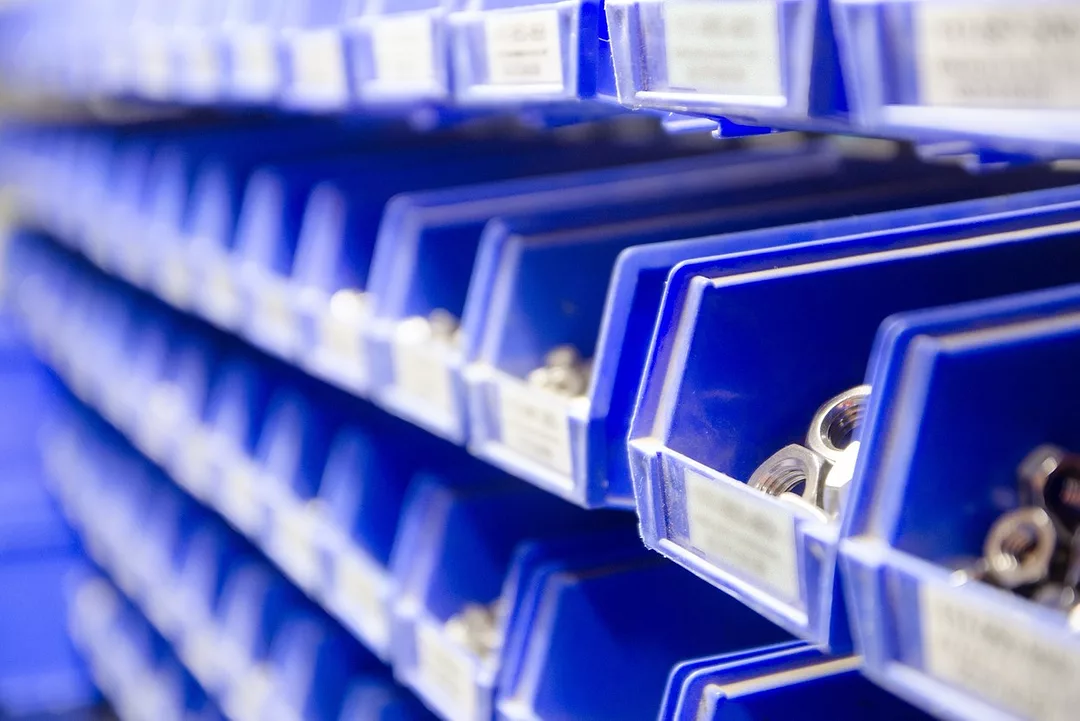
Photo: iStock/Marc Dufresne
Google Glass wasn’t the first “smart” glasses to hit the consumer market when it debuted in 2013. Sony, Philips and Epsom were among the innovators that preceded it with some variation on a computer built into eyeglasses. And the concept can be traced all the way back to the mid 1960s.
For consumer use, however, smart glasses have been slow in gaining traction. The first generation of Google Glass suffered an ignoble end just two years after introduction for two main reasons: It made a lot of mistakes, and it looked clunky and unattractive (even by the standards of tech geeks). In addition, there were privacy concerns and a high price tag to contend with.
Smart glasses got a better reception in the warehouse, where an increasingly sophisticated array of wearable devices allowed for hands-free scanning, picking and inventory management. But that technology, too, has required a lot of testing and tweaking before it can be considered a viable tool in material handling. It has had to get in line behind earlier breakthroughs such as pick-to-light and, especially, voice-directed picking and putaway systems.
Now, the state of the art in the warehouse has advanced to the point where developers are predicting, if not the outright replacement of voice by smart glasses, the success of a hybrid model that definitely favors the latter. And nobody cares what a smart-bespectacled warehouse worker looks like.
Chris Parkinson, president of enterprise solutions with Vuzix Corp., believes that in the warehouse, smart glasses’ time has come. His company has introduced a ruggedized, headband-mounted model dubbed the LX1, for use in maintenance, field service and warehousing, and which recently received both FCC and CE certification for use in the U.S. and Europe, respectively. The model supports what Vuzix terms “a hybrid vision-plus-voice workflow.”
Parkinson says there’s “no single smoking gun” that explains the slow advance of smart glasses for industrial use, although one possible factor is that initial users didn’t understand how best to deploy the unfamiliar model. (Tilting one’s head to scan individual barcodes on small items, for example, isn’t the ideal use.) But real-world successes of the last five or so years, along with workshops to explain the devices’ plusses and minuses in specific settings, have helped to promote acceptance.
Wearability is another issue. Older models were too heavy and clunky. “Nobody wants to wear 10 pounds on their head,” Parkinson says. Lighter and better-balanced versions, coupled with increased ruggedness for use in tough environments, took care of that problem. So did longer battery life — the latest models can operate for 12 hours without charging, and the batteries are swappable.
Voice-only picking systems were hampered by poor audio, noisy work environments and the need to accommodate the different speaking patterns of a diverse workforce. Video on the new hybrid models is better, too, Parkinson says, allowing for operations in low light and being able to scan multiple barcodes at once.
Finally, of course, there’s artificial intelligence, the technology that underpins every “smart” device in operation today. Parkinson says AI can analyze the live camera feed, optically recognize purchase orders and handwritten addresses, and instantly determine where a given box needs to go.
The display on the glasses is placed just below the worker’s line of sight, so it doesn’t obscure a view of the actual environment. Magnifying optics make it readable. “Safety is paramount,” Parkinson says, adding that “you’re not going to read War and Peace in 12-point text.”
Voice remains very much a part of the system. A worker can still vocally designate items for picking, and today’s natural-language assistants are well-equipped to understand what’s being said in any environment.
Google Glass, meanwhile, is being reintroduced to the consumer market, this time in a more stylish format with a monocular display set into Ray-Ban frames. (No one would mistake Vuzix’s LX1 for an everyday set of eyeglasses.) The new units were developed in partnership with Samsung, Gentle Monster and Warby Parker. The hope is that a younger, tech-friendly generation will be more open to wearing a computer on the head — albeit one that looks a lot less geeky.
Parkinson expects no such issues to be of concern in the industrial world, where productivity is paramount. Younger workers have little problem adopting the smart glasses, he says, and their easy acceptance is motivating older colleagues to do the same, albeit a little more slowly.
Eventually, Parkinson says, the industrial version will move to a form factor similar to that of traditional safety glasses, making them even less bulky and conspicuous. And gradually, the technology for workers and consumers should merge. But for that to happen, he says, “the cost has got to come down, and the glasses need to be a bit more ruggedized.”
Popular Stories




100 Great Supply Chain Partners 2026: The Secret to Supply Chain Success
VIEW THE LATEST ISSUECase Studies


Visit Our Sponsors |
|
|
|
|
|
|
|
|
|
|
|
|
|
|
|
|
|
|
|
|
|
|
|
|
|
|
|
|
|
|
|
|
|
|
|
|
|
|
|
|
|
|
|
|
|
|
|
|
|
|
|