
ENVIRONMENTAL
How Better Data, Connected Planning, and AI Are Reshaping Food Waste
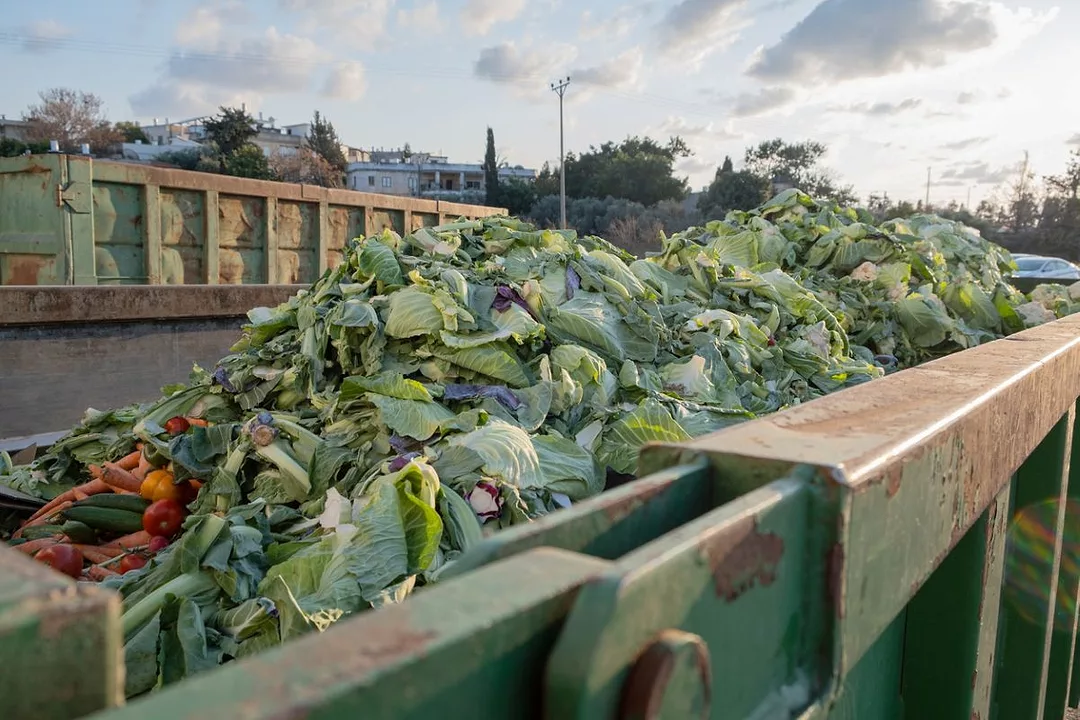
Photo: iStock/Roman Mykhalchuk
 Analyst Insight: As sustainability initiatives change, food waste remains one of the supply chain’s most persistent environmental problems, the companies making real progress are attacking it through better measurement, data visibility and advanced planning, which will only continue to advance as technology develops.
The sustainability conversation has changed in the past year. The U.S. administration has pulled back from climate commitments, while in Europe, new reporting mandates are pushing companies toward greater environmental transparency. But one environmental issue continues to unite boardrooms across geographies and political parties: food waste. It is one of the clearest cases where environmental responsibility and financial performance point in exactly the same direction.
Globally, food waste and loss account for an estimated 8% to 10% of total greenhouse gas emissions. In the U.S. alone, the food surplus is valued at $382 billion, according to ReFED. Food waste, at its core, is revenue in the trash. That’s why its reduction has remained an operational priority even as other sustainability topics have been minimized. While it is a complex problem to solve, developments over the past year in technology, data and planning have started to change the equation.
The first and most fundamental shift is in measurement. One of the longest-standing barriers to food waste reduction has been that companies simply didn’t know how much they were losing or where. According to data from the U.S. Food Waste Pact, the share of unsold food items categorized as “unknown” dropped from 27% to 15% in a single year. That means retailers who previously had little visibility into what happened to unsold products are getting a better handle on tracking where they go. Further operational improvement is possible.
Better data is only useful, though, if it reaches the right people at the right time. In many organizations, the teams responsible for merchandising, supply chain, and store operations work from different data sets and hold different priorities. A merchandising team focused on assortment and promotional impact may not be weighing the waste consequences of those decisions. A supply chain team managing replenishment may not have real-time visibility into what is actually selling at the store level. Even when good data exists, it often sits in silos where it cannot inform the planning decisions that drive waste outcomes.
The silo problem extends beyond company walls. In many supply chains, each node operates on its own demand forecast. The retailer guesses what customers will buy. The wholesaler guesses what the retailer will order. The manufacturer guesses what the wholesaler will need.
Even when data does flow to the right teams, the methods of collecting data need to advance. In many grocery operations, store-level produce ordering still relies on manual counts. The process is labor-intensive and often imprecise when repeated daily across thousands of stores.
This is where more advanced, integrated planning makes a tangible difference. When forecasting operates at the store and SKU level, accounting for shelf life, batch expiration, local demand patterns and price sensitivity, the accuracy of replenishment decisions improves significantly. The difference between ordering two cases and three cases of strawberries for a Tuesday delivery at a specific store may seem trivial, but multiplied across hundreds of locations and dozens of fresh items, those incremental gains in precision compound into meaningful waste reduction and savings.
Companies that have invested in this kind of granular planning are seeing substantial decreases in spoilage across perishable categories, and the environmental impact is direct: Less food waste means fewer emissions from production, transport, and decomposition. In 2025, RELEX customers across retail, wholesale and manufacturing collectively prevented more than one billion pounds of food waste, a 34% increase over the prior year.
The technology behind this planning is advancing rapidly. Machine learning and artificial intelligence are opening possibilities that were out of reach even just a year ago. Automated inventory recognition in stores could reduce the dependence on manual counts. Emerging agentic AI capabilities could take this further, enabling planning systems to autonomously detect shifts in demand or shelf conditions, and adjust orders without waiting for human intervention.
More sophisticated price optimization could help companies adjust in real time when demand shifts, rather than reacting after waste has already occurred. And, as environmental data becomes more standardized at the product level, planning systems will eventually be able to factor carbon impact into assortment and sourcing decisions alongside cost and availability.
The UN’s global target to halve food waste by 2030 is now just four years away. While this is a complex problem to solve across the entire supply chain, progress is being made through better data, connected planning, smarter forecasting, AI and machine learning tools. For an industry that loses hundreds of billions of dollars a year to food that never reaches a plate, the opportunity to turn that around has never been closer.
Popular Stories



.webp?height=100&t=1781496076&width=150 "015_bringing_the_loading_dock_up_to_speed_v1 (540p).png")

SupplyChainBrain 2026 ESG Guide: ESG — The Supply Chain’s Biggest Secret
VIEW THE LATEST ISSUECase Studies


Visit Our Sponsors |
|
|
| |
|
|
|
|
|
|
|
|
|
|
|
|
|
|
|
|
|
|
|
|
|
|
|
|
|
|
|
|