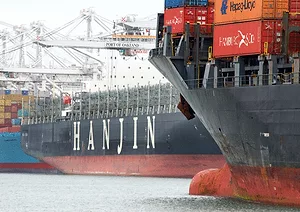
It's been the same drill for years: Ocean carriers and shippers talking service, then fixating on price. Is this disconnect finally about to be disrupted?
The consumer products industry has undergone radical change over the past several years, rendering older methods for matching supply to demand ineffective. Consider some of the upheavals facing consumer products manufacturers today.
Monster Moto, a producer of economically priced off-road vehicles, shifts from offshore production to domestic assembly, a move made possible by cutting its transportation and logistics expense.
Another ambitious program for fixing and expanding the nation's transportation infrastructure. With no clear way how to pay for it. Déjà vu strikes again.
For Xilinx Inc., a supplier of programmable logic devices, the focus is more on speed than optimization, says Alex Brown, vice president of supply chain.
Luxury clothing retailer Thomas Pink says it has deployed the Acuitas Digital Internet of Things (IoT) platform, which helps retailers to digitize the physical store, at its Wall Street store in New York City.
Radio frequency identification and sensor technology company Mojix has released a new set of products aimed at providing hands-free, item-level tracking for retailers and brands. Radio frequency identification and sensor technology company Mojix has released a new set of products aimed at providing hands-free, item-level tracking for retailers and brands.
DHL eCommerce, a division of Deutsche Post DHL Group, has launched a fulfillment center in Sydney to meet Australian domestic demand for overseas goods ordered by online shoppers, the company says.