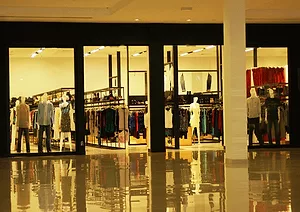
Picture yourself entering a department store and, instead of wandering around searching for the correct department or product, you are guided by an expert personal concierge. The concierge is not a person, but rather a humanlike smartphone assistant. Whether you want to know "where are women's shoes located?" or "is this dress available in size six?" this concierge is always at hand to assist you. This is what retail shopping may be fast becoming, thanks to the mass proliferation of artificial intelligence (AI)-based technologies.
FedEx Express is expanding its distribution hub at Paris-Charles de Gaulle (CDG) Airport with a €200m ($217.38m) investment in technology and automation, and a €1.2bn ($1.3bn), 30-year lease. The 30-year lease underscores the long-term importance of the European Union to the company's long-term plans. Once completed, FedEx said the upgrade will increase sorting capacity by 40 percent.
There will be a doubling in the number of 3D printers shipped this year, according to analysts. Gartner predicts 455,772 units will ship in 2016, compared to 219,168 in 2015, as firms use the technology to create prototypes, augment manufacturing processes and produce finished goods.
The message at Gartner's recent Symposium/ITxpo was to prepare for a fast move to augmented reality, the decline of mobile apps, a major shift away from web browsing and more. Many users will expect businesses, universities and governments to respond to these shifts, the market research firm said at its annual conference.
A new generation of footwear manufacturing, spearheaded by Bill McInnis, head of future at Reebok and a former NASA engineer, is allowing the fitness brand to design and create a high performance athletic shoe faster and more efficiently than ever before, the company says.
University of Massachusetts Memorial Medical Center says it will attach Visybl's Bluetooth beacons next month to packages of naloxone, an opioid-blocking drug, to determine whether patients discard the medication before leaving the premises and to gauge their willingness to have the medicine tracked.
If robots are taking human jobs, they haven't made much headway in Santa's workshop - or in his supply chain. It turns out that even the most technologically advanced retailers need lots of humans to serve customers. Amazon, arguably the most disruptive force in American retailing, announced last week that it would be hiring 120,000 seasonal workers this year - 20 percent more than last year - and the Seattle giant isn't alone.
Oracle's October security update is one of the largest ever, fixing more than 250 vulnerabilities in enterprise products that are used to store and work with business data, the company reported.
A hack at Sony Pictures that exposed more than 170,000 emails in 2014 derailed a much-hyped film's release and prompted a months-long industry freakout. A hacking incident at Yahoo now threatens to derail a sale to Verizon. WikiLeaks' releases of Democratic officials' hacked private emails are providing near-endless fodder for Donald Trump's presidential campaign. And yet, while large numbers of Americans appreciate the threat of getting hacked, they don't seem to be changing their behaviors in any appreciable way.
Startup Sewbo has announced that it used a robot to sew a T-shirt, producing the world's first robotically-sewn garment, which could mark a significant change for the global garment industry.