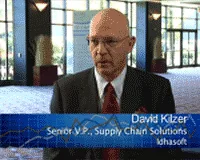
Supply-chain professionals have been sounding the warning bell about the coming talent shortfall for several years now. But who's listening? At a time when the economy at large is coping with high unemployment and sluggish job growth, the notion of a sector that can't attract enough qualified bodies is tough to grasp. Still, that's the reality in the supply-chain world today, and it's only going to get worse.
Downstream demand signals have been available in the retail world for some time now, but it has taken a while for suppliers to take full advantage of them. Mark Kremblewski, global business expert in demand planning with Procter & Gamble, likens the situation to the mining industry, which trades in deposits of both high- and low-grade ore. The latter type is more plentiful, but it's the first that offers the biggest payback from a better use of demand data in unpredictable situations.
Traceability always has been important to dairy cooperative Agri-Mark, but it has become even more of a focus since passage in 2010 of The Food Safety Modernization Act, which gives the Food and Drug Administration the right to make product recalls mandatory, rather than voluntary.
The Obama administration ordered tariffs of 31 percent and higher on solar panels imported from China, escalating a simmering trade dispute with China over a case that has sharply divided American interests in the growing clean-energy industry.
As a leading contract manufacturer of electronics, Celestica works with a diverse supply base comprised of thousands of vendors. Six years ago, the company began a major initiative to gain better visibility and control of supplier performance, an effort that led to creation of a proprietary supplier collaboration tool known as Live Share.
How we love our information systems, our management theories, our best-laid plans. And how often they fail us. It reminds me of what the playwright and novelist Samuel Beckett once said about his work. "Each time one thinks one starts fresh, new," he mused. "Yet each time one reaches the same impasse. There are many ways to begin, many roads to it, but always the same impasse at the end."
People, processes and technology are the three key areas where companies are experiencing "pain points" in their forecasting efforts, says Eric Ball, solutions manager with Avercast LLC. The people side is especially vital, given the trend within many companies of "trying to do more with less." Too often businesses rely on a new piece of technology to improve their forecasting, ignoring the need for humans to run the system. "Coupled with budget cutbacks left and right, developing personnel is a tremendous issue," he says.
California cantaloupe handlers have voted overwhelmingly in support of the state's first mandatory food safety program to be implemented by a commodity board. The California Department of Food and Agriculture said that 100 percent of handlers voting in a statewide referendum are in favor of amending the existing California Cantaloupe Advisory Board to establish the new food safety program.
The electronic industry has always been characterized by high variability in supply and demand. With recent natural disasters such as the earthquake and tsunami in Japan, and flooding in the parts of the U.S., the problem has only become more acute. Tackling it requires state-of-the-art systems, strong management commitment, good customer service, well-run business processes, integration among functions and effective inventory-control procedures, says Dave Lentz, director of innovation and solutions marketing with Avnet Electronics Marketing Americas.