While diesel engines remain the norm in shipping, competitors like LNG are becoming both more feasible and more available. Part of the reason is the rapid expansion of Sulfur Emission Control Areas (SECAs) across North America and Europe. So the critical question becomes: Does "green" propulsion allow the merging of economic efficiency with environmental benefits, or is it just another compliance cost for the shipping trade?
Import cargo volume at the nation's major retail container ports should see a small-but-significant increase this month as merchants stock up for the back-to-school season, then see a larger wave in late summer and fall for the holiday shopping season, according to the monthly Global Port Tracker report released by the National Retail Federation and Hackett Associates.
Lee Young, director of supplier quality with ThermoFisher Scientific, discusses how technology and business-process change have helped the company to tighten up its risk-management program.
Radio frequency identification (RFID) is hardly a cutting-edge technology. The system of scanning and identifying objects through the use of radio waves has roots that reach back to World War II. Since then, it's been used in countless tracking systems to monitor the movement of trucks and goods.
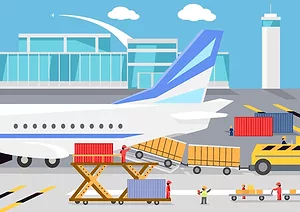
Lufthansa Cargo and All Nippon Airways (ANA) are extending their joint venture to combine Lufthansa's entire European feeder network with direct flights of both carriers.
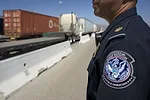
Trade Tech has partnered with Advent Intermodal Solutions to help truckers meet delivery schedules in light of the new container-weighing rules issued by the International Convention on the Safety of Life at Sea (SOLAS).
South Korean shipbuilding giant Hyundai Heavy Industries (HHI) has signed a memorandum of understanding to develop Internet of Things applications for ships with SK Shipping, Intel, Microsoft, the Ulsan Center for Creative Economy & Innovation (UCCEI) and the Daejeon Center for Creative Economy & Innovation (DCCEI).
The latest news, analysis, services and systems regarding transportation and distribution and their impact on global supply chains. Today’s companies are shipping and delivering perishables and manufactured goods faster and farther around the world than ever before through transportation and distribution solutions. New technologies that provide information during local and global shipments via air, ground and sea are transforming the way companies do business - and allowing them to stay ahead of the competition in their industries. As these services continue to evolve, businesses are discovering new ways to increase efficiency and cut costs. Learn how companies are using transportation and distribution solutions to power their supply chains.
Subscribe to our Daily Newsletter!
Timely, incisive articles delivered directly to your inbox.