Although the coalition's efforts were largely successful in suppressing piracy over the last decade, renewed global instability has allowed the threat to reemerge.
A spokesperson for the Houthis said on social media on August 17 that the group had struck a Saudi military vessel and four escort ships at Yemen's Port of Mokha.
The USDA reported in February that there were an estimated 86.2 million heads of cattle in the U.S. to start the year, marking the lowest level the country has seen in 75 years.
Of all industries doing business across North American borders, none stands to be more affected by a possible end to the United States-Mexico-Canada Agreement than automotive manufacturers.
Supply chains are under constant pressure from disruption, rising costs and increasing service expectations—yet decisions are still made across fragmented systems and functional siloes. Even with heavy investments in digitalization and AI, many organizations remain stuck in reactive execution.
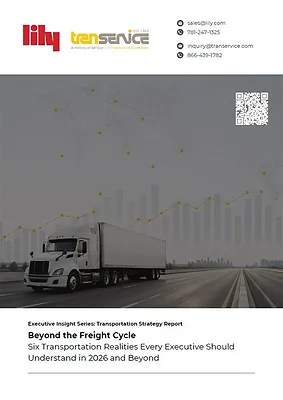
Beyond the Freight Cycle: Six Transportation Realities Every Executive Should Understand in 2026 and Beyond argues that transportation has evolved from a tactical logistics function into a strategic business capability that directly influences profitability, customer satisfaction, operational resilience, and long-term growth.
For years, transportation procurement has largely followed a familiar playbook: Shippers issue an annual request for proposals, carriers submit rates, and those contracts are expected to hold steady until the next bidding cycle. Today, that approach has become much harder to sustain.
The fund will be set up as a financing agreement that pre-funds the purchase of essential components, providing suppliers with the capital they need to stockpile parts.
Through March 2027, El Niño will likely bring above-normal temperatures to much of the Northern Hemisphere, including western North America and southern Europe.