 RSS
RSS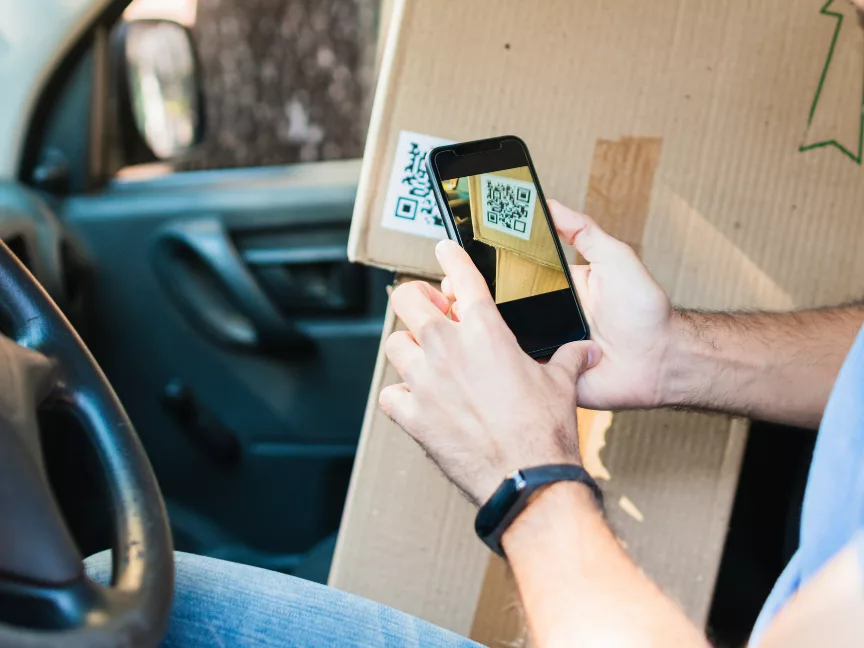

The counterfeit business is booming, at the cost of authentic businesses suffering heavily.
According to one report, counterfeit goods caused an estimated $323 billion damage to the global economy in 2018. According to Forbes, counterfeiting was the largest criminal enterprise in the world. The counterfeit industry is predicted to grow to $2.8 trillion and cost 5.4 million jobs by 2022. The world is witnessing a massive supply crunch resulting in shipment delays, and counterfeiters may use this as an opportunity to capture a wider market.
Fake products are everywhere. From cosmetics to pharmaceuticals, even cooking oil and clothes, every major industry suffers heavily due to counterfeit products. According to an estimate from Gartner, nearly 60% of “extra virgin” olive oil is fake. Counterfeit products affect the brand image of businesses significantly. The world is losing nearly $90 billion annually due to counterfeiting. Counterfeiters make millions by selling cheap copies, and businesses must look beyond traditional practices to find an effective solution.
Counterfeiters gain strength from issues like supply chain disruptions and production shortages. The pandemic has ruptured the global supply chain, providing counterfeiters with an opportunity to flood the market with fake products to meet the demand. The size of the counterfeit products market reflects the failure of authentic countermeasures, and businesses have realized this too. Deployment of groundbreaking technologies like blockchain to tackle counterfeiting is sorely needed. Several luxury brands, including LVMH, have adopted blockchain technology after recognizing it as an effective means to take on counterfeit products.
The Most Impacted Industries
Counterfeit products hinder innovations across industries by providing cheaper alternatives to consumers. This severely affects brand image and costs businesses heavily. Following are some of the largest impacted industries:
- Footwear. As of 2016, footwear accounted for 22% of the total value of counterfeit goods seized by customs. Counterfeiters targeted luxury brands such as Michael Kors, Gucci and Louis Vuitton, as well as mass-market brands such as Adidas, Nike and Reebok. These companies have suffered losses in the billions due to fake products being sold using their brand.
- Clothing and fashion. As per the statistics, clothing is the second-worst affected industry due to fake products. According to Ghost Data, 20% of fashion products advertised on social media platforms are fake. Counterfeiters use Instagram and other popular channels to advertise fake products in the guise of branded products. The fashion industry lost over $50 billion in 2020 alone due to the sale of fake products. Copies of clothes, watches, perfumes and other accessories contributed to this figure.
- Pharmaceuticals. The impact of fake products on the pharma industry is scary, to say the least. The pharmaceutical sector suffered losses worth more than €10.2 billion in 2020 due to the sale of counterfeit products. Fake pharmaceuticals include antibiotics, lifestyle treatments, pain killers, anti-malarial drugs, diabetes treatments and central nervous system medications that are seldom properly formulated, and thus pose a significant threat to public health.
Toys, jewelry, electronics and leather goods are some of the other industries severely affected by the sale of counterfeit products.
Some businesses ignore the creation of fake products under their branding, rationalizing that the cost of fighting the counterfeiters outweighs the losses. In addition, social media platforms turn a blind eye to posts that advertise counterfeit products, as they boost engagement.
Businesses will have to take on the responsibility of fighting the counterfeit industry. Traditional practices have failed to put a stop the counterfeiters, and it’s time to look beyond them to tackle the issue. Following are four tools that businesses can deploy to spot and stop counterfeits:
- Human verification. Businesses can deploy regulators conducting actual physical inspections, sampling and testing to conduct onsite auditing and deliver verification certificates. These regulators can also audit the review ratings of sellers in case of digital operations to keep a check on manipulated ratings.
- Automated verification with AI. Customized solutions powered by artificial intelligence can analyze and recognize attributes, components and ingredients of the genuine article as per the standard procedure to verify authenticity.
- Digital verification. This is an effective method for quality control. Techniques like DNA analysis and spectral imaging are used to capture the product and record it as a digital object. Later, blockchain technology is used for end-to-end tracking of the object to ensure authenticity.
- Handling point verification. Verification of predetermined handling points is key to ensuring that products are being shipped from the proper distribution facility, then sold from the proper retail location. To verify handling points, QR, RFID or NFC chips can be used to complete the scans and record the geolocation of the scanner for validation. Scans can be performed throughout the supply chain by both the retailer and consumer.
While these problems can solve the problem to some extent, there still are some shortcomings to consider. The human verification method would be inefficient in the case of large businesses that produce thousands of products daily. One alternative is to layer all three solutions together, but the cost will increase significantly. There’s a need for a cost-effective solution that can end counterfeiting across industries.
Blockchain as a Solution
Improved traceability and end-to-end tracking can help businesses fight counterfeiting to a large extent, and blockchain is helping businesses across industries in tracking their shipments in real time. Walmart uses blockchain to add transparency to the food supply ecosystem. Automobile giant Ford uses it to trace supplies of cobalt. FedEx relies on blockchain technology to guard its chain of custody. The adoption of blockchain among businesses is increasing with the rise in awareness about the technology.
Blockchain helps tackle counterfeiting by identifying a product’s proof of origin, or provenance. By combining this with blockchain’s end-to-end tracking mechanism, companies can ensure quality checks at every level, from production to delivery. Smart tags are integral to a blockchain-powered solution for fighting counterfeiting.
Smart tags are used by companies to implement blockchain provenance identification. They’re attached to products to identify the place of manufacture, track real-time location, and assign specific information at various stages. Following are some common types of smart tags used by businesses.
- RFID tags. Radio frequency identification tags use radio waves for communication. A reader is required to receive signals from an RFID tag.
- QR codes. They are widely used by businesses for purposes such as payments and shipment tracking. Unlike RFID tags, QR codes can be read by any smartphone or tablet, making it convenient for businesses to view shipment status.
- NFC chips. NFC stands for near-field communication chip, a silicon component that can be attached to an antenna to enable short-range wireless communication between two devices. Combining a uniquely programmed NFC chip with blockchain leads to increased transparency and trust in the supply chain.
When a smart tag is attached to a product, data of every new transaction is sent to the blockchain along with the corresponding time stamp, creating a trust layer for the data by rendering it immutable. This makes it easy for concerned parties to track a shipment and view history right from the onset.
We’re witnessing the emergence of blockchain-powered platforms that provide customized tools to businesses for tackling counterfeiting. They draw on distributed ledger technology to create a digital footprint for the entire supply chain. Platforms streamline the flow of money and services in the supply chain with automation, eliminating the possibility of fraud. Blockchain-powered solutions designed for fighting counterfeiting can be easily integrated with legacy systems. This makes blockchain a cost-effective solution to fight counterfeiting.
As consumer demands increase, counterfeiters will try to ride on the opportunity and increase their market share. The world needs a cost-effective solution to tackle counterfeiting, and it needs it now. Since the adoption rate of blockchain looks promising, innovators have the opportunity to leverage it for the benefit of the global economy. Furthermore, blockchain solves the problem of counterfeiting without replacing legacy systems. As businesses transform their operations with digitization, the scope of leveraging blockchain keeps growing larger.
Dan Weinberger is UN supply chain expert and chief executive officer of Morpheus.Network.



.webp?height=100&t=1781496076&width=150 "015_bringing_the_loading_dock_up_to_speed_v1 (540p).png")


