
• Advertise
  • Contact Us
  • Supplier Directory
  • SCB YouTube
  • About Us
  • Login
  • Subscribe
  • Logout
  • My Profile
  • LOGISTICS
    • Air Cargo
    • All Logistics
    • Facility Location Planning
    • Freight Forwarding/Customs Brokerage
    • Global Gateways
    • Global Logistics
    • Last Mile Delivery
    • Logistics Outsourcing
    • LTL/Truckload Services
    • Ocean Transportation
    • Parcel & Express
    • Rail & Intermodal
    • Reverse Logistics
    • Service Parts Management
    • Transportation & Distribution
  • TECHNOLOGY
    • All Technology
    • Artificial Intelligence
    • Cloud & On-Demand Systems
    • Data Management (Big Data/IoT/Blockchain)
    • ERP & Enterprise Systems
    • Forecasting & Demand Planning
    • Global Trade Management
    • Inventory Planning/ Optimization
    • Product Lifecycle Management
    • Robotics
    • Sales & Operations Planning
    • SC Finance & Revenue Management
    • SC Planning & Optimization
    • Supply Chain Visibility
    • Transportation Management
  • GENERAL SCM
    • Business Strategy Alignment
    • Customer Relationship Management
    • Education & Professional Development
    • Global Supply Chain Management
    • Global Trade & Economics
    • Green Energy
    • HR & Labor Management
    • Quality & Metrics
    • Regulation & Compliance
    • Sourcing/Procurement/SRM
    • SC Security & Risk Mgmt
    • Supply Chains in Crisis
    • Sustainability & Corporate Social Responsibility
  • WAREHOUSING
    • All Warehouse Services
    • Conveyors & Sortation
    • Lift Trucks & AGVs
    • Order Management & Fulfillment
    • Packaging
    • RFID, Barcode, Mobility & Voice
    • Warehouse Automation
    • Warehouse Management Systems
  • INDUSTRIES
    • Aerospace & Defense
    • Apparel
    • Automotive
    • Chemicals & Energy
    • Consumer Packaged Goods
    • E-Commerce/Omni-Channel
    • Food & Beverage
    • Healthcare
    • High-Tech/Electronics
    • Industrial Manufacturing
    • Pharmaceutical/Biotech
    • Retail
  • THINK TANK
  • WEBINARS
    • On-Demand Webinars
    • Upcoming Webinars
    • Webinar Library
  • PODCASTS
  • WHITEPAPERS
  • VIDEOS
Home » Blogs » Think Tank » What Supply Chains Must Do to Comply With Sanctions Against Russia

Think Tank
Think Tank RSS FeedRSS

What Supply Chains Must Do to Comply With Sanctions Against Russia

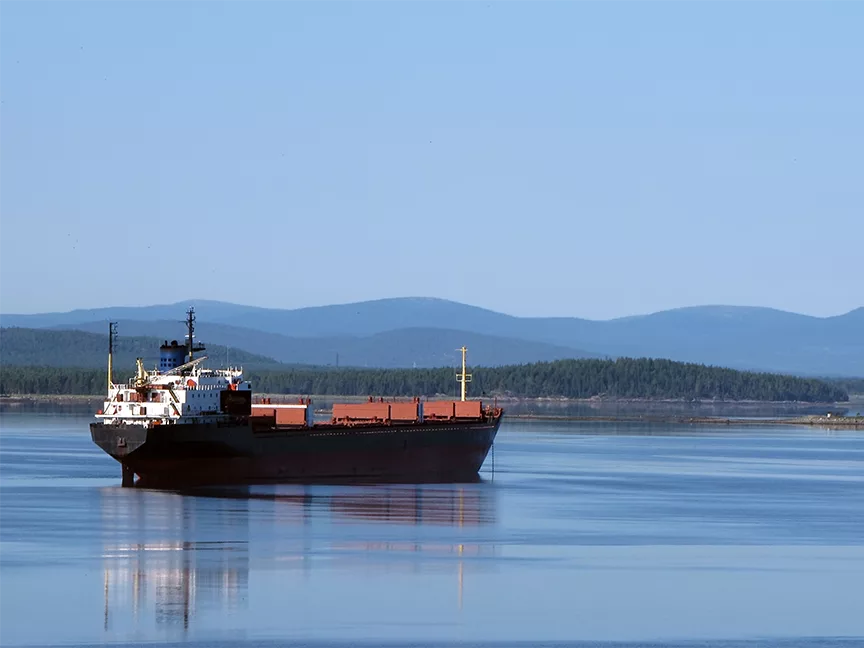
Cargo ship in Russia
A cargo ship at anchor in Kandalaksha, Russia. Photo: Getty.
March 21, 2022
Robert J. Bowman, SupplyChainBrain

Global businesses need to know precisely how they’ll be affected by the widening economic sanctions imposed by the U.S. and Europe against Russia, in response to its invasion of Ukraine.

Given the complexity of global supply chains, the sanctions could have unanticipated effects on production, distribution, finance and exposure to regulatory action. So it’s all the more important that companies are prepared to identify those issues and mitigate their impact, says Christian Contardo, attorney and member of the Global Trade & National Security Practice Group of Lowenstein Sandler LLP.

“It’s a volatile and dynamic situation that’s changing daily,” he says. Among the most worrisome issues for companies with economic ties to Russia are new sanctions imposed by the U.S. Treasury Department’s Office of Foreign Assets Control (OFAC), which is going after the assets of Russia’s oligarchs. In addition, the Commerce Department’s Bureau of Industry and Security (BIS) has implemented restrictions on exports to Russia, with the intent of limiting the country’s access to technology that could be deployed for military purposes.

Russian banks are yet another target of the U.S. and other countries, which have blocked payments by institutions accounting for nearly 80% of Russia’s banking sector assets. “It’s really important to know which banks you’re dealing with within Russia,” Contardo says.

For companies with potential exposure to Russian interests, strict screening procedures are a must. It could be a matter of ferreting out Russian oligarchs who sit on boards of directors, or have even the smallest ownership interest in a global business. End customers must be scrutinized to ensure that producers aren’t violating new sanctions on technology transfer. Employees of Russian subsidiaries could further expose companies to severe regulatory action.

As the U.S. and its allies tighten restrictions on trade with Russia, affected companies need to ramp up their screening efforts in line with the shifting definition of due diligence. In many cases they’re being required to conform to overlapping regulatory regimes with differing rules on who’s an acceptable trading partner. BIS, for example, has added 49 Russian military end users to its roster of prohibited entities, but that list might not square exactly with those of the European Union, the United Kingdom, Japan, Australia and New Zealand.

On the legal side, companies should be reviewing their contracts with Russian entities to ensure they’re in accordance with the law. Buyers must certify that they’re not purchasing items on behalf of military end users. But mere promises of compliance aren’t enough to protect a manufacturer or distributor, if the ultimate customer is concealed by multiple layers of purchasers. “Supply chains can get really opaque after a few levels,” Contardo says.

Nevertheless, he says, “Companies are generally liable even if they don’t know, and it’s impossible to know. The laws in the U.S. are strict.”

The consequences of non-compliance can be heavy, ranging from millions of dollars in fines to criminal prosecution. Large numbers of small-value transactions could add up to enormous penalties, Contardo says, recommending that companies be prepared to plead mitigating factors if found in violation of the sanctions. OFAC, for one, “has wide discretion in assessing penalties.”

As Russia continues to intensify its assault on Ukraine — and perhaps even escalate attacks beyond that nation’s sovereign borders — it will become increasingly toxic as a trading and investment partner. Many western companies with business in Russia are likely to abandon the country altogether, provided that they can identify all of the parties in their downstream supply chains. But others will find it difficult to quit Russia entirely, given its supremacy as a provider of certain key commodities like oil, natural gas and wheat.

Even a pullback of Russian forces from Ukraine won’t end the risk of doing business with Russia. “I don’t see the sanctions being relaxed or removed anytime soon,” Contardo says. “I expect those restrictions are going to be in place for the foreseeable future.” And while they are, supply chains need to remain diligent about staying in compliance with multiple regulatory regimes.

Supply Chain Visibility Global Trade & Economics Regulation & Compliance Sourcing/Procurement/SRM Supply Chain Security & Risk Mgmt

RELATED CONTENT

RELATED VIDEOS

Subscribe to our Daily Newsletter!

Timely, incisive articles delivered directly to your inbox.

Featured Product

Popular Stories

  • A pair of hands reaches towards a cluster of icons showing global logistics network distribution and transportation

    CSCMP's State of Logistics Report: Get Used to the Fog

    Logistics
  • Ebook_TransformingSupplyChain_thumbnail.jpg

    Transforming Your Supply Chain From Cost Center to Growth Driver

    Forecasting & Demand Planning
  • TWO WORKERS DISCUSS DATA SHOWN ON COMPUTER SCREENS

    Gartner: Gap in SC AI Talent Cannot Be Closed by Hiring Alone

    Artificial Intelligence
  • GOVERNANCE SCRUTINY RISK MANAGEMENT ASSESSMENT iStock-champpixs-1465316262.jpg

    Supply Chain Resilience Is Now a Board Governance Imperative

    Supply Chain Finance & Revenue Management
  • 015_bringing_the_loading_dock_up_to_speed_v1 (540p).png

    Watch: Bringing the Loading Dock Up to Speed

    HR & Labor Management

Digital Edition

2026 esg cover main scb q2 2026 cover

SupplyChainBrain 2026 ESG Guide: ESG — The Supply Chain’s Biggest Secret

VIEW THE LATEST ISSUE

Case Studies

  • Recycled Tagging Fasteners: Small Changes Make a Big Impact

  • A GRAPHIC SHOWING MULTIPLE FORMS OF SHIPPING, WITH A HUMAN STANDING AT THE CENTER, TOUCHING A SYMBOLIC MAP OF THE WORLD

    Enhancing High-Value Electronics Shipment Security with Tive's Real-Time Tracking

  • A GRAPHIC OF INTERLACING HONEYCOMBED ELEMENTS REPRESENTING GLOBAL BUSINESS TRANSACTIONS

    Moving Robots Site-to-Site

  • JLL Finds Perfect Warehouse Location, Leading to $15M Grant for Startup

  • Robots Speed Fulfillment to Help Apparel Company Scale for Growth

Visit Our Sponsors

4flow Arkieva Blue Yonder
Carton Cloud CoEnterprise Dassault
Duravant E2Open General Logistics Systems
Hy-Tek iGPS Korber
Lyngsoe Procurability Quinyx
SAP Sikick Systech
S&P Global Mobility TADA TransImpact
US Bank Werner Enterprises WSI
  • More From SCB
    • Featured Content
    • Video Library
    • Think Tank Blog
    • SupplyChainBrain Podcast
    • Whitepapers
    • On-Demand Webinars
    • Upcoming Webinars
  • Digital Offerings
    • Digital Issue
    • Subscribe
    • Manage Email Preferences
    • Newsletters
  • Resources
    • Events Calendar
    • 2026 Event Coverage
    • SCB's Great Supply Chain Partners
    • Supplier Directory
    • Case Study Showcase
    • Supply Chain Innovation Awards
    • 100 Great Partners Form
  • SCB Corporate
    • Advertise on SCB.COM
    • About Us
    • Privacy Policy
    • Contact Us
    • Data Sharing Opt-Out

All content copyright ©2026 Keller International Publishing Corp All rights reserved. No reproduction, transmission or display is permitted without the written permissions of Keller International Publishing Corp

Design, CMS, Hosting & Web Development :: ePublishing