RSS
RSS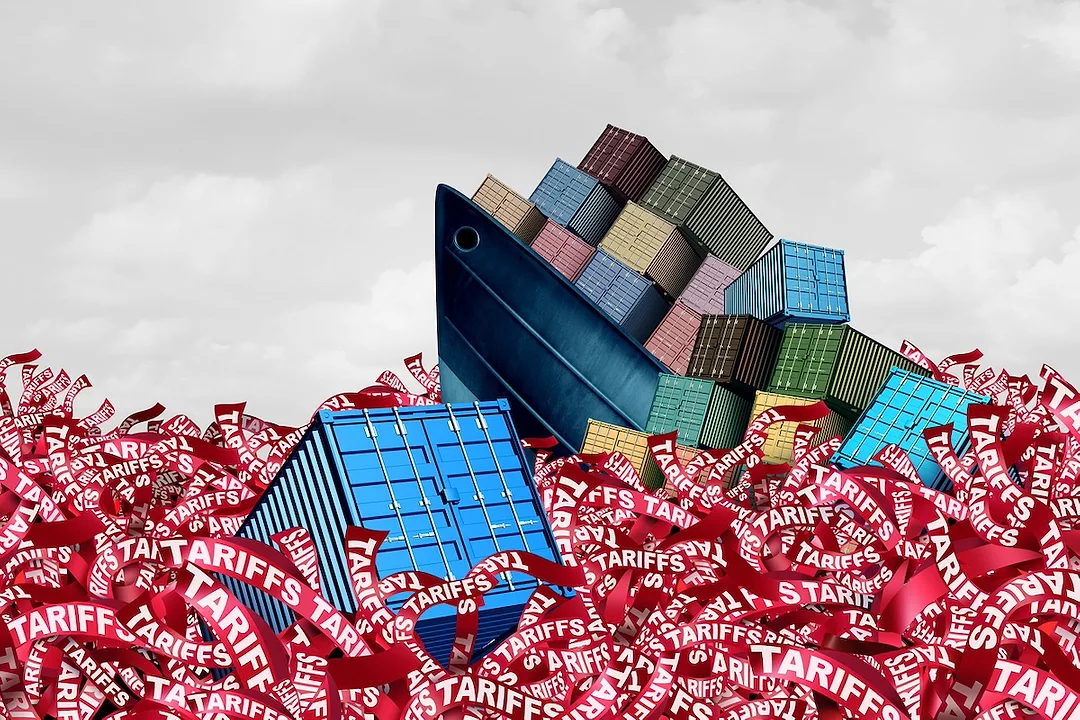

The panic-buying and firefighting of the port congestion years have subsided. What has taken their place is quieter and more deliberate: a rewiring of how logistics leaders think about execution.
In conversations with people responsible for keeping freight moving, one theme surfaces repeatedly. After years of reacting to disruption, leaders are shifting their focus away from reinvention, and back toward discipline and accountability in how work gets done.
Many have stopped waiting for a “return to normal.” That ship has sailed. The last few years exposed how fragile many operating models become under sustained pressure. What has emerged is a steadier, more disciplined approach, where ownership is clearer and execution carries more weight than strategy decks.
Volatility as Baseline, Not Exception
Surviving in 2026 requires treating unpredictability as a given. Weather disruption, demand swings, capacity imbalances, labor constraints and policy shifts now shape day-to-day operations.
Recent extreme weather across the U.S. has brought this reality into sharp focus. Localized events quickly created national capacity ripples that no forecast caught in time. Operators shifted into execution mode, rerouting freight, securing emergency capacity, managing downstream delays and absorbing knock-on effects days later. Strategic initiatives faded into the background as operational reality took over.
Tariffs continue to dominate headlines, but most operators view them as another variable rather than an existential threat. Where the pressure shows up most acutely is downstream, with importers increasingly leaning on their logistics partners to help them understand tariff exposure in real time.
Working through fluctuating tariff codes, classification changes and shifting policy guidance has become harder in a volatile market, where assumptions can break between the time a shipment is planned and when it actually moves. Customers expect clarity, often quickly, even when the rules themselves are moving. Such demand adds cognitive and operational load to teams already managing disruption elsewhere.
The heavier pressure, though, comes from an industry still correcting after years of distortion.
Several forces are surfacing consistently. Excess capacity is being worked out of the system as temporary demand spikes, and financial support fade. Margins remain under sustained pressure, leaving little tolerance for idle assets, rework or manual drag. At the same time, risk costs are rising. Cargo theft, claims and insurance premiums are shifting attention away from rate optimization toward total cost avoidance.
Taken together, these dynamics are pushing operators away from brittle just-in-time assumptions. More resilient thinking is becoming standard. Nearshoring, diversification and buffer capacity are now viewed as safeguards rather than optimization levers.
There’s no universal agreement on how much resilience is enough. Some leaders accept short-term inefficiency to avoid future shocks. Others worry that excess buffering creates its own fragility. What’s consistent is the recognition that volatility is structural, not cyclical. Once that reality is accepted, the focus shifts toward operating models that absorb disruption without cascading failure.
The AI Reality Check
Technology inevitably enters these conversations, and is often where clarity begins to blur.
The breakdown rarely stems from a lack of ambition. More often, it shows up as a loss of ownership. When taking on new artificial intelligence tools, leaders can become disconnected from how work actually moves through the system. Accountability diffuses quietly, until pressure arrives and it becomes unclear who owns the outcome.
Most AI failures aren’t really AI problems at all. They come back to governance. Inboxes fill up with unstructured emails; documents arrive in every format imaginable, and data looks clean right up until real-world conditions expose the gaps. Automation can perform well when everything behaves as expected, but it starts to wobble as soon as those assumptions break.
Some teams approach automation deliberately, using it to reduce cognitive load rather than replace judgment. They focus on prioritization, standardization and removing repetition, while keeping responsibility visible. Human decision-making remains explicit, particularly where exceptions and risk reside.
Other teams move faster, layering systems onto unstable foundations. When those systems fail, uncertainty emerges not just about what happened, but about who’s responsible for fixing it.
There’s still no consensus on the right balance between human judgment and automated execution. What the more resilient operators share isn’t better technology, but clearer boundaries. Technology absorbs volume and repetition. Humans retain ownership of outcomes, escalation and recovery when systems fail. That clarity often matters more than the sophistication of any individual tool.
Patterns of Resilience
Across these conversations, the same behaviors keep surfacing among operators who manage volatility with less friction. They come from teams that have been tested repeatedly under real pressure.
Disruption is now taken as given. As a result, backup options exist even when they look inefficient on paper. Supplier bases are wider, and inventory strategies allow for delay without triggering immediate penalties.
Increasingly, customers expect to know where freight is, when it will arrive, and what changed when plans slip. Teams that can’t answer those questions are seen as out of control, regardless of how sophisticated their systems appear.
The strongest teams use automation to document decisions and surface patterns, preserving judgment rather than replacing it.
As systems become more capable, there’s a conscious effort to remain connected to the work itself — not to micromanage, but to ensure that assumptions remain aligned with reality.
Resilient operators don’t all look the same. Some favor flexibility over efficiency. Others accept tighter controls to reduce variance. What unites them is a refusal to hand accountability over to a process or technology alone.
Strength and Limits of Collective Wisdom
No single leader has the full set of answers. What endures in multiple conversations is the shared experience of those closest to the work, accumulated through repeated exposure to real operational pressure.
Volatility has a way of stripping things back to what actually works. When plans are tested, it’s the hand-offs, exceptions and recovery moments that show what holds together and what doesn’t. Leaders who stay close to that reality, and who learn openly from peers dealing with the same constraints, tend to adapt faster than those looking for certainty or neat explanations.
In 2026, collective operator wisdom can be turned into an advantage. The challenge ahead isn’t simply learning from experience, but finding ways to absorb learning without freezing it into rigid doctrine.
Volatility may be here to stay. The harder question is whether organizations can continue to learn once disruption stops feeling exceptional, and becomes part of the everyday operating environment.
Adrian Smith is co-founder and chief executive officer of Ripple.