
Dying Factory Becomes Symbol of China Might in 27-Year Revival
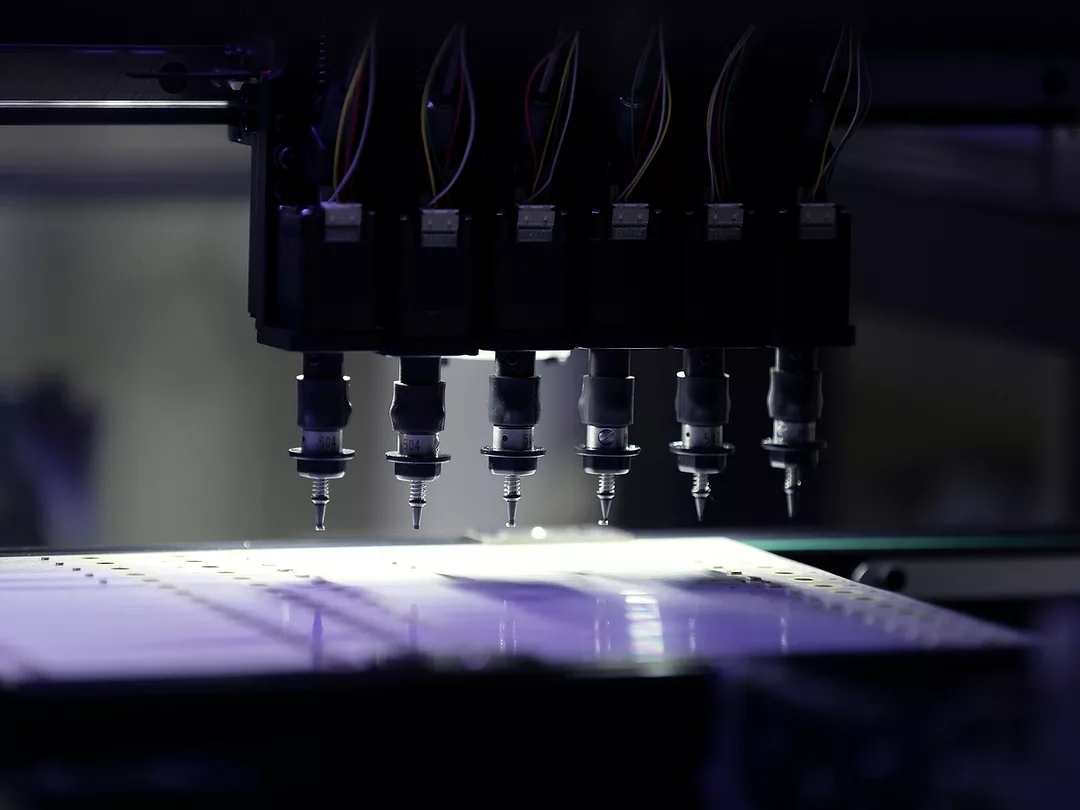
A quarter-century ago, Beijing Electron teetered on the brink of collapse, a government behemoth brought to its knees by superior foreign technology. Decades later, fueled by billions in state funds, a re-christened BOE Technology Group Co. does business with Apple Inc. and has its sights on becoming the biggest supplier of next-generation screens.
It’s a turnaround authored by Wang Dongsheng, an accountant who took over an ailing vacuum-tube factory — then begged his underlings for bailout money, at one point dabbling in producing mouthwash to make ends meet. But he ultimately secured capital from Beijing to build the biggest producer of flat displays, and devised BOE’s ascension to the pinnacle of screen-making: mastering bendable displays set to underpin a generation of malleable smartphones from the Samsung Fold to — maybe — a future iPhone.
Today, BOE is a symbol of China’s remarkable technological ambitions. Its brush with death — it came close twice — is nowhere in evidence on a stroll through a $7bn factory on the outskirts of Chengdu, a western Chinese city better known for spice and pandas. Big enough to cover 16 football fields, it cranks out expensive organic light-emitting diode displays that Apple and Huawei Technologies Co. are keen to put in their marquee devices.
By the end of this year, BOE will become the world’s No. 2 purveyor of phone OLED displays — trailing only Samsung Electronics Co. — with a monthly capacity of roughly 64,000 panels, said Zhang Yu, a senior vice president who oversees marketing. That’s enough to coat 6 million foldable phones a month as it also eyes customers in wearable devices, car dashboards, appliances and TVs. Getting onto the iPhone, as some analysts anticipate, would vault it into the rarefied echelons of the $39bn market for smartphone displays.
“The foldable screen is a revolutionary force that fuels the next big change,” Zhang said. “We have an all-around plan for the OLED business. The screens for mobile devices are only a part of it.”
Inside the Chengdu plant, robotic arms flip glass panels as big as basketball backboards like they were sheets of paper. A 0.03-mm film forms on glass substrates sealed within transparent dust-free vacuum cubes, before layers of electronics are added. High-powered lasers then peel off the initial membrane to reveal the finished product. It’s a symphony of precision and no human hand comes close throughout the seconds-long process.
Propelling BOE’s ascent is state largess. It’s inked deals with officials across the country, including government-backed entities that agreed to help it raise at least 20.5bn yuan for another plant in southern China’s Fuzhou. Other help came in the form of land, energy and favorable policies.
It’s that sort of aid that’s got the Trump administration on edge, but it’s not all about handouts. To fuel its expansion BOE’s debt has rocketed four-fold to a record 118bn yuan since it began developing OLED around 2014.
As a publicly traded business with ties to Apple and Samsung, it’s averted the sort of scrutiny that plagues Huawei. But in November, the Korea Economic Daily reported BOE was among Chinese companies that illegally acquired Samsung bendable-screen technology, citing unidentified people in prosecution and business circles.
That follows a controversial acquisition in 2003 of Hydis, a Korean display specialist that provided the foundation for BOE’s initial liquid-crystal display business. The deal spurred accusations from unions at the time that it stripped the company of technology before letting it collapse. BOE blamed the demise of Hydis on labor unions and declined to comment on the technology theft case.
Despite being credited with BOE’s reinvention, Wang has kept a low media profile. He declined to be interviewed for this story.
“Respect for technology and persistence in innovation are among BOE’s core values,” Wang told a company partners’ convention in November, in a speech confirmed by the company.
After building scale in LCDs, BOE now specializes in OLED because it’s more colorful, consumes less power and is thinner. It can be curved, twisted or rolled into any shape without marring the vibrant display and has been adopted by Apple for its top iPhones while Huawei uses it in their $2,600 foldable phones.
The catch? OLED costs five times as much as LCD, inflating price tags for consumers and hindering shipments. But the Chinese company is betting that flexible phones will catch on, boosting volumes and reducing costs.
The Chengdu plant, which kicked off mass production in 2017, was BOE’s first major OLED base and now rolls out about 32,000 panels a month, or nearly 70 percent of designed capacity. It’s building another facility in nearby Mianyang which can make just as much.
But with those plants meeting just half of its envisioned appetite for OLED, BOE is plotting replicas in neighboring Chongqing and in Fuzhou, targeting mass production as early as 2020. Those projects will cost $14bn. It’s also starting to test production of much larger panels (almost 10 square meters) in Hefei, for bigger devices such as TVs. That project may eventually compete against LG Display Co.
It’s that sort of expansion that’s catapulting China up the ranks of the world’s leading display makers. Chinese suppliers, led by BOE and Shenzhen-based Tianma Microelectronics Co., make up about a quarter of the global flexible-OLED panel market but are on track to catch their Korean rivals after 2020, according to TrendForce.
But it also raises the prospect of too much production coming on to the market, increasing risks for a company that had 2018 revenue of 96bn yuan and has a market value of about $20bn.
“The small and medium OLED market, led by Samsung Display, is already facing over-capacity,” Jerry Kang, senior principal analyst at IHS Markit, wrote in an email. “‘The demand is not quite there due to the high price.”
Last year, BOE outpaced LG Display to become the biggest maker of LCDs. It now aims to duplicate that in OLED where Samsung is the sole supplier of the screens to iPhones.
“People may begin to find that BOE is now able to influence the path of the entire display industry,” TrendForce research director Boyce Fan said. “While Chinese suppliers challenge the South Koreans’ dominance in OLED, Chinese phone brands will be more than happy to opt for home-made screens.”
In its 1950s and 1960s heyday, Beijing Electron was China’s largest maker of electronics components, churning out vacuum tubes using Soviet-era technology. It fell on hard times after Deng Xiaoping’s 1979 opening-up unlocked an influx of superior foreign technology, forcing the company to cut 10,000 staff from its main plant in the capital’s northeast. Zhang still remembers how about 90 percent of graduates recruited in 1988 left because of the abysmal pay. Engineers that stayed were paid less than cleaners in a nearby hotel and as young workers quit, the aged and unskilled were left behind.
Wang, then chief accounting manager, could have secured a better salaried job elsewhere but the 61-year-old was appointed chief, and decided to give it one last try. He kicked off reform in 1992, asking management and workers to collect capital to stave off bankruptcy. Desperate to keep the factory afloat, Zhang said about 2,600 employees ponied up a little more than 6.5m yuan ($1m), with some people giving out five years’ salary.
Yet that was barely enough to pay interest on loans and it couldn’t find a profitable core business when electron tube demand cratered. “We’ve tried more kinds of businesses than we can remember,” said Zhang, who joined as a chemistry engineer. It tried mouthwash and even started an employment agency to make money. Neither worked out.
In April 1993, the factory was renamed Beijing Oriental and Wang steered it toward color TVs, churning out cathode ray tubes before jumping into flat panel products in the early 2000s.
“There are many factors that fueled the prominent growth of BOE. I think the government’s policy support and BOE’s own efforts to beat back fierce competition are the two key reasons,” Trendforce’s Fan said.
BOE faced another life-or-death decision around that time: what kind of display to bet on. After an internal debate, it landed on flexible OLED, which some noted would be a differentiator.
“It was an extremely tough call and everyone was under immense pressure,” Zhang said. And it was risky: if BOE failed to commercialize OLED within three years, the company could collapse under the weight of its own debts, he said.
BOE started with a small test line in 2011 ahead of its first prototype in 2013. There followed years of research and recruitment of top talent from elite domestic universities working long hours in their Beijing lab to perform hundreds of experiments in pursuit of breakthroughs.
Things are no longer so precarious. Its headquarters occupy a vast corner of an industrial park in Beijing, with prestige neighbors including Mercedes to General Electric, where it shows off fully transparent screens and a 65-inch display manufactured via inkjet printing.
“It may seem like a miracle to some of our overseas competitors. But to ourselves, it was more than a decade of preparation,” Zhang said.
Popular Stories





SupplyChainBrain 2026 ESG Guide: ESG — The Supply Chain’s Biggest Secret
VIEW THE LATEST ISSUECase Studies


Visit Our Sponsors |
|
|
|
|
|
|
|
|
|
|
|
|
|
|
|
|
|
|
|
|
|
|
| |
|
|
|
|
|
|
|
|
|
|
|
|
|
|
|