
Amazon's Merchants Feel Pain of Market Clout That Bezos Disputes
Fifteen years ago, Jason Boyce made a bet on Amazon that changed his life for the better. He started selling basketball hoops on the site — known mostly for books at the time — and his sales and profits took off.
Today, Boyce worries his relationship with the world’s biggest online retailer is getting more and more lopsided. Amazon has evolved from partner to competitor, making products similar to his, selling them for less and giving them prominence on the site. To stand out, Boyce must now buy advertising, which makes Amazon even more profitable at his expense.
Amazon.com Inc. Chief Executive Officer Jeff Bezos touted the success of merchants like Boyce this month in his annual letter to shareholders, suggesting they were beating Amazon at its own game because they make up 58 percent of all sales on the site. What Bezos neglected to mention is that Amazon is the biggest winner of all. Amazon captures 50 cents of every dollar spent online in the U.S. EBay Inc., its closest competitor, gets just six cents.
That dominance puts Amazon in control of a $600bn market that is growing at triple the pace of overall retail spending. Merchants like Boyce might be selling more stuff than Amazon. But Amazon takes a bigger bite of each sale. Its share has almost tripled to more than 40 percent in the past few years, merchants say, mostly due to the new cost of advertising. Those who don’t like it have to shrug, sigh and roll with it because no other site comes close to Amazon’s reach.
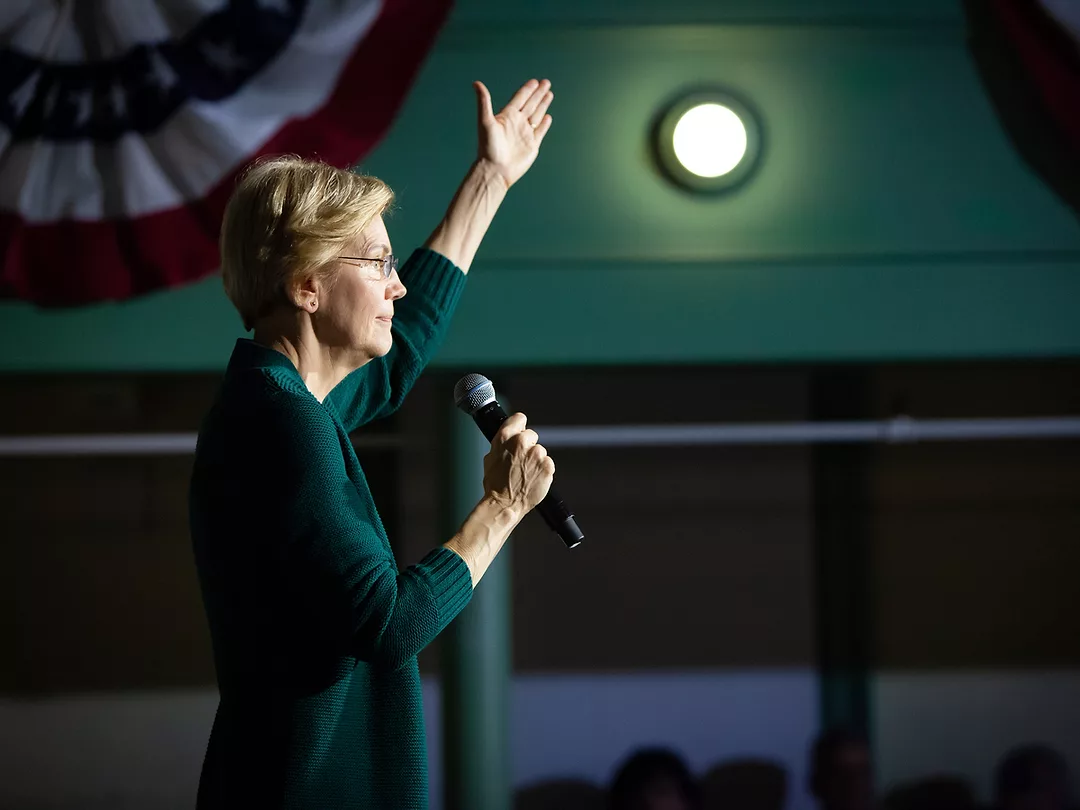
Like the dozen successful merchants interviewed for this story, Boyce acknowledges that selling products on Amazon has helped him earn a comfortable living. As businesspeople, he and other merchants are wary of regulation. But when Senator Elizabeth Warren proposed prohibiting Amazon from competing against them, they were at least prepared to listen.
“If you’re going to have a marketplace,” Boyce says, “you shouldn’t be able to piggyback off the hard work and labor of your sellers to beat them.”
To be clear, the call to break up Amazon is simply one proposal, from one Democratic presidential candidate in a crowded field 19 months before the election. Amazon holds less than eight percent of the U.S. retail market. There’s little evidence that the company hurts consumers with predatory pricing, the yardstick typically used to prove anti-competitive behavior. All the same, the fact that Bezos indirectly addressed antitrust at the top of his annual shareholder letter demonstrates how seriously he is taking the threat of stepped-up regulation. Ditto his company’s lobbying efforts in Washington, where it has dispatched senior executives to woo antitrust enforcers.
“Amazon is definitely perceived as getting more and more powerful,” says James Thomson, who organizes the Prosper Show, an annual e-commerce conference focused on Amazon. “There are a lot of reasons for merchants to be highly skeptical and cynical about what Amazon is doing.”It wasn’t always that way.
Boyce, a former Marine Corps officer, began selling basketball hoops online in 2002 at superduperhoops.com, buying search ads to direct people to the site. In 2004, his brother got a phone call from an Amazon representative who said the up-and-coming company liked their products. Amazon was predominantly a bookseller at the time, so the hoops stood out, and orders rolled in. A photo and product description was enough to lure customers. Amazon took a small commission. Customers waited a week or two to get their hoops. And the business had little risk since Boyce didn't buy any inventory until after a customer ordered one.
For the next few years, Boyce’s experience on Amazon largely echoed what happens in the offline world: competitors entered the market, pushing down prices and making it harder to make a profit. So Boyce adapted. He stopped selling basketball hoops and developed his own line of foosball tables, air hockey tables, bocce ball sets and exercise equipment. The best way to make a decent profit on Amazon was to sell something no one else had and create your own brand. Boyce, who’s now 47, was making a comfortable living. He has a home in Princeton, New Jersey and sends his two daughters to private school.
Then Amazon started selling its own products. AmazonBasics appeared in 2009 and mostly focused on batteries. For several years, the house brand “slept quietly as it retained data about other sellers’ successes,” according to a 2016 report from Skubana.com, which helps merchants manage their sales. Then about five years ago, AmazonBasics rolled out a range of products that seemed perfectly tailored to customer demand.
Amazon also started selling bocce ball sets that cost $15 less than Boyce’s. He says his products are higher quality, but Amazon gives prominent page space to its generic version and wins the cost-conscious shopper. “They’re pulling market share away from us and our competitors as well,” he says.
Amazon is hardly the first company to create its own brands, and it says its own products represent about 1 percent of its total sales. Walmart Inc. and other retailers have done this for years, putting their food, soap and cereal on the shelf right next to household names. But Amazon’s monster trove of data tell it not just what items are selling well but what shoppers are searching for and can’t find. And while many of Amazon’s branded products flop, that’s little consolation to merchants who watch the company copy a product and then proceed to nibble away at their business. “Amazon crushes small companies by copying the goods they sell on the Amazon Marketplace and then selling its own branded version,” Warren said in her proposal to break up Amazon.
Meanwhile, Amazon has stepped up efforts to recruit Chinese suppliers and manufacturers directly, cutting its merchants out of the equation. The entry of these new players also has coincided with an explosion of counterfeit products and fake customer reviews — issues that plague e-commerce companies in China. When Amazon cracks down, legitimate sellers sometimes are caught in the net and watch their sales tank until they can persuade the company to reinstate them. The process can take weeks. An Amazon suspension during the busy holiday season could sink a business.
Amazon, in an emailed statement, said “customer safety is a top priority,” that it investigates all counterfeit claims and takes appropriate action, including removing products, taking legal action against suspected perpetrators and working with law enforcement. “We employ dedicated teams of software engineers, applied scientists, program managers and investigators to operate and continually refine our anti-counterfeiting programs,” the company said.
The millions of merchants who do business on Amazon are by no means a homogeneous group. There are plenty of boosters, who argue that without Amazon they probably wouldn’t be in business. They point to the company’s fulfillment service, which gives them access to a network of warehouses around the U.S. That means they can stash inventory closer to their customers and take part in Amazon’s two-day Prime shipping program. Paying Amazon to handle logistics is typically cheaper than doing it yourself.
Fulfillment by Amazon, as the service is known, helped Alon Gesthalter reach tens of millions in annual sales selling a range of household products sourced in China with just a handful of employees. “We don’t need a big warehouse that sits empty six months out of the year and then fills up around Christmas and Mother’s Day,” Gesthalter says. “We only pay Amazon for the space that we use.” Many merchants consider the fulfillment service a win-win-win: for them, for customers and for Amazon.
Chuck Gregorich’s Wisconsin business employs 50-plus people and sells more than 2,000 products, from hammocks to patio furniture. He was at a conference a couple of years ago and went out for drinks with several fellow merchants. “Everyone was complaining about Amazon and how hard they make it for us,” he recalls. “I said, ‘guys, we’re all making millions in sales because of Amazon. If I just started a brick-and-mortar store in my home town, I would have never reached this scale.’ I don’t mind when they make it difficult for us. The more difficult they make it, the less competition maybe we’ll have.”
Less sanguine merchants have tried to lessen their reliance on Amazon. A couple of years ago, Walmart introduced its own online marketplace and began actively wooing Amazon sellers. EBay stepped up its outreach, and Alibaba has been trying make U.S. merchandise directly available to Chinese shoppers. Despite these alternatives, merchants are even more reliant on Amazon than they were two years ago. Some say they get between 80 and 90 percent of their sales there even though they also list products on other sites.
Jason Boyce, having navigated Planet Amazon for 15 years, is selling his business and has started a consulting firm helping other merchants. It wasn’t an easy decision, but he says the money he was forced to spend to advertise his products reduced his profits by several hundred thousand dollars a year. To account for those extra costs, he had to raise his prices and decided it was time to get out. Now he provides competitive advice to about a dozen clients selling pet supplies, supplements, beauty products and sporting goods. “I know what to do because it’s a problem I faced myself,” he says. “Amazon is constantly throwing curve balls at you.”
Popular Stories
.webp?height=100&t=1780891461&width=150 "021_what_is_ai_in_warehousing_and_the_supply_chain- (540p).png")




SupplyChainBrain 2026 ESG Guide: ESG — The Supply Chain’s Biggest Secret
VIEW THE LATEST ISSUECase Studies


Visit Our Sponsors |
|
|
| |
|
|
|
|
|
|
|
|
|
|
|
|
|
|
|
|
|
|
|
|
|
|
|
|
|
|
|
|