
Here’s How Wildfires Will Impact What Australians Eat and Wear
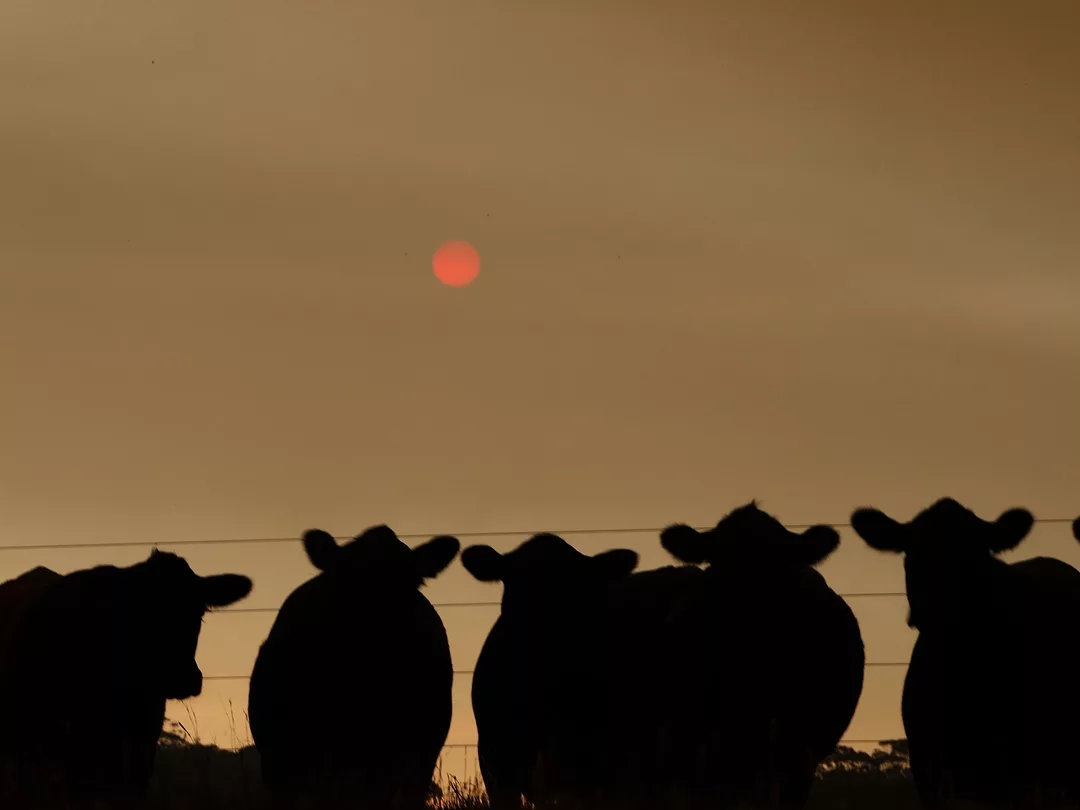
As unprecedented wildfires threaten large parts of Australia, the nation’s agriculture industries are counting the cost of the blazes that have scorched pasture, destroyed livestock, and razed vineyards.
With the fires still burning and fears of more to come, it’s too early to quantify the damage, analysts and industry officials said. It’s likely the country’s dairy supply will be hit hardest, with key milk-producing states Victoria and New South Wales suffering the greatest loss of farmland and infrastructure damage. Meat, wool, and honey output may also dip.
More than 11.4 million hectares (28 million acres) have been blackened. That’s about 1.5% of the country’s land area, but still an expanse greater than Scotland. Over half the ground burned is in New South Wales and Victoria, and it’s mostly dense native vegetation, forests and national parks, as opposed to crop-growing farmland and areas of intensive agriculture.
Here’s what we know so far about the impact on agriculture:
Dairy
While fewer than 100 farms have been burned so far, wildfires have ravaged drought-affected dairying regions, including Victoria’s East Gippsland and Bega Valley, in New South Wales state, where two industry veterans were killed, according to Peter Johnson, a group manager of farm profit and capability at Dairy Australia Ltd.
“Some farms are disposing milk in areas with power outages or where access issues are preventing tanker pick-ups, or low power supply is preventing the cooling of milk,” Johnson said.
Bega Cheese Ltd.’s shares plunged 9.3% after fires threatened the town of Bega and ravaged Cobargo, a town about 30 kilometers north, earlier this month. The stock has since gained about 13%.
About 900,000 liters (238,000 gallons) of milk couldn’t be collected from farms and as much as 1 million liters of additional supply may be threatened, the company said Thursday. That compares with an annual intake of about 1 billion liters, and the milk losses “will have no material overall impact on Bega’s operations,” the processor said.
Fonterra Cooperative Group, which collects milk in Gippsland, said its dairy regions remain largely unaffected.
Meat
Both New South Wales and Queensland, where 2.5 million hectares have been razed, are key producers of red meat. About 80,000 ranching properties are in the country’s main affected areas, industry group Meat & Livestock Australia said Tuesday.
“The extent of the full impact to livestock is unknown and will take time to understand,” said Jason Strong, the group’s managing director. “Our latest information is that 9% of the national cattle herd live in regions that have been significantly impacted and a further 11% in regions partially impacted.”
Losses of about 1.7 million sheep and 450,000 head of cattle are likely, according to Matt Dalgleish, an analyst at Mercado. That would result in a 2.4% reduction in the national sheep flock and a 1.8% drop in the total cattle population in 2020, he said in a note.
Cheryl Kalisch Gordon, a senior analyst for grains and oilseeds at Rabobank, echoed that view, saying significant livestock losses are expected in eastern Victoria.
Wool
Wool is produced across Australia, with the exception of the Northern Territory. New South Wales produces the most, followed by Victoria.
About 13% of the national sheep flock is in regions that have been significantly impacted and a further 17% in regions partially impacted, according to Meat & Livestock Australia.
Wildfires will reduce the country’s wool production, which has already been declining because of drought. The output of shorn wool is forecast to drop 9.2% to 272 million kilograms in 2019-2020 from a year earlier, Australian Wool Innovation forecast in November.
Fruit
Vitalharvest Freehold Trust, which leases farms to Australia’s largest listed fruit and vegetables grower Costa Group Holdings Ltd., said this month that the fires burning in southern New South Wales damaged packing equipment and several vehicles at its Tumbarumba berry farm.
Family-owned W.F. Montague Pty, which owns 75 hectares of apple orchards in the fire-ravaged town of Batlow in New South Wales, reported “only minor damage,” according to the Weekly Times. Some 5,000 apple trees on the Montague property’s boundary were damaged out of a total of about 200,000 apple trees, Managing Director Scott Montague told the newspaper.
Wine
It will be several weeks before it’s possible to get a real picture of the impact of wildfires in the affected areas, Wine Australia Chief Executive Officer Andreas Clark said Tuesday.
A review of fire maps suggests as much as 1,500 hectares of vineyards are within fire-affected regions. Even if all those vineyards were fire-damaged — and that’s not the case — it would account for about 1% of Australia’s total vineyard area, he said.
“In some areas where people have been evacuated, it will be some time before it is safe to access vineyards,” Clark said in a statement. “There is also the fact that assessment of the impact on vines is complex. It is easy to see when vines are burned, but often it takes much longer to establish the damage caused by heat.”
New South Wales is the largest wine-producing state after South Australia and contributes a third to the country’s output.
Individual vineyards and wineries have suffered devastating damage, which would take years to recover, according to Wine Australia. Affected areas include the Adelaide Hills in South Australia, and the Shoalhaven Coast and Tumbarumba wine regions of New South Wales, and parts of Victoria and Queensland.
Sorghum
Sorghum is the key summer crop in Australia in terms of area sown and the quantity of grain produced. It’s mainly harvested in northern New South Wales and southern Queensland. Extended dry periods have been reducing sorghum output for years.
The area planted to the grain crop will fall by 51% this summer to 241,000 hectares. Early planting was minimal and late planting would require significant rainfall, which is unlikely given the latest three-month seasonal outlook issued by the Bureau of Meteorology. Production is forecast to more than halve to a record-low 398,000 tons, the Australian Bureau of Agricultural & Resource Economics and Sciences said last month.
Cotton
Cotton is grown in the inland regions of southern, central and northern New South Wales and central and southern Queensland, with crops planted from around September and picked at the of April. The country is the world’s fifth-largest exporter of cotton, according to the U.S. Department of Agriculture.
While there’s been no information reported about the impact on cotton from the wildfires, it’s expected crops are mostly too far away from the major affected areas, and the irrigated nature of production should buffer output.
Honey
Australia is facing dwindling honey production as natural disasters, including droughts and wildfires, reduced the pollen and nectar honeybees require to survive and make honey.
In New South Wales, which produces 45% of the country’s honey, “thousands of hives have been burned and many thousands have been damaged,” Stephen Targett, president of the New South Wales Apiarists’ Association Inc., said Friday.
The state’s honey production will be 30% below the historical average for the next 10 years, he said. Field bees that collect nectar and pollen have been hardest hit by the wildfires. Sugar is being offered to starving bees, and some hives have been relocated to unaffected national parks.
“Very little honey will be collected between now and spring,” nine months away, Targett said. The loss of bees will hurt pollination-dependent industries, including almond-growing in the New South Wales Riverina and Sunraysia area of northwestern Victoria.
Grain
Large cropping areas have mostly escaped fire damage, according to Rabobank. In eastern Victoria though, the bank expects the loss of fodder and stored grains as well as widespread pasture loss.
“We will see a proportionally higher loss of feedstock, than loss of livestock, so that the impact of the fires will be a further tightening element to the already tight grain and fodder balance sheet,” Rabobank’s Gordon said in a recent email.
“Due to harvest being complete in most areas and the fires not being in areas that will affect crops or supply routes to delivery, the impact of the fires on Australia’s grains markets is limited to what the fires mean for livestock feed demand from these affected areas.”
Popular Stories




100 Great Supply Chain Partners 2026: The Secret to Supply Chain Success
VIEW THE LATEST ISSUECase Studies


Visit Our Sponsors |
|
|
|
|
|
|
|
|
|
|
|
|
|
|
|
|
|
|
|
|
|
|
|
|
|
|
|
|
|
|
|
|
|
|
|
|
|
|
|
|
|
|
|
|
|
|
|
|
|
|
|