
Tariff Ruling Kicks Off Messy Fight Over $170B in Refunds
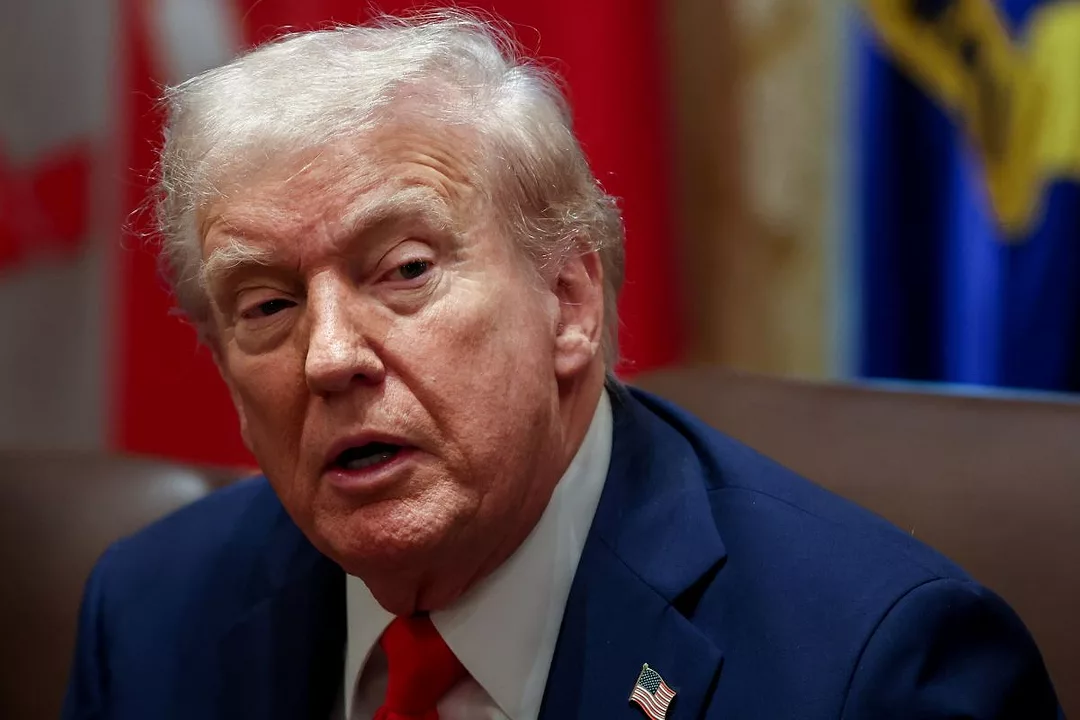
Photo: Bloomberg
Thousands of companies and importers are set to launch what could be a prolonged battle to try to recoup as much as $170 billion in tariffs they’ve already paid to the U.S. government after the Supreme Court struck down a key tool in President Donald Trump trade policy.
The top court was silent on the topic of refunds when it ruled on February 20 that Trump didn’t have legal authority to impose the duties under an emergency law.
“They take months and months to write an opinion, and they don’t even discuss that,” Trump said in a news conference after the ruling. “We’ll end up being in court the next five years.”
The U.S. president said he is planning to immediately impose a fresh 10% global tariff under a different provision. But that won’t stop the flood of lawsuits by companies seeking refunds.
The administration’s loss is poised to reverberate across the global economy. The scale and reach of any refund process would be unprecedented. An array of businesses — big and small, public and private — have spent recent months angling to best position themselves to claw back the levies they’ve been paying if the justices struck down Trump’s actions.
Retailers like Costco Wholesale Corp. and large industrial companies like U.S. aluminum producer Alcoa Corp. are among those clamoring, along with major household brands and hundreds of small businesses, have filed suits. Most companies are U.S.-based, but include domestic subsidiaries of overseas corporations as well.
Among the major questions left unanswered for U.S. importers in the Supreme Court ruling are the prospects and the process for recouping the money the government collected over the past year under the International Emergency Economic Powers Act. The vote was 6-3 against the Trump administration, with Justice Brett Kavanaugh writing in dissent.
“The court says nothing today about whether, and if so how, the government should go about returning the billions of dollars that it has collected from importers,” Kavanaugh wrote. “But that process is likely to be a ‘mess,’ as was acknowledged” during the court’s oral arguments in November.
U.S. Customs and Border Protection so far has collected an estimated $170 billion in tariffs imposed by Trump using the International Emergency Economic Powers Act, the law at the center of the case.
The court ruled that using IEEPA to impose tariffs wasn’t lawful, but the justices didn’t address whether importers are entitled to refunds, leaving it to a lower court to sort out those issues. The litigation will return to the U.S. Court of International Trade for the next round of legal wrangling.
While waiting for the justices to rule, more than 1,500 companies have filed their own tariff lawsuits in the trade court to put themselves in line for tariff refunds, according to a Bloomberg analysis.
The trade court in recent months has pressed the Justice Department for at least a hint of how it plans to handle the refund issue if it lost at the Supreme Court.
Retail and apparel companies have been particularly on edge, since the tariffs had added substantial costs to those that source goods from Asian nations such as China and Vietnam. In December, for example, Lululemon said gross margin — a measure of profitability — will decline due in large part to tariffs.
The ruling comes amid a flurry of retail earnings, including Home Depot Inc., which is due to report on February 24. While most companies are reporting quarters that wrapped before the decision, Neil Saunders, managing director of GlobalData, said the move could have an impact on profit and earnings guidance. “If they’ve already baked in very high costs for tariffs, there actually might be some upside,” Saunders said.
“While the decision provides some near-term relief, it does not eliminate the broader trade policy uncertainty facing retailers and brands,” Emarketer principal analyst Zak Stambor wrote in an emailed note. “We expect the ruling to create a modest tailwind for retail sales beginning this year, though that benefit will gradually fade by 2028.”
In written submissions, government lawyers have said that the administration won’t fight the court’s authority to order officials to recalculate tariffs, but left open the possibility that it might try to limit which importers are eligible.
The U.S. trade court has experience managing a mass refund process. After the Supreme Court struck down a harbor maintenance tax on exporters in 1998, the court created a claims process. That fight involved approximately 4,000 cases and $750 million in taxes paid, according to court records and reports at the time.
The scale of Trump’s contested tariffs is far larger — by the end of 2025, the government told the trade court that more than 300,000 importers had paid the contested tariffs so far.
“For importers, it means that there is a refund potential,” said Ted Murphy, a partner at Sidley Austin LLP. What the refund process will be and how long it will take “is a big issue,” he added.
Daniel Mach, a partner at Bryan Cave Leighton Paisner, said refunds are “a solvable problem,” explaining that the trade court could consolidate all of the individual lawsuits.
The National Retail Federation, an industry group, called for a streamlined refund process.
“We urge the lower court to ensure a seamless process to refund the tariffs to U.S. importers,” David French, the group’s executive vice president of government relations said in a statement. He added that tariff relief would provide an economic bump that would allow investment in operations and other business areas.
The 1977 emergency powers law doesn’t mention tariffs, and had never before been used to impose the duties. Companies are still subject to other tariff measures.
With nearly $774 billion cash on hand, the U.S. Treasury has more than enough cash on hand to return IEEPA revenue if ordered to, according to Secretary Scott Bessent, though that could happen over weeks or months and “may take over a year,” he said in a Reuters interview last week.
Bessent also suggested that refunds may amount to a “corporate boondoggle” for companies that passed on the tariff burden. “Costco, who’s suing the U.S. government, are they going to give the money back to their clients?”
Michael Wieder, president and co-founder of Lalo, which makes baby and toddler products, said in an interview that the company would take whatever steps necessary to recoup the more than $2 million they paid in tariffs covered by the Supreme Court’s latest order.
“We don’t expect refunds to be issued overnight even if our ducks are in a row, but we want to be front of the line,” he said.
He added that the company worked with suppliers to offset costs and only pass on a “minimal amount” of tariff burden to customers, and hadn’t decided what they would do if they get that money back.
“We’ll cross that bridge when we get there,” he said.
Varied Shares
Some industries stand to receive a bigger share of the duties collected under IEEPA as of December 14. According to an analysis from Bloomberg Economics, textiles, toys and food and beverages industries top the list of industries that import final goods, including wholesalers, retailers and manufacturers with factories outside the U.S. For those that import tariff-hit components needed to manufacture goods domestically, it’s machinery, electronics and autos that stand out.
“The construction industry — from its purchases of electrical equipment and appliances, possibly to be fitted in new buildings — also appears particularly exposed,” BE’s Nicole Gorton-Caratelli and Chris Kennedy wrote.
Firm size will play a role in who sees the biggest refunds, they said. Because any refunds would go to the importers-of-record who paid the duties, larger companies that import goods themselves are more likely to receive refunds directly than smaller firms that buy from wholesale importers.
Joe Feldman, an analyst at Telsey Advisory Group, said the ruling raises more questions than certainties for retailers.
Companies’ attempts to get money back that they’ve already paid is going to take some time, and prices of goods typically don’t come down once they go up — with the exception of commodities like milk and eggs, he said.
While operators could benefit from better profit margins in the near term, they are unlikely to receive a windfall of cash or change pricing structure.
“The reality of what’s going to happen on the ground isn’t going to change all that much,” Feldman said.
Customs brokers and lawyers are advising companies that the administration could make it difficult to obtain refunds, potentially requiring proof that they didn’t pass the cost on, or demanding extensive paperwork for each shipment. For now, importers are being told to at least have their import records in order for a refund push, even if they don’t know what it’ll look like yet.
CBP recently announced that starting February 6, the U.S. Treasury would no longer issue CBP refunds via paper check, instead moving to electronic payments.
Hans Heim, chief executive officer of Ibis Cycles Inc. in Santa Cruz, California, said he expects to eventually receive refunds after the court’s decision, although the timing is unclear. He and other executives have spent untold hours in the past year reworking their supply chains, parsing the changes in tariff rates and cutting costs in order to counter the higher duties.
“People will be superficially happy that they are getting the refunds,” Heim said. “But they would 10 times more wish this had never happened.”
Popular Stories




100 Great Supply Chain Partners 2026: The Secret to Supply Chain Success
VIEW THE LATEST ISSUECase Studies


Visit Our Sponsors |
|
|
|
|
|
|
|
|
|
|
|
|
|
|
|
|
|
|
|
|
|
|
|
|
|
|
|
|
|
|
|
|
|
|
|
|
|
|
|
|
|
|
|
|
|
|
|
|
|
|
|