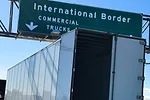
Coming 'Great Freight Recession' Could Hit Supply Chain Partners Hard

Experts are anticipating major trucking capacity shortages in the near future as 2011 approaches, which may make it even more difficult for the U.S. economy to achieve a sustainable recovery.
In fact, the Council of Supply Chain Professionals (CSCMP) is predicting "The Great Freight Recession," in which economic growth will be severely hampered by the inability to get products to market. That means retail shelves are likely to be facing stock-outs, so retailers will be forced to lean hard on their supply chain partners to perform under increasingly constrained conditions.
The problem has deep roots, according to the CSCMP State of Logistics Report, which was released in June 2010. Trucking carries 78 percent of the transportation load in the U.S., but 2,000 truck companies closed last year and another 2,000 are expected to fail this year. Truck drivers have been leaving the industry in record numbers, and very few carriers are buying new trucks to replace the ones going out of service.
Couple all this with the CSCMP's assertion that inventories have hit "rock bottom," and you can see that there is the potential for significant challenges in the supply chain ahead. The economic downturn has wiped out a massive amount of capacity, which many businesses still haven't even noticed yet. However, this dramatic shortfall will become increasingly evident as soon as consumer spending rises.
So what can companies do to prepare for this coming "Great Freight Recession?
Enhanced Analysis, Accelerated Decisions
In this environment, freight costs will rise dramatically and unpredictably. When stores need product for the holiday shopping season, transportation planners will have to quickly examine their options and make intelligent decisions about how to get shipments done in very fluid, uncertain logistical and economic conditions. There will be a lot of frantic phone calls as spot market prices and capacity fluctuate faster than logistics planners can track. This will require a level of enhanced analysis and accelerated decision speed far beyond what has been relied upon in the past.
This problem won't end after the coming holidays, and in fact it will become more pervasive when economic growth returns to the country. Ironically, economic growth is expected to kill some companies caught in the middle of this, so now is the time for supply chain partners to prepare and improve their use of technologies that will enable them to continue to meet their transportation planning and execution needs.
For instance, transportation managers will need to leverage both their own internal fleets and those of market carriers far more efficiently to continue providing acceptable service levels while remaining profitable. But that's easier said than done.
Most retailers still have an "integrated" approach, whereby disparate parcel, transportation management, and fleet systems are knit together via integration, with limited workflows between them. That often forces modal choices being made even before costs and constraints can be adequately evaluated. While this is bad for retailers, it is also bad for their logistics partners because decisions are being made with incomplete data and poor planning methodologies. The result is last-minute decision making, market inefficiency and lost opportunity, which not only affects the retailers, but also the supply chain partners serving them.
That has led many supply chain partners and retailers to look to TMS systems that encompass all of the transportation modes. These might include truckload, less-than-truckload (LTL), ocean, rail and parcel, as well as private or dedicated fleets. The key is that it's no longer adequate to plan these on separate platforms. All the options need to be on the same platform for comparison as operations managers decide the best way to move shipments as spot prices and capacity fluctuate. Doing moves they way they have always done them probably won't work anymore - at least in a truly feasible, economic sense.
Profit on Both Sides of the Freight Door
Today, some retailers and their supply chain partners are using more innovative ways to maximize efficiency in the use of assets to reduce total costs, such as continuous move and backhaul planning. For example, savvy retailers are working with their carriers to identify backhaul routes that match with moves they need to fulfill. Naturally, helping a carrier deliver a full load on a backhaul is better for the carrier, and that can also lead to more favorable rate negotiations for the retailer. This kind of cooperation also creates better business partnerships and more opportunities for profit on both sides of the freight door. Having these good relationships will be important when capacity gets tight.
Backhaul planning is one of many details both logistics companies and retailers can manage in a centralized TMS planning system - details that would quickly overload human decision-making abilities. That's why the TMS needs to support key supply chain partners' constraints. These include facility-specific issues like a dock availability at a particular warehouse, or awareness of how space is allocated in a carrier's multi-compartment trucks. This kind of minutia is enough to overwhelm even the best transportation and operations managers, but if it is all automated with business rules in a sophisticated, easy-to-use planning engine, the workload becomes manageable and fewer mistakes occur.
Retailers aren't the only ones who have decided it is wise to invest in more advanced TMS technologies. Logistics companies such as 3PLs are looking for even better integration with retailer systems by using supply chain collaboration portals and deployment of their own TMS technology. The choices for on-demand, hosted and Software-as-Service (SaaS) technologies are allowing these logistics companies to deploy systems faster and in a format that more appropriately aligns with the level of their own IT resources. Putting these systems in place reduces many of the last-minute surprises that occur in uncertain economic conditions, and also allows them to better set prices as the market gets more stretched and volatile.
Another trend that is impacting freight planning is demand by consumers for more flexibility in home delivery of products like furniture and large electronics. As a result, fleet requirements and LTL planning have become more sophisticated, with a wider variety of needed assets, and more complex routing and scheduling.
Retailers also are placing greater emphasis on parcel shipping to handle the continually increasing number of online orders they receive. For parcel operations to be efficient, the TMS solution must include rate shopping, manifesting, carrier-compliant label generation, and end-of-day processing with electronic communications to carriers. The solution must also be able to use parcel rates when determining the best option for executing small package moves, while evaluating the tradeoffs between parcel and LTL. Again, system sophistication is critical to both the retailers and the logistics companies they are engaging.
As the freight picture gets more complex and dynamic, transportation managers will need to rely less on the institutional memory of "what has worked before," and more on sophisticated, easy-to-use decision support systems and technology. Those that do this the most successfully are the ones who will come out of this downturn and the expected "Great Freight Recession" with an even better competitive advantage.
Source: RedPrairie
Popular Stories
.webp?height=100&t=1780416625&width=150 "018_how_3pls_can_get_started_with_ai_v1-(540p).png")



SupplyChainBrain 2026 ESG Guide: ESG — The Supply Chain’s Biggest Secret
VIEW THE LATEST ISSUECase Studies


Visit Our Sponsors |
|
|
| |
|
|
|
|
|
|
|
|
|
|
|
|
|
|
|
|
|
|
|
|
|
|
|
|
|
|
|
|