Imagine you could travel from Montreal to Toronto in 30 minutes after buying a ticket to ride inside an aluminum pod that travelled at high speed inside a low-pressure tube.
Analyst Insight: Industry disruptions - whether caused by economic strife, weather events, or labor disputes - seem to be becoming more common, and they are prompting many executives to rethink the design of their global supply chains. For years many companies have invested in solid-state supply chains built for cost efficiency. The problem is that these are premised on very defined paths-to-market that lack resiliency and make them susceptible to disruption. - Glen Goldbach and Ryan Hawk, principals, PwC
Once again, UPS has seized the top position by a long-shot, with a brand value of $22bn, according to Brand Finance, a U.K.-based valuation and strategy consultant that appraises the brand values of the world's leading logistics companies.
Pirates have hijacked an oil tanker with eight Sri Lankan crew on board, Somali authorities said last week, the first time a commercial ship has been seized in the region since 2012.
Trucking fleets stepped up hiring at the fastest pace in five years in February, adding 10,600 jobs in a display of confidence as companies across U.S. industries ramped up payrolls.
Analyst Insight: By understanding the true costs and potential benefits from improving their reverse logistics processes, retailers are developing strategies to recover as much value as possible from their returned goods. - Matt Ennis, vice president of business development and client solutions, Yusen Logistics (Americas) Inc.
Analyst Insight: U.S. shippers have had ample reasons to be frustrated with the international supply chain in recent years. The industry has incurred multiple disruptions and increasing operating complexity that is likely to get worse before it gets better - unless we change the way we approach these challenges. – Adriene Bailey, chief strategy officer, Yusen Logistics (Americas) Inc.
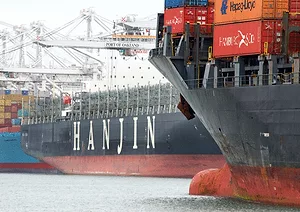
The viability of the international container ship transportation industry depends on vibrant trade between distant nations, and that trade depends on cost-competitive manufacturing industries in the exporting nations, mainly China.