Analyst Insight: The findings from the 25th Annual Trends and Issues in Transportation and Logistics suggest that three complex supply chain elements - transportation, technology, and organizational structure - have companies waiting before committing to transformation changes in these areas. However, waiting too long to make a decision will result in a competitive disadvantage that will be difficult to overcome in a global economy. Understanding the interplay and interconnectedness of the three elements is essential in determining the path forward. – Mary Collins Holcomb, SCM professor, University of Tennessee, and Karl Manrodt, logistics and SCM professor, Georgia College and State University
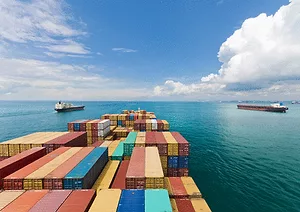
Analyst Insight: Slow post-recessionary recovery has fostered uncertainty in many markets, but few have felt the effects as strongly as deep sea cargo transportation. The market's emblem - an ancient, laboring ship that is slow to adapt to obstacles in its path - has become an apt metaphor for the market itself. Financial risk, absent demand and volatile inputs indicate that container shippers may be caught in a bubble - one that IBISWorld anticipates will burst by 2020 unless shippers change course. – Ashley Cruz, research analyst, IBISWorld Inc.
Analyst Insight: In 2016, Amazon subsidized the cost of shipping to their customers by about $7bn, setting a very high bar for customer expectations of cheap or free shipping with rapid delivery. Most competitors don't have the same options as Amazon to buy market share this way, putting enormous pressure on them to squeeze every penny out of fulfillment and transportation costs (as well as to differentiate in other dimensions). Omni-mode integration is one tool that can help companies lower shipping costs to effectively compete. – Bill McBeath, chief research officer, ChainLink Research
Analyst Insight: Logistics decisions are executed to deliver a service at the lowest possible cost. There are various inefficiencies in logistics operations, and the overall supply chain, that make this seemingly simple objective a constant struggle. Some of those inefficiencies are self-imposed by shippers, as they attempt to drive stability in logistics to lower costs. Mode decisions and core carrier programs are examples of historical ways to drive logistics efficiencies. But they may be driving inefficiencies in tomorrow’s logistics operations. – Shanton Wilcox, Partner-Supply Chain Management, Infosys Consulting
Help wanted: America needs truck drivers. In 2015, American Trucking Associations estimated that for-hire trucking companies had nearly 50,000 fewer drivers than they needed. The shortage was less severe in 2016, but the trade group expects it to worsen in coming years.
It's been the same drill for years: Ocean carriers and shippers talking service, then fixating on price. Is this disconnect finally about to be disrupted?
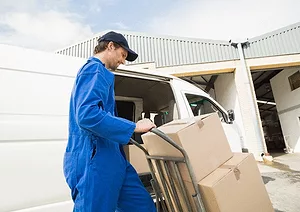
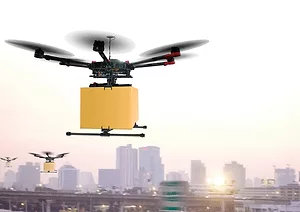
Analyst Insight: The decades-old practice of a delivery truck dropping off a package at a home or business occurs millions of times daily across the globe. But new ways to cover last-mile delivery - such as drones, self-navigating parcel robots and underground vehicles/tunnels - are providing a glimpse into what tomorrow's last-mile delivery options might look like. Here are three technologies that carry the potential to transform the local delivery of direct-to-consumer orders. – John Johnson, senior content specialist, Gartner
More than four decades after the last man walked on the lunar surface, several upstart space entrepreneurs are looking to capitalize on NASA's renewed interest in returning to the moon, offering a variety of proposals with the ultimate goal of establishing a lasting human presence there.