Package delivery company United Parcel Service Inc says it will consider raising prices across the board in coming years to offset pressure on margins, particularly from the rising costs of delivering packages to e-commerce customers.
Another ambitious program for fixing and expanding the nation's transportation infrastructure. With no clear way how to pay for it. Déjà vu strikes again.
Deutsche Post DHL Group and Chinese technology conglomerate Huawei Technologies are collaborating on a range of supply chain services for customers using "industrial-grade internet-of-things hardware and infrastructure."
By majority vote, the Members of the European Parliament have agreed to include shipping in the European Emission Trading Scheme (ETS) Directive as of 2023, unless there is a comparable system agreed under the auspices of the IMO by the end of 2021.
Two container shipping lines, France's CMA CGM and Israel's Zim, have signed up with Alibaba to allow customers to book space on their vessels through the Chinese e-commerce giant, in a bid to boost sales as the sector battles a severe downturn.
The U.S. Postal Service says it lost $200m during the year-end holiday season, despite a strong quarter of package shipping and expanded use of vote-by-mail in the November presidential election.
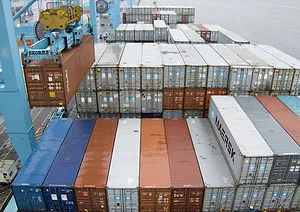
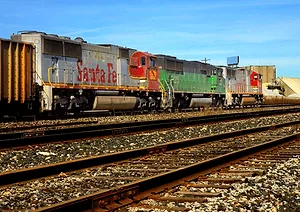
No matter what products they make, how many they make, or how often they make them, all U.S. manufacturers share a common goal: They need to get their products to their customers, on time, and the familiar litany of trucks-trains-boats-and-planes (and sometimes, pipelines) remains the way that goods get moved. At least that's the case in early 2017. Within a year or two, maybe not so much.
GPS technology can tell a commercial trucker all about routes and traffic conditions. But when it comes to predicting the regulatory landscape, the road ahead is a lot less clear.
Last October the British and Chinese governments agreed to allow more than double the number of passenger flights between the two nations and threw the door open to unlimited cargo flights. To date, however, no air carrier has availed itself of the opportunity. Instead, rail, as well as rival ground-based modes, have risen in popularity.